Bond Repair vs Deep Conditioner
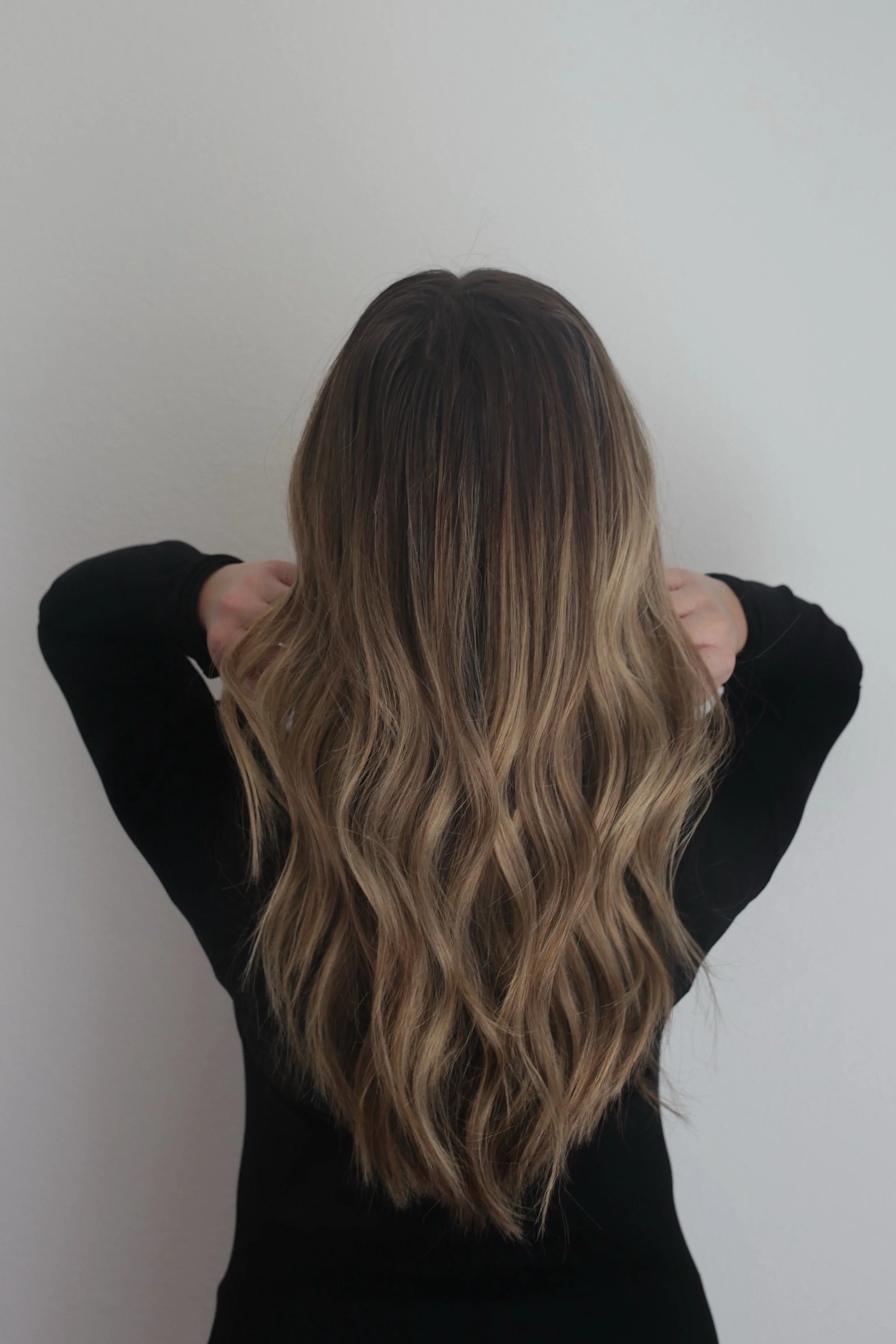
I will never forget when I was looking at pictures a few months ago and saw one of me and a friend and realized that my hair was noticeably damaged. I’ve highlighted it for years, but have never dealt with crazy split ends and I don’t blow-dry my hair, so seeing the damage stand out in a photo freaked me out. Of course, I wanted to fix it immediately, but hair damage is something that, unfortunately, takes time.
Another thing I noticed is how many products promise to fix your damage, and how it seems like you need 53 different types of products in your hair routine in order to fix your hair; skip one and you’re doomed. I hate fear-based marketing, and while I definitely panicked over my damaged hair, I decided to dive into the trenches and figure out exactly what would best fix my damage, heal split ends, and actually repair and strengthen my hair.
Deep conditioner has been around for years, but it seems like bond repair products popped up out of nowhere. The latest and greatest is always tempting, but I wanted to figure out if you needed both, or if one would be more effective.
While deep conditioners and bond repairs seem similar, they actually do very different things for your hair.
For the tl;dr: bond repair helps rebuild the internal structure of damaged hair, while deep conditioner focuses on moisture, softness, and smoothness.
If your hair is damaged like mine, you most likely can benefit from using both (I did!), but knowing when to use each can make a huge difference in how your hair looks and feels.
Below, I share how (and when) to use each product, their pros, cons, and tips for layering in order to repair and strengthen your hair.
bond repair vs deep conditioner
what is bond repair?
Bond repair treatments are designed to help strengthen broken bonds inside the hair shaft. Your hair’s bonds become damaged from bleaching, coloring, heat styling, and chemical treatments. Even if you don’t heat style your hair, environmental factors like sun exposure can also damage your hair and weaken the follicles.
Unlike regular conditioners, bond repair products work deeper within the hair structure to improve strength and reduce breakage over time. Bond repair is especially useful if your hair:
Feels stretchy or weak when wet
Breaks easily
Has bleach or color damage
Feels mushy after washing (kind of like mesh, if that makes sense)
Has split ends and excessive shedding from breakage - especially at the root or ends
Frizzes at the ends
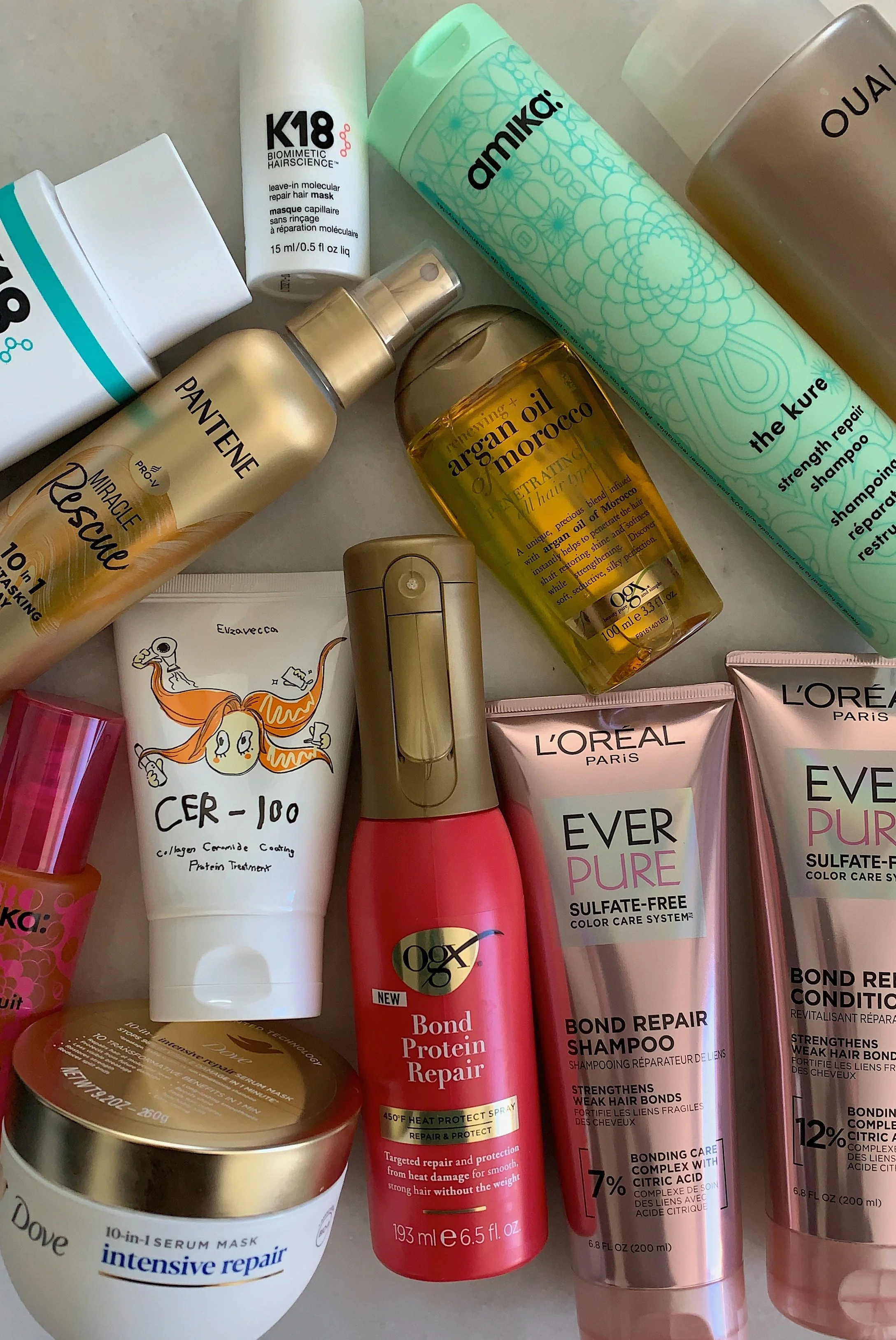
Some of my favorite (and the most popular) bond repair products include:
K18 Leave-In Molecular Hair Mask – This is the most expensive hair mask I’ve ever used, but a little goes a long way so it’s worth it. It doubles as a heat protectant, and is one of the few leave-ins that actually heals your hair rather than sitting on top of it. It deeply penetrates the hair to repair damage; it doesn’t just make your hair superficially soft.
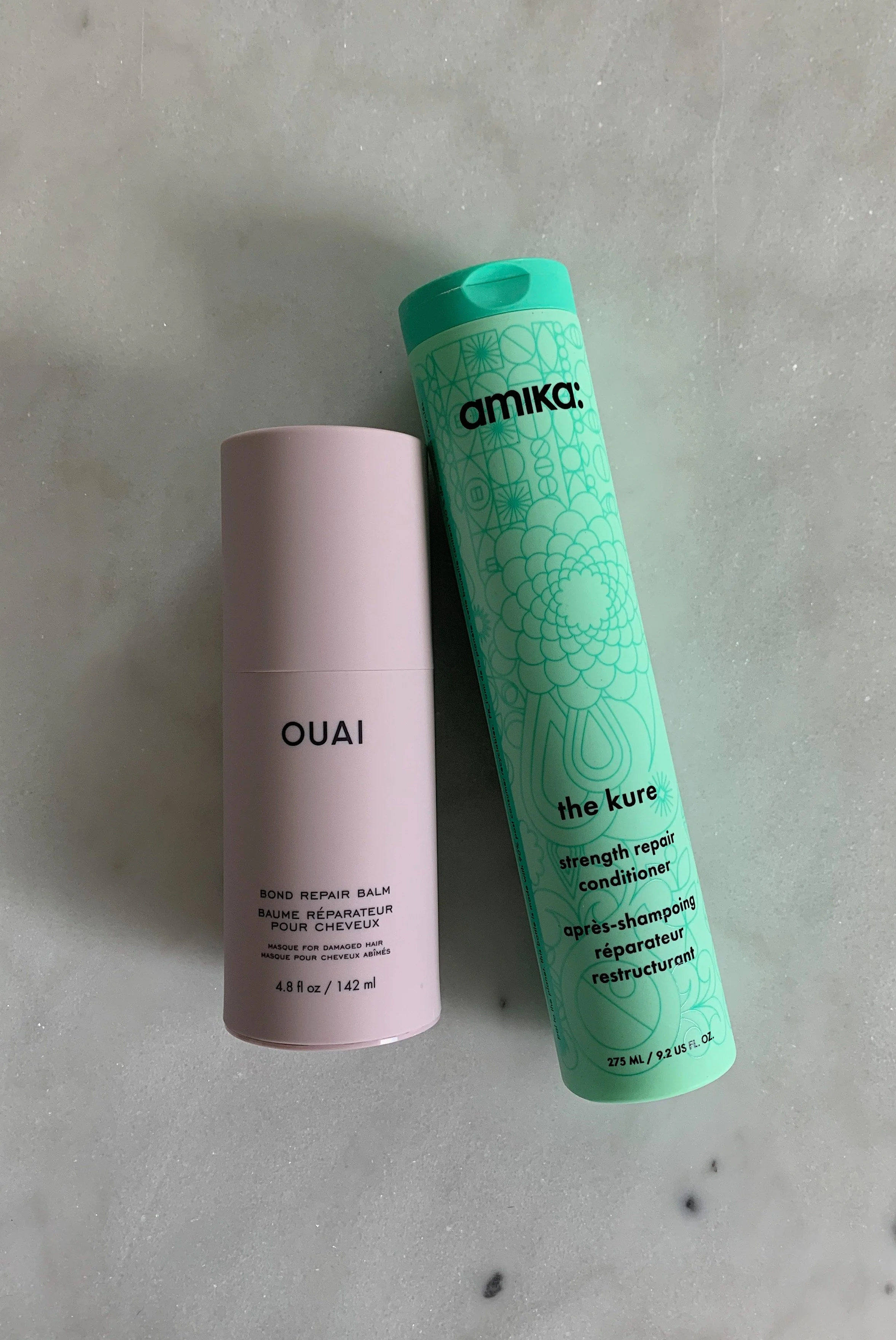
Amika The Kure collection - Love their shampoo especially and it’s a great way to incorporate bond repair without having to add an extra step to your routine, but the mask is also 10/10.
Ouai Bond Repair Balm - A newer product, but this is a conditioner replacement that only has to be left on for 3 minutes to work. If your hair gets weighed down easily, this is the way to go.
who should use bond repair?
You will notice a big improvement in your hair health if you have:
Bleached or highlighted hair (especially if you color your hair frequently)
Heat-damaged hair
Chemically processed hair
Weak or breaking hair
If your hair is mostly healthy but slightly dry, a deep conditioner alone may be enough.
what does a deep conditioner do?
A deep conditioner focuses on restoring moisture and improving manageability. Deep conditioners coat the hair to help soften rough strands, reduce frizz, and make hair feel smoother and healthier. Some also contain proteins or oils, but they generally do not rebuild hair bonds the way dedicated bond repair treatments do.
Where bond repairs penetrate the hair, deep conditioners are more about coating the hair. Still, they are nourishing and don’t just sit on the hair.
when should you use deep conditioner?
Deep conditioners are best for those who have:
Dry hair
Frizzy hair
Tangle-prone hair
Dullness
Rough texture
Seasonal dryness (think cold winters and dry summers)
If you heat style your hair regularly, you will also want to incorporate a deep conditioner into your haircare routine. I really like:
Cécred Moisturizing Deep Conditioner - So good; this is hydrating and tames frizz better than other conditioners I’ve tried, and it’s one of the few deep conditioners that works for all hair types without leaving a film or weighing down your hair. I prefer this for thicker hair types; it can be a little heavy on my fine hair if I use it too often.
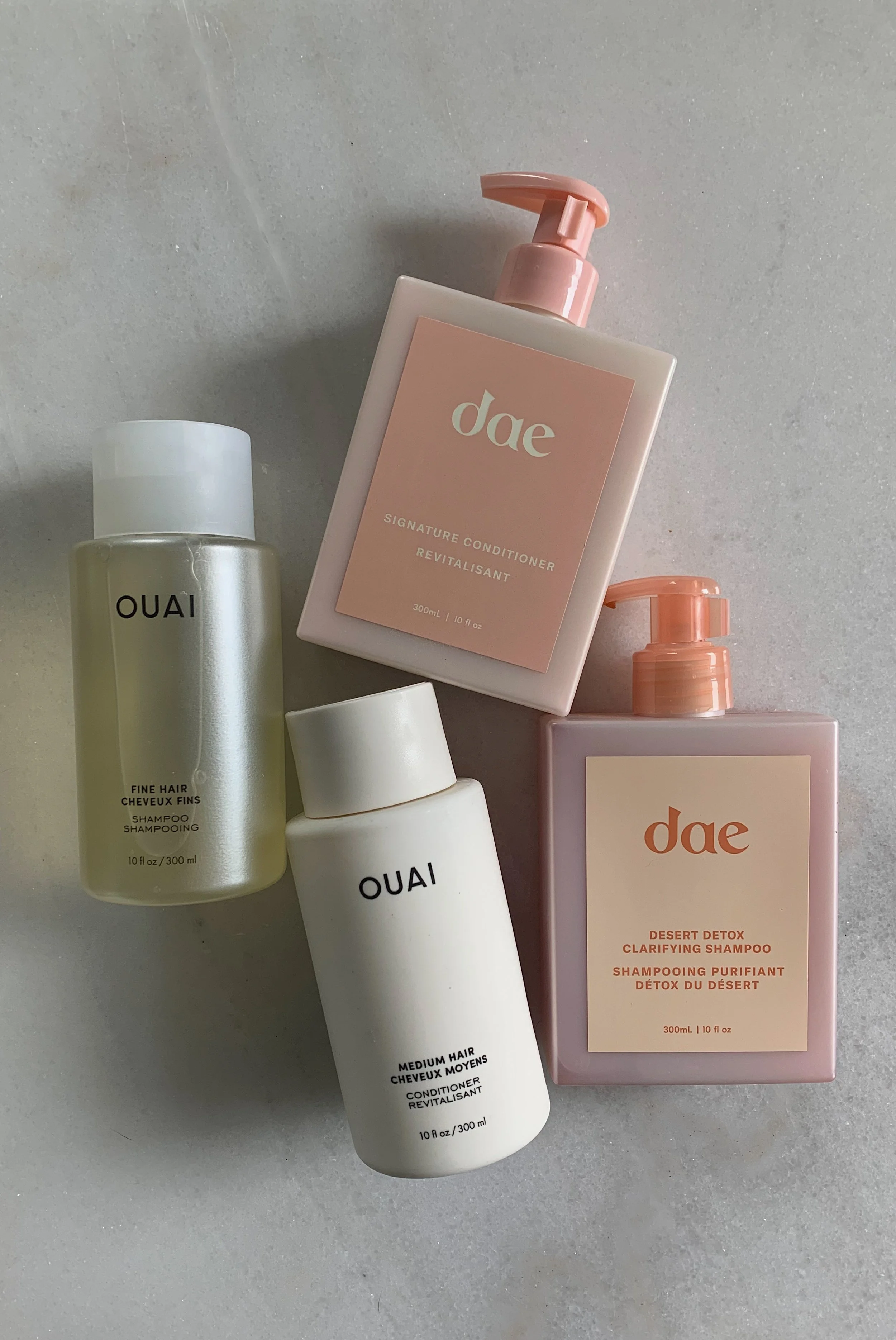
Ouai Medium Conditioner - Not technically a deep conditioner, but this is the perfect mix of hydrating yet lightweight. It’s nourishing, yet doesn’t leave a film and makes my hair so much easier to style. I’ve repurchased this 15+ times over the years and truly can’t live without it. They also make a version for thick hair.
bond repair vs deep conditioner: the biggest difference
The main difference is that bond repair targets internal damage, whereas deep conditioner is meant to add external softness and hydration.
They’re the peanut butter and jelly of hair health: bond repair helps make damaged hair stronger; deep conditioner helps make hair softer and smoother.
After using a deep conditioner, your hair usually feels softer and more moisturized immediately, but that doesn’t necessarily mean your hair is healthier. You want to add a bond repair for comprehensive haircare, because it improves hair strength. The results are more gradual (over multiple uses), but if you have structural weakness, it’s a must-have.
At the risk of another cringey analogy, bond repair and deep conditioner are like healthy eating and exercise; combine both for overall wellness. But don’t deprive yourself; highlights and heat styling are the ice cream and “fun foods” that make it all worth it.
which one is better for damaged hair?
If your hair is heavily bleached, breaking, or chemically damaged, bond repair is usually more important initially because moisture alone cannot fix broken internal bonds.
That said, you will still benefit from a deep conditioner because bond repair products do not always provide enough softness or hydration on their own.
For very damaged hair, using both often works best:
Use bond repair first to strengthen hair
Follow with deep conditioner for softness and moisture
This combination helps your hair feel healthier without becoming overly dry or overly soft - it’s the perfect balance of instant improvement plus long-term results.
can you use bond repair and deep conditioner together?
Yes! I am someone who wants the least amount of products in my haircare routine, but I highly recommend pairing a bond repair and deep conditioner. This will give you the healthiest hair and it’s easy to use both without having to overhaul your haircare routine or dedicate tons of time.
Use a bond repair treatment once a week, and then alternate with a deep conditioner once or twice a week, depending on dryness and how often you wash your hair.
Some people alternate them, while others layer a moisturizing mask after bond repair. If you have thick hair, you can layer, but if you have fine hair, it may be too much.
For my fine, highlighted hair, I like to use a deep conditioner as my regular conditioning product, and then once a week on self-care Sundays, I use a bond repair leave-in after my normal shampoo/ conditioner.
If you want to jump-start the healing process for your hair, switch to a bond-strengthening shampoo; this one is lightweight yet hydrating and works on all hair types. That said, “too much of a good thing” applies to haircare products.
If your hair starts feeling stiff or protein-heavy, you may need more moisture. Scale back on the bond repair and use a deep conditioner instead.
Overall, bond repair and deep conditioner are designed for different problems, which is why they are often best used together instead of choosing one over the other.
If your hair is weak, stretchy, or breaking, prioritize bond repair. If your hair mainly feels dry, rough, or frizzy, focus on deep conditioning.
If your hair is both damaged and dry, combining the two usually gives the best results.
My full review of the Color Wow Money Laundering Shampoo and Conditioner for cleansing power, hydration, scent, softness, shine, how they make your hair feel, price. Sharing my overall results and if they are worth the buying.