Hair Gloss vs Anti-Frizz Spray
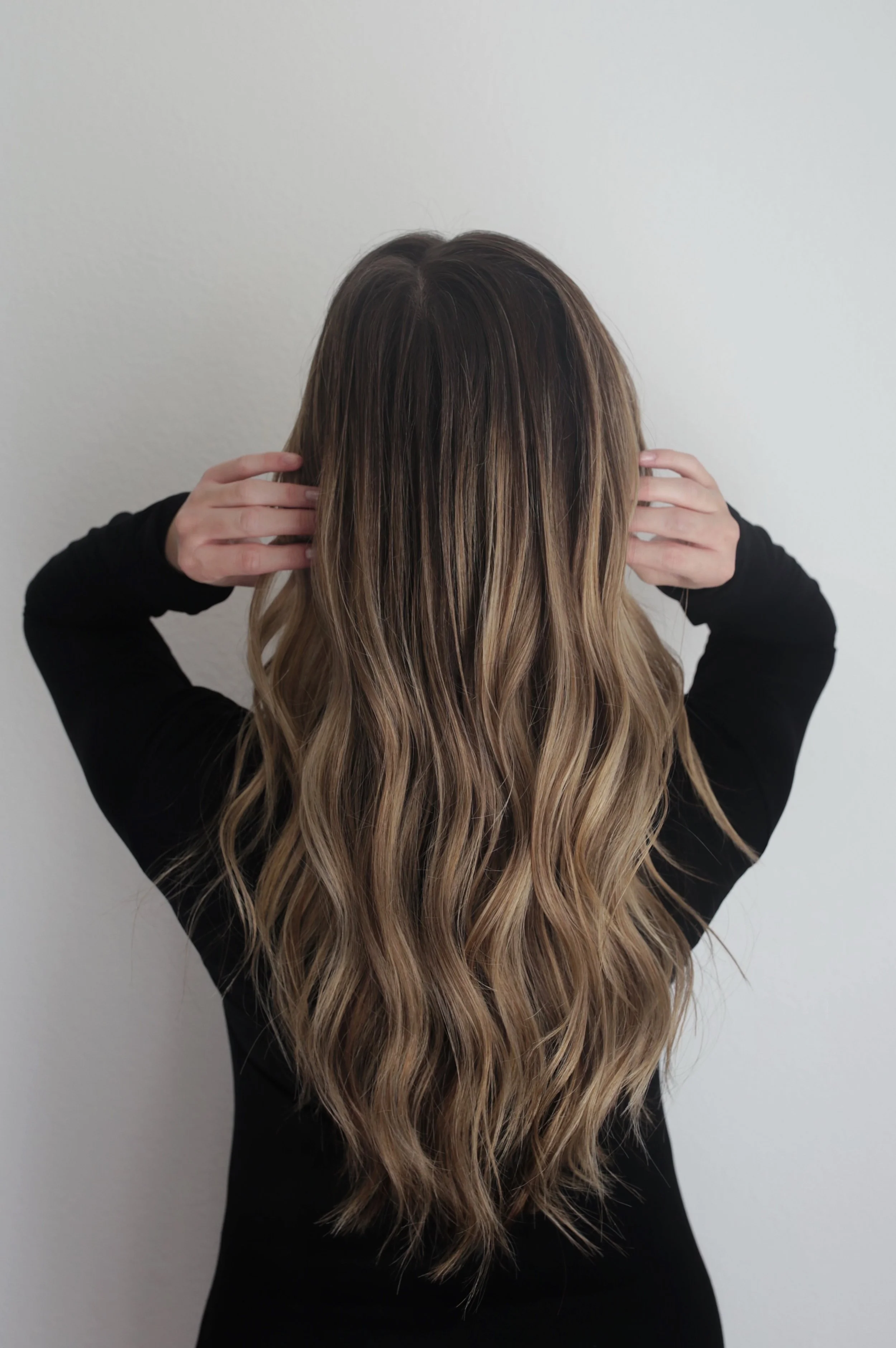
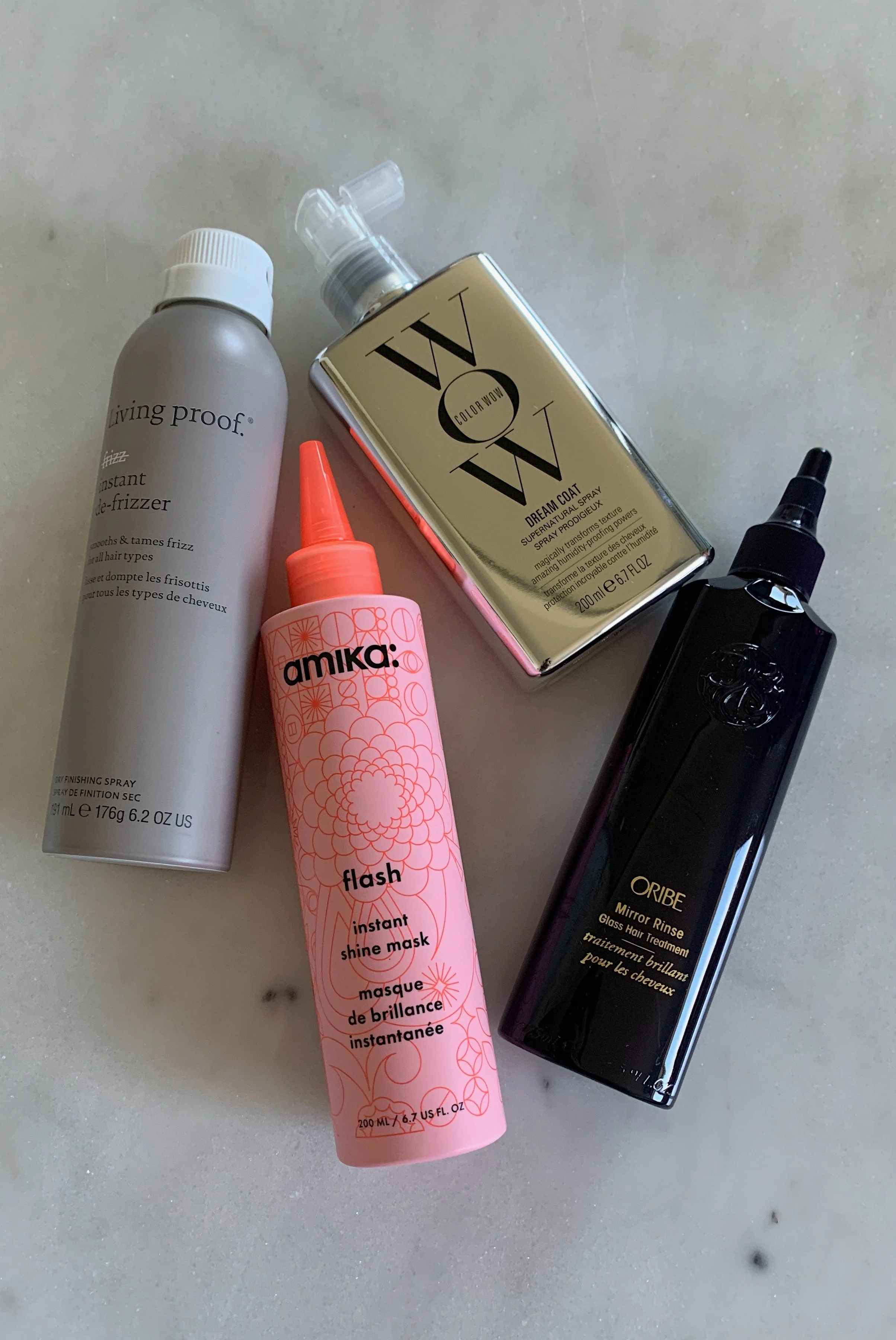
If you're trying to tame frizz or make your hair shinier, two products stand about above the rest: hair glosses and anti-frizz sprays.
At first glance, they seem interchangeable, as both leave your hair looking smoother, healthier, and more polished. That said, despite the similar results, they work in very different ways.
A hair gloss boosts shine, enhances color, and smooths the hair cuticle, whereas anti-frizz spray focuses on controlling humidity, flyaways, and frizz throughout the day. Hair gloss is more of a treatment; anti-frizz spray is an every-day styling tool.
I love and use them regularly, but you don’t need both. Depending on your hair type and goals, one will work better for you. Below, I share the before and after results of each, how they perform, and which is better for your hair type and the problem you’re trying to solve.
hair gloss vs anti-frizz spray: what's the difference and which do you need?
For a quick tl;dr:
Hair gloss is best if your hair looks dull or needs a pick-me-up in between hair appointments, even if you don’t color your hair or get highlights.
Anti-frizz spray is an everyday styling tool that will fight humidity, flyaways, and frizz. It makes your hair sleek and adds shine, and is somewhat easier to use, though you need to use it more often to keep up results.
what is a hair gloss?
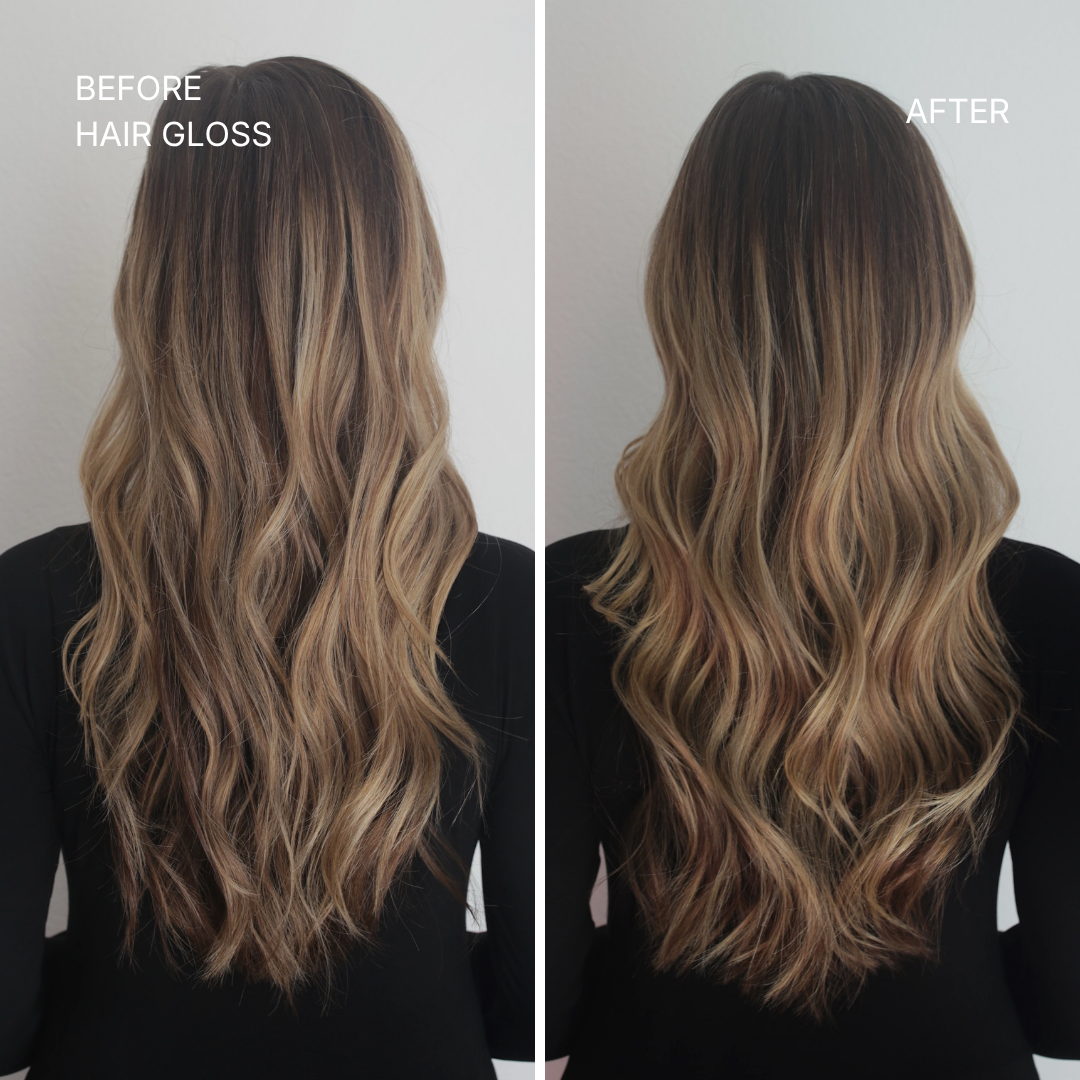
A hair gloss is a treatment that smooths the outer layer of the hair (the cuticle) to reflect more light. While you can your hair glossed at a salon, for the sake of this post, I’m focusing specifically on at-home glosses. Results you can expect include:
More shine
Reduced dullness
Softer hair
Enhanced hair color
A subtle refresh for faded color between salon visits
Smoother hair
Some hair glosses are clear, while others contain pigment to enhance or tone your hair color (tinted glosses). I never recommend using tinted glosses at home unless it has been hand-selected for you by your stylist. Glosses are not permanent, but they can be much stronger than expected. I’ve heard way too many horror stories to recommend tinted glosses to you.
Remember that while glosses can give your hair a “boost” in between salon visits, they’re not going to cover your roots, so if that is your main concern, I recommend heading to the salon for a color refresh.
Typically, at-home glosses are used in the shower after shampooing. Depending on the gloss, you can use it instead of conditioner, or before conditioning.
hair gloss before and after
what is an anti-frizz spray?
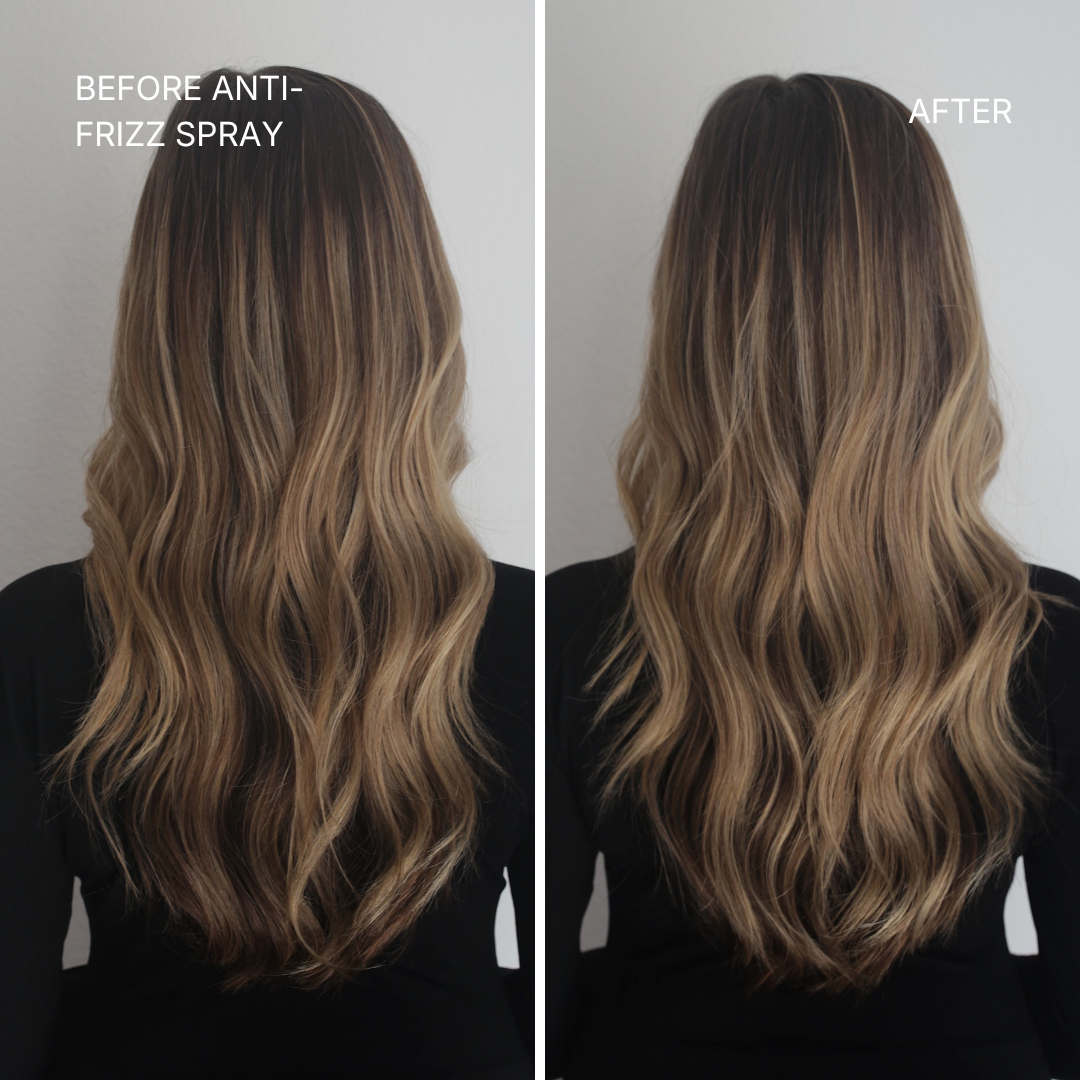
An anti-frizz spray is a styling product that helps prevent frizz caused by humidity, static, and everyday environmental conditions.
Most formulas work by creating a lightweight barrier around the hair to help keep moisture from entering the hair shaft, which is what often causes frizz - think of it as an umbrella for your hair. When you use an anti-frizz spray, you can expect:
Smoother flyaways
Less static
Light shine
Improved resistance to humidity
Heat protection (for some sprays)
Longer lasting hairstyles
Unlike a hair gloss, an anti-frizz spray is typically used after washing during the styling process. As such, you can use anti-frizz spray anytime you style your hair, whereas glosses are best used once every 4-8 weeks.
anti-frizz spray before and after
hair gloss vs anti-frizz spray results
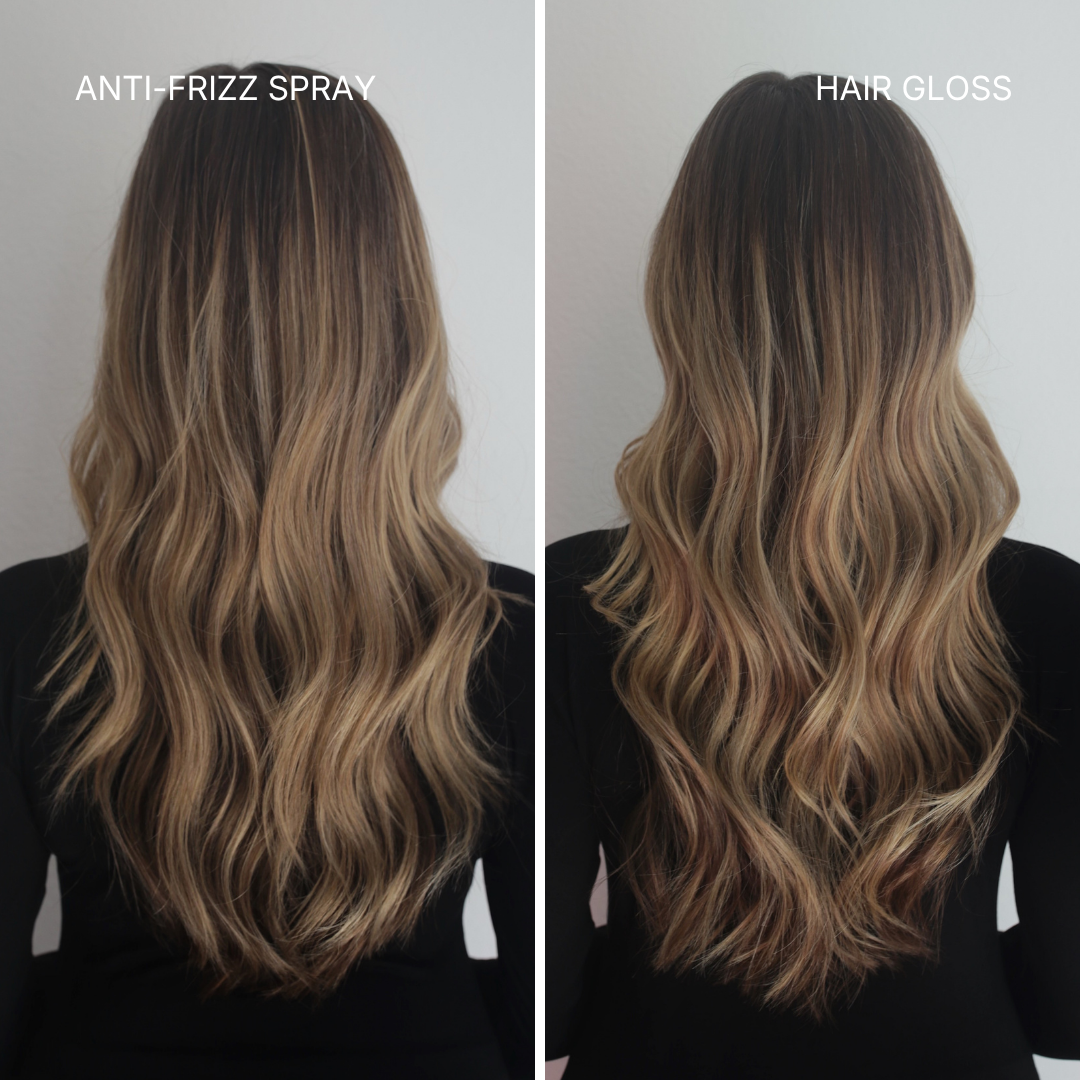
Although hair glosses and anti-frizz sprays both leave your hair looking smoother and shinier, they're formulated to solve different problems:
Hair gloss is the better product for you if your hair looks dull, your color needs refreshing, or you simply want a healthier-looking finish.
Anti-frizz spray is the best product if your biggest challenge is humidity, frizz, or keeping your style smooth throughout the day.
If your hair is both dull and prone to frizz, you don't necessarily have to choose between them. Add a gloss to your monthly treatment routine, and then stick with an anti-frizz spray during your regular styling process. Using both, even if you have fine hair, can help you achieve shinier, smoother hair with better frizz control.
for shine
If maximum shine is your goal, a hair gloss is the way to go. Because it smooths the hair cuticle, your hair reflects more light, giving it a healthier, glossier appearance. An anti-frizz spray also adds shine, but that's usually a secondary benefit rather than its primary purpose.
for frizz control
Anti-frizz sprays are specifically formulated to dramatically reduce frizz. and keep humidity from disrupting your hairstyle
for color enhancement
Hair gloss, but as I mentioned earlier, I do not recommend tinted glosses ever. Clear glosses do give your hair a boost and can bring back some of the shine and “pop” that you have when you first get your hair color done at the salon. They’re going to revive dull or faded color, but won’t change the tone of your hair; for that, head to the salon.
Anti-frizz sprays don't affect hair color.
for humidity protection
If you live in a humid climate or frequently battle flyaways, anti-frizz spray will be your new best friend and is 100% worth the money. This one specifically is designed to help your hairstyle hold up in moisture-rich environments; I use it anytime I travel to the east coast. If your hair becomes frizzy within minutes of walking outside on a humid day, an anti-frizz spray will typically be much more effective than a gloss.
for softness
Hair glosses often make your hair feel softer because they smooth the cuticle while adding conditioning ingredients.
Anti-frizz sprays can improve smoothness, but they don't always provide the same level of softness. That said, if you want sleek hair (which doesn’t equate to softness), opt for an anti-frizz spray.
for styling
An anti-frizz spray is a key part of the styling routine, whereas hair glosses are treatments.
Most anti-frizz sprays don’t just fight frizz; they also provide heat protection, static control, smoother results, and lightweight hold.
which lasts longer?
Both are surprisingly long-lasting, but hair gloss tends to last longer, as the results stay through a few hair washes. Anti-frizz spray usually needs to be reapplied after washing your hair.
which is better for your hair type?
fine hair
Both work well. Choose a lightweight gloss if your hair lacks shine; go for the anti-frizz spray if flyaways are your main concern.
Keep in mind that applying too much of either product can leave your hair feeling greasy or weighed down. A little goes a long way, especially near the roots.
thick hair
Both products can be beneficial; my mom has thick, wiry grey hair and we use both on her interchangeably. A gloss will improve softness and shine, whereas an anti-frizz spray can help manage volume and humidity, making your hair easier to style (and allowing the style to last longer). If you wear your hair naturally, go for a gloss; if you style regularly, get the anti-frizz spray.
curly hair
If your curls tend to frizz, an anti-frizz spray is usually the better choice for everyday styling. However, a gloss treatment can help maintain shine and softness over time, but isn’t the best way to spend your money if you style your hair regularly.
color-treated hair
Clear hair glosses are especially popular for color-treated hair because they can refresh faded or dull color while restoring shine between salon visits. That said, if your color-treated hair also struggles with humidity, there's no reason you can't use both products.
can you use a hair gloss and an anti-frizz spray together?
Yes, and for many people, that's the best approach because they serve different purposes:
A hair gloss improves the overall condition and appearance of your hair by enhancing shine and smoothing the cuticle, used once every 4-8 weeks.
Anti-frizz spray is a styling product that helps maintain that polished look throughout the day by protecting against humidity and flyaways.
Using both gives you long-term shine with everyday frizz protection, and it’s super simple to do. Just apply an anti-frizz spray whenever you style your hair, and add “hair gloss” to your routine once every 4-8 weeks.
which one should you buy?
choose a hair gloss if...
Your hair looks dull.
You want maximum shine.
You have color-treated hair.
You want softer-feeling hair.
You're looking for a treatment rather than a styling product.
choose an anti-frizz spray if...
Humidity makes your hair frizzy.
You struggle with flyaways.
You want smoother blowouts.
You want sleek, glass-like hair.
Your hairstyle loses definition throughout the day.
buy both if...
Your hair is both dull and frizzy.
Because these products solve different problems, many people benefit from using a gloss treatment periodically (every 4-8 weeks), while relying on an anti-frizz spray for daily or weekly styling.
frequently asked questions
is a hair gloss the same as an anti-frizz spray?
No. A hair gloss focuses on shine, smoothness, and color enhancement, whereas an anti-frizz spray is formulated to reduce frizz and protect your hairstyle against humidity.
which adds more shine?
Hair gloss adds more noticeable shine that also lasts longer. You also get shine from an anti-frizz spray, though it doesn’t last as long.
which is better for frizzy hair?
If frizz is your biggest concern, an anti-frizz spray is the better option.
can you use both together?
Yes. Many people use a gloss treatment every few weeks as a boost in between hair appointments, and then an anti-frizz spray whenever they style their hair.
do either of these repair damaged hair?
Neither product is designed to repair split ends or broken hair bonds. If your hair is damaged, you may see better results by adding a bond-building treatment or deep conditioning mask to your routine.

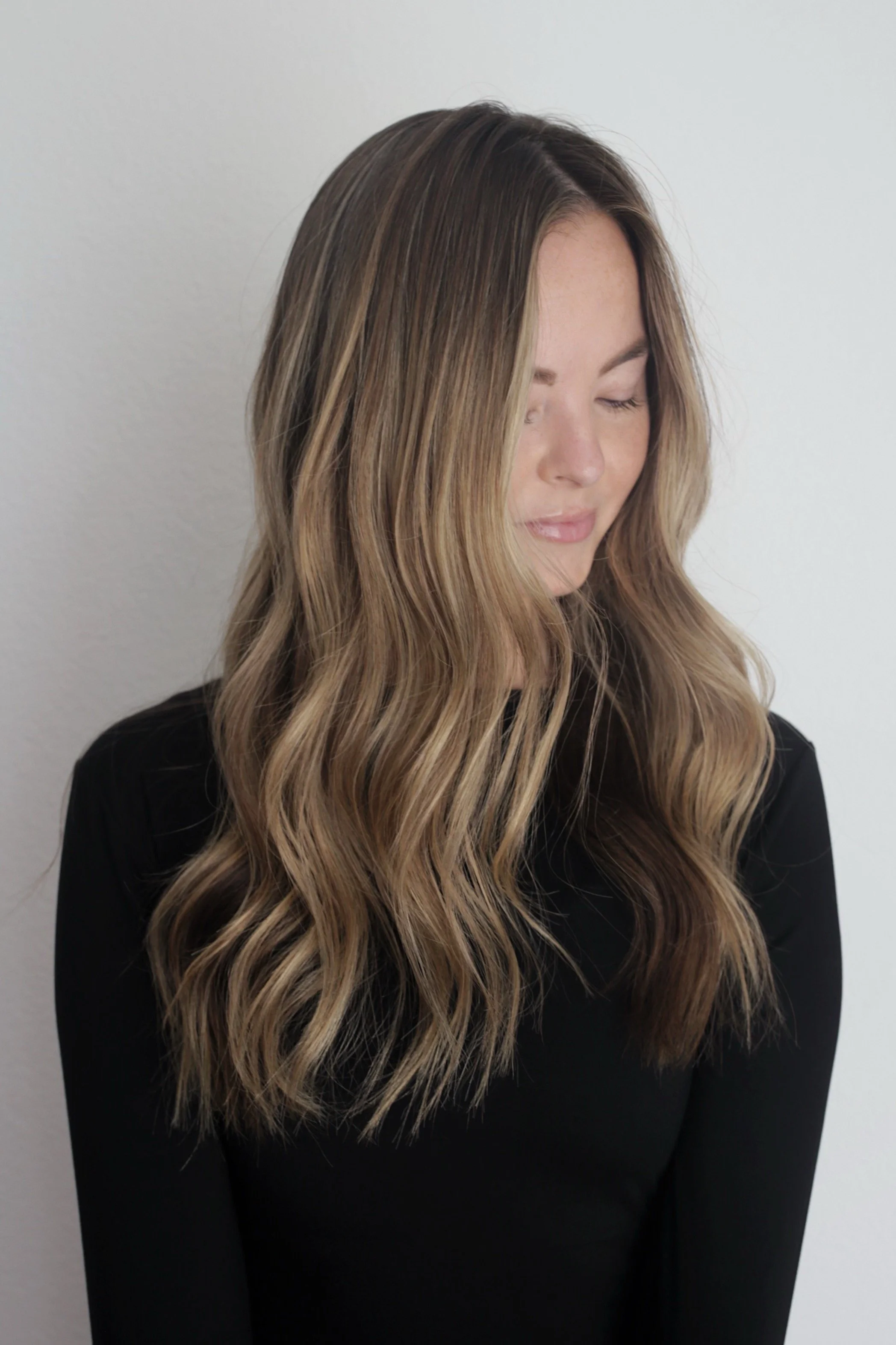

Comparing hair gloss and anti-frizz spray with before and after results. Sharing pros and cons plus tips for using to explain when to use each, and which one is best for each hair type.