How to Do a Life Audit: A Step-by-Step Guide to Reset Your Life

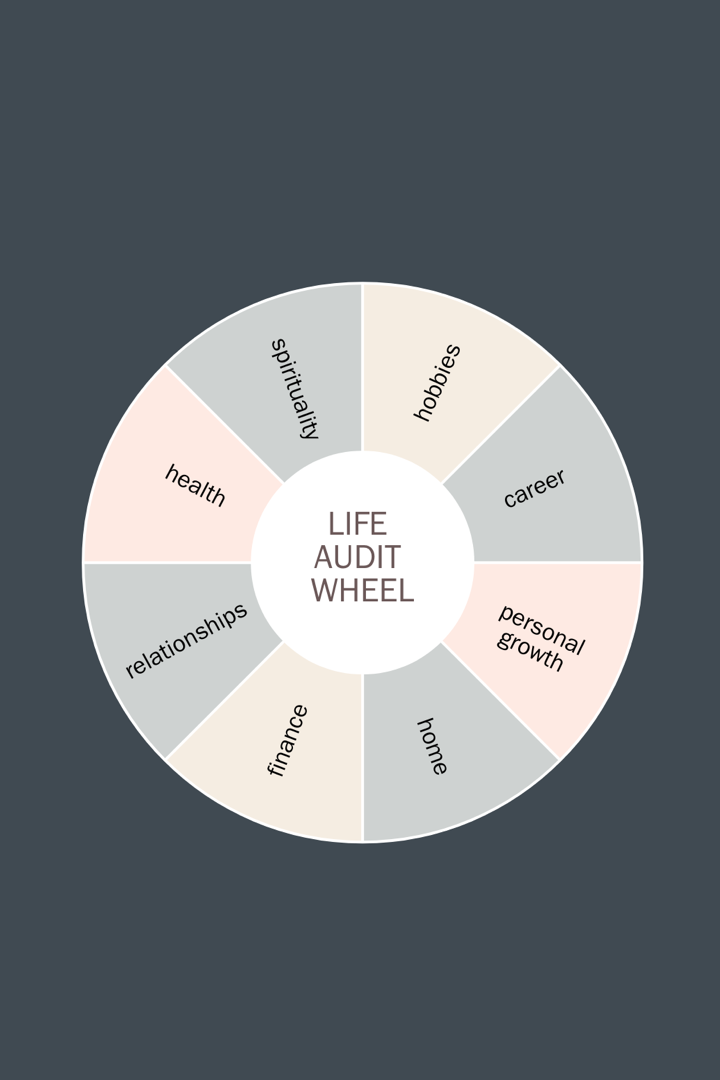
While I love New Year’s resolutions and goal-setting, I think the missing piece is often the pre-work, aka the reset and life audit. It may sound overwhelming, but a life audit is one of the easiest ways to step back and evaluate the different areas of your life. Life audits help you identify what's working, what isn't, where you want to be, and what steps you need to take to get there.
Think of a life audit like a slingshot: you go backwards (the reflection) to propel forward. You get to examine the big picture and the tiny details (aka habits) through this personal check-in that allows you to live more intentionally instead of simply going through the motions.
Now that I am in my 30s and school is well behind me, I try to make a point to do a life audit at least every few months (ideally once a quarter, or 4x a year) in order to stay on track. The days are long but the years are short, and having a clear picture of where I’m at and where I want to go is key for not just hitting goals, but living a life that feels good.
Whether you're entering a new season of life or just feeling stuck, here's exactly how to do a life audit that leaves you with a clear plan for moving forward.
how to do a life audit: a step-by-step guide to reset your life
A life audit is a structured reflection on the major areas of your life. Rather than focusing on one goal or one habit, it looks at the bigger picture. You get a bird’s eye view of your life as a whole, though as you move through the process, you can choose a key area or two to focus on moving forward.
The most effective life audits focus on these two key questions:
What's going well?
What could be better?
The more honest you are, the better. Even the littlest things can make the biggest difference. For example, my life audit has showed me that I sleep better when I set my nighttime routine 10 minutes before my roommates, and that packing a change of comfy clothes is worth the hassle of overpacking.
Keep in mind that the purpose isn't to judge yourself or strive for perfection; it's to understand where you currently are so you can make decisions that better align with the life you want.
before you begin
I recommend setting aside 30–60 minutes. Life audits seem daunting at first, but once you get started, you really hit a groove and don’t want to have to rush at the end. For my big audits (beginning of the year and half-way point), I set aside at least an hour, closer to 90 minutes.
As far as where you do your life audit, that is up to you. I prefer sitting at my desk because it’s where I feel the least distracted. If ambiance is what gets you in the right headspace, head to a coffee shop or sit outside in the sun.
You will need a notebook/ journal or a blank document. I personally complete my life audits on blank paper because I want the ability to write freely and move from category to category as random thoughts pop in my head. I’ll move my key takeaways to the notes app because that’s easier to reference on a daily basis, but the bulk “brain dump” is done on paper.
step 1: audit each category of your life
For each category, rate your satisfaction on a scale of 1–10. Don’t overthink it; you want to capture that instinctual opinion because it’s often the most honest.
Next, reflect on why that number comes to mind. I do this in a bullet point list, but some prefer to free-write paragraphs. What helps me is to make a pro and con list; I’ll share what is going well in that category, as well as what isn’t. I ignore the rating at this point; I’m not trying to write things that “match’ the number; I’m writing out every single thing that comes to mind.
Be as detailed as possible! This is where you might find little gems that are easy to change but make a big impact. For example, I learned that by skewing my bedtime 10 minutes before my boyfriend, I fall asleep easier and my sleep is more restful overall.
The categories can obviously be adjusted based on where you are at in life, but the main ones I focus on are:
Health - physical and mental
Ex: sleep, stress, diet, time spent outside, etc.
Relationships - romantic, family, friends
Finance - saving, spending, etc.
Home
Ex: for me outer order = inner calm so I will talk about areas that have become an eyesore, if I’m the only one unloading the dishwasher, etc.
Personal growth
Career - co-workers can go here or in the relationships category
Hobbies - anything fun! Doesn’t have to be a straightforward hobby, but remember that life is meant to be enjoyable, even if only in little ways
Spirituality - can be religious or simply boiling things down to what is and is not giving you peace of mind
For me, I judge my life quality on peace of mind more than happiness. I struggle with anxiety and happiness is fleeting; I’m much more okay with being in a “blah” mood than stressed or worried about something.
Don’t worry about goals or action steps yet. If something comes to mind, you can obviously write it down, but this step is all about laying the groundwork and doing a full assessment.
Another thing to keep in mind: recognize what habits you have, whether it is calling your mom once a week or running late to social events. Any pattern, intentional or not, is worth writing down.
I’m all about free-writing whatever comes to mind, but if you need a jumpstart, here are some key questions to ponder for each category of your life audit:
Am I spending time intentionally?
What thoughts come up most often throughout the day?
How do I talk to myself?
Am I making time for rest?
What do I do for rest? Does it recharge me or drain me?
What am I doing when I lose track of time (in a good way)?
Who do I want to spend more time with?
Are there any conversations I've been putting off?
What are my boundaries with others?
What promises do I keep with myself, and what do I break?
When do I spend money and feel good about it? When do I not feel good spending money (or after)?
Which friendships energize me? Which feel one-sided?
Am I making enough effort to maintain meaningful connections?
Do I want to meet new people?
What do I do just for fun?
When was the last time I tried something new?
Do I make time for anything fun outside of work?
Am I making time for reflection?
Do my daily actions align with my values?
What helps me feel peaceful?
What are my pet peeves?
What consistently annoys me throughout the day?
What am I still dwelling on? On the other hand, what do I consistently reminisce on?
If you're in a relationship, ask yourself:
Do I feel loved and supported?
Do we communicate well?
Do we spend quality time together?
Are we stuck in a rut, or do we feel comfortable in a good way?
Is there anything we've been avoiding?
If you're single:
Am I happy being single?
Am I making space for the type of relationship I want?
What qualities matter most in a future partner?
Career:
Do I enjoy my work?
Am I challenged?
Do I feel appreciated?
Am I learning new skills?
Does my job support the lifestyle I want?
If nothing changed for five years, would I be happy?
Finance:
Do I know where my money goes each month?
Am I saving consistently?
Do I have an emergency fund?
Am I carrying unnecessary debt?
Are my spending habits aligned with my priorities?
Am I spending to compensate for other areas of my life (ex: treating friends so they’ll like me)?
if all of your problems are other people
Some life audits suggest focusing only on yourself, but I recommend listing EVERYTHING, including conflicts with other people. No, you cannot control other people, but a life audit will help you identify points of friction, irritation, and conflict. You can then adjust your perspective, your reaction, or behavior.
I’m not saying doing the dishes for a sloppy roommate is the resolution, but if 99% of your frustrations are roommate-related, you know you probably need to start looking at new options well before your lease is up.
step 2: list out your best-case scenarios
Whether you’re a dreamer or prefer the structure of goals, this is the step where you list out exactly what would make each category a 10/10 for you. Dream as big as you want, but be a little realistic. For example, winning the lottery would be wonderful, but that’s rare and also not something you can control. A better ideal is an emergency fund of $7,000 that would allow you to quit your awful job. That’s something you can actually work with (and towards).
step 3: reverse engineer your life
Once you have your current life on paper, as well as what your ideal life looks like, you can now reverse engineer and figure out what your gaps are, as well as the action steps that will get you from point A to point B.
Think of this part of the life audit as a ladder or bridge. You want to fill in the middle with what you can change, do, or adjust in order to get closer to a 10/10 for each category.
This part may seem overwhelming, but keep in mind that this section is not your to do list. You are brainstorming different ways to address your pain points and solve problems, but we aren’t coming up with the action steps just yet. So think of this section as “throwing spaghetti at the wall” and list out anything that would be an improvement.
For example:
Health is a 4/10 and the key themes that came up were: no energy, headaches, hard time falling asleep, weight is high because I can’t work out, no time to meal prep, etc.
10/10 would look like: consistent workouts, healthy weight, eating fresh foods, falling asleep easily, able to function on 7 hours of sleep
As you reverse engineer, some of the action step ideas might be:
Scheduled workouts, starting with 2 on days I can control (Saturday and Sunday)
Waking up earlier on weekends so that I can go to bed earlier
Buying 2-3 salads at a time from restaurants; costs more but is the clearest path to eating healthier right now
Walk in the parking lot for 5 minutes when work ends before driving home
Being strict about what times I drink caffeine to get my body on a system (vs cutting it out completely, or switching to a caffeine source you actually don’t like)
step 4: identify action steps and pick your areas of focus
As you move through step three, you may notice themes or patterns that keep popping up (ex: work is causing most of the negativity). In this case, that will become your natural area of focus. because they’ll have the biggest positive impact on your life if they improved.
On the other hand, you may want to pull different steps from a few different categories for general improvement. Both work; there’s no right or wrong approach.
That said, I have found that picking one habit from every category doesn’t cause much improvement unless I’m able to blend those steps seamlessly into my life (ex: habit stacking). While every action step might look appealing and “easy” to do right now, pick a few (2-5) to focus on over the next few weeks.
For me, I like to pick 3 habits and 3 checklist items. Getting one checklist item done within a week or two builds momentum, and 3 habits is the sweet spot of mastery without having to overhaul your entire life. My last life audit looked like:
Habits (set an alarm on my phone for each to make it easier to complete):
Turn on diffuser at 8:30PM to start bedtime routine.
Set out my clothes the night before.
Drink a protein shake a day.
The time varied; I scheduled this the night before as part of my time-block routine. When I don’t schedule it, I put it off and then push it to tomorrow.
Checklist:
Schedule coffee with a friend - just get it on the calendar! Bonus points if you can do it before your next audit, but just having that date locked in is one step forward.
Buy a travel case for the random napkins and straws that accumulate in my car; give them one dedicated space for a more organized look and feel.
One hour of deleting screenshots on my phone.
As you can see, I made these as small and easy as possible! Once you have mastered (or completed) them, you can add more. If you start with too high of stakes and then don’t finish them or make progress, it can derail your momentum.
Some other ideas:
Schedule a doctor’s check-up, dentist appointment, or sports massage.
Drink one large water bottle a day.
Listen to one podcast a week.
Bake something once a week as a screen-free activity.
Read one book.
Transfer $50 to savings.
Open a Roth IRA.
Plan a day trip or vacation.
Start a daily gratitude list.
step 5: schedule check-ins
In order to get the most out of your life audit, you need to revisit it from time to time to ensure you’re putting it into action. During your check-in:
Reflect on your progress.
Identify if your actions steps or goals are still in alignment with your life.
EX: One time, my goals were to spend more time with friends, stop eating out, and double up on my workload. Those all felt equally important to me, but were not in alignment with each other! I realized I needed to move my social goals to the next quarter, because hitting my work goal and eating healthy were most important to me.
Plan your next action steps.
You now have the priceless feedback of what worked for you and what didn’t. Maybe you need more checklist goals to keep momentum going, or you’ve learned 5 habits is too many to add at once.
I recommend doing check-ins frequently. As I mentioned, I complete a life audit every quarter, but I like to do my check-ins once a month. You may want to do them more frequently, but I already have a weekly goal check-in that is connected to my life audit, so I only refer back to my entire life audit once a month.
step 6: measure your success
I save this step for towards the end, because it can be a bit discouraging. Add up all of your scores from each category; you can leave that as a raw total or divide them up to find the average.
Take note of which areas scored the lowest (and highest). This doesn’t define your life, but see it as a baseline you can improve upon.
There have been times when my average was lower than how my life felt, and other times when I saw it as motivation to improve even more - sometimes it resonates and sometimes it doesn’t. If you are a numbers person, you may like the data. If you aren’t, don’t dwell on it or let it define you (or your life).
step 7: schedule your next life audit
A life audit isn't something you do once and forget. Priorities change and goals evolve, so I recommend repeating the process. I do this 4x a year, but I have a friend who does it once a year. It’s up to you and what feels right. Make sure to schedule it like an appointment and add enough time to complete the process; this is one way you can show up for yourself and prioritize your well-being.
A life audit isn't about criticizing where you are; it's about recognizing where you want to go, and coming up with an action plan to put your goals into motion. Remember, a fulfilling life rarely happens by accident; it comes from paying attention to the different areas of your life and making intentional choices over time. Show up for yourself; you deserve it.
I hope my life audit routine helps you!


Exactly how to do a life audit with this step-by-step guide to evaluate your health, relationships, career, finances, hobbies, spirituality, and personal growth. A gentle guide for 30-somethings who feel overwhelmed and behind in life.