Travel Safety Tips for Women
I absolutely love traveling and think it’s something everyone should prioritize. I’ve traveled mostly on my own; the fear of something bad happening shouldn’t stop you from doing what you love or exploring other cultures. Below I’m sharing quite a few tips for staying safe while you travel, whether you’re with a group or alone. Take what works, continue to research, and most importantly, trust your gut! Your subconscious processes so much information, so if something feels off, it probably is.
Lastly, you are capable! Don’t let these tips scare you; they’re meant to empower you and help you enjoy your travel experience safely.
travel safety tips for women: how to stay safe before & during your trip
Don’t hold the door of secured buildings open for anyone. These doors are secured for a reason; don’t give invite a stranger in. It may seem impolite, but they’ll get their key out and open it for themselves if they’re meant to be there.
If you’re traveling via train, try to sit near the conductor (typically the front car).
Buy a case of water. Or bring a few reusable bottles. Just have an emergency stash of water that’s more than one 16oz bottle. Traveling dehydrates you and you can’t always rely on the tap.
Get in the habit of bringing water with you whenever you leave the room; you never know how long you’ll be out or if the weather will dehydrate you quicker.
Also, buy a fresh water bottle (or refill yours) when you land at the airport (or get to the train station). We’re usually in a hurry to get to our hotel, but anytime I skip this, I regret it. It takes two minutes and then you arrive to your final destination with one less thing to worry about.
Have emergency money saved for unexpected ride shares. I’ve heard about friends walking sketchy routes because they didn’t want to pay for an Uber because they’d already stretched their budget on the trip. Please save a little extra money just in case; your safety is priceless.
Use reputable agencies for excursions or tours. Trust your gut. If someone says they’ll cut you a deal to get paid directly, it’s probably not worth the risk.
Be cautious with pubic WiFi. Not needing to figure out the password is convenient, but it puts you at greater risk of being hacked. Try to avoid logging into banking sites especially. Good hotels will have trustworthy networks with passcodes.
Just because you can, doesn’t mean you should. This applies to “hot zones” (people, places, things that are triggering) or anything that can compromise your mental clarity (not just physical) and skew your perspective or peace of mind.
what to know ahead of time
Check travel advisories before making international plans. This includes updates on health trends, not just crime.
Enroll in STEP. This is free; you enroll your trip aboard so the Department of State can move quickly (and provide you with direct updates) in case of emergency.
Know the local US embassy/ consulate. If you enroll in STEP, they’ll contact you in times of emergency. Regardless, for personal emergency/ safety, I recommend familiarizing yourself with them ahead of time.
Memorize the local 911. Some countries have different numbers for EMS vs police, so check that out.
Learn the local culture and etiquette. You don’t have to master the language, but being a tourist isn’t an excuse for ignorance. Learn the basic do’s, don’ts, and local dress codes.
Identify the nearest hospital. Bonus points if you know the level; Trauma 1’s can provide the highest level of care. Different countries may categorize differently, so know that, too.
For girls trips, discuss the “going off with a guy” scenario. We’ve seen too many horror stories with this, so I highly urge you to have the conversation before your trip and then confirm it upon arrival or before going out. Things can change in the heat of the moment, so you ALL need to agree before. Whether you buddy system, go as a group, or make plans to meet with the guy the next day, you all have to agree and stick to the plan, no matter what.
For larger group travel, know how you’ll all keep track of each other; I recommend sticking to the same buddy throughout the trip so there’s no confusion.
Check the extended weather forecast, plus overall trends. Obviously it helps you pack appropriately, but you want to know if the area is prone to outages, floods, or natural disasters. Sometimes rates are discounted because it’s not ideal weather (ex: hurricane season).
If the weather is inclement, download a weather service app to receive more timely updates.
Save your routes and travel directions. Screenshot them at a minimum; print a hard copy if you need to. You never know when you’ll lose service (especially internationally), so know how to read the map, follow street signs, and get where you need to go without Siri guiding every step.
Try to arrive before 4PM. Arrive while it’s still daylight; this gives you time to orient yourself. Arriving at night (especially if you are by yourself) is when things can get confusing or sketchy.
If you cannot avoid it, arrange your transportation from the airport to your hotel ahead of time, whether it’s a pre-booked Uber or the official hotel shuttle.
Also: check FlightAware to see if your flight has a tendency to get delayed. We tend to panic over things we can’t control; if you have a multi-leg travel day, knowing the flight patterns will help you plan accordingly.
what to pack
Leave valuables at home. Don’t rely on the hotel safe; not all hotels are equally secure and you don’t know what employees have access to them.
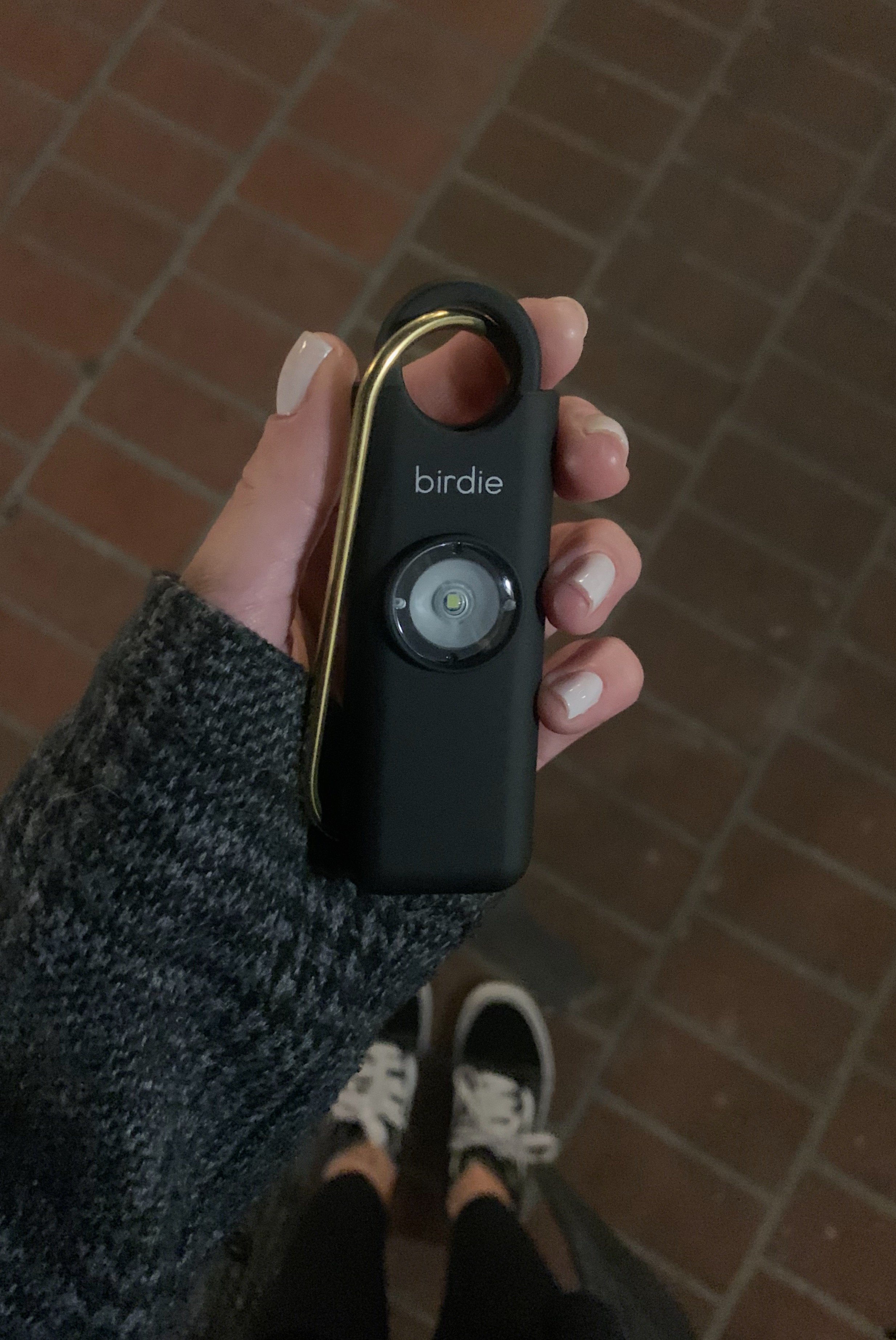
Carry an alarm or whistle. Mace/ pepper spray/ knives aren’t legal everywhere; they can also get taken by airport security, so it’s more reliable to keep an alarm or whistle instead.
Have a portable charger. Phones are strange and can go from 80% to 20% quickly; this cheap investment is SO worth it. Bring it while you’re out exploring (especially at night). And if you’re traveling in a group, it’ll also save you from fighting over a wall outlet.
Bring a mini first aid kit. Include your prescriptions (as well as paper copies, should you need to refill if there’s an emergency), sunscreen, and dramamine. If you’re somewhere more remote, you want to physically carry this around with you as you explore. They’re small, compact, and light, so it’s not too cumbersome.
Pack a mini flashlight. They’re lightweight yet powerful. You have one on your phone, but in case of an emergency, you want to preserve that battery for as long as possible.
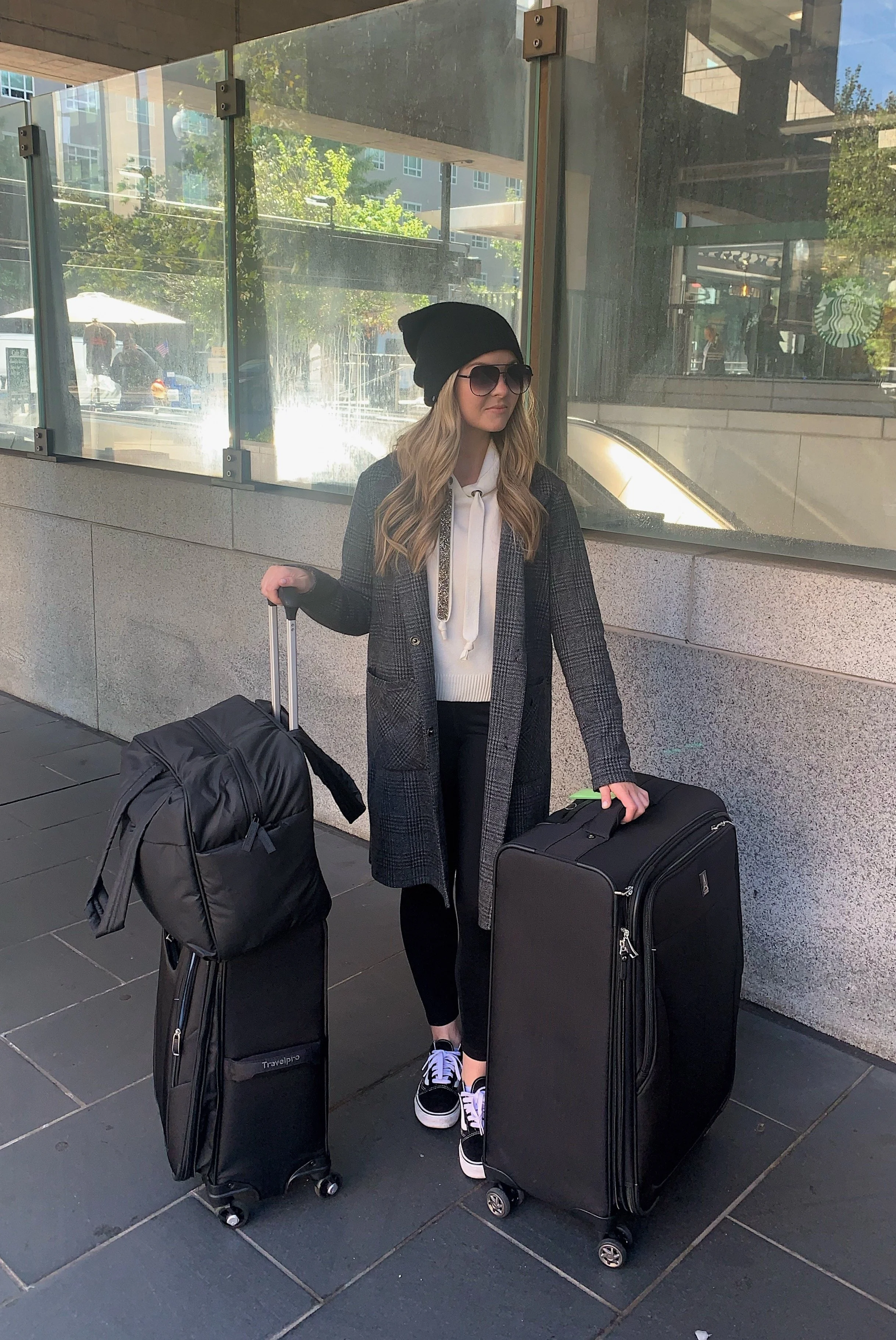
Be mindful of how you carry luggage. And know that carrying luggage identifies you as a tourist.
Keep your backpack on your lap while you’re riding public transportation (trains, buses, etc.); someone can slide it from under the seat to pickpocket you.
You get mixed advice on this, but I personally wear my hair down when I’m walking around with a backpack. If your hair is up (or in a pony) someone can more easily grab the backpack (or your pony) to pull you down/ away.
hotels, air b&b, lodging
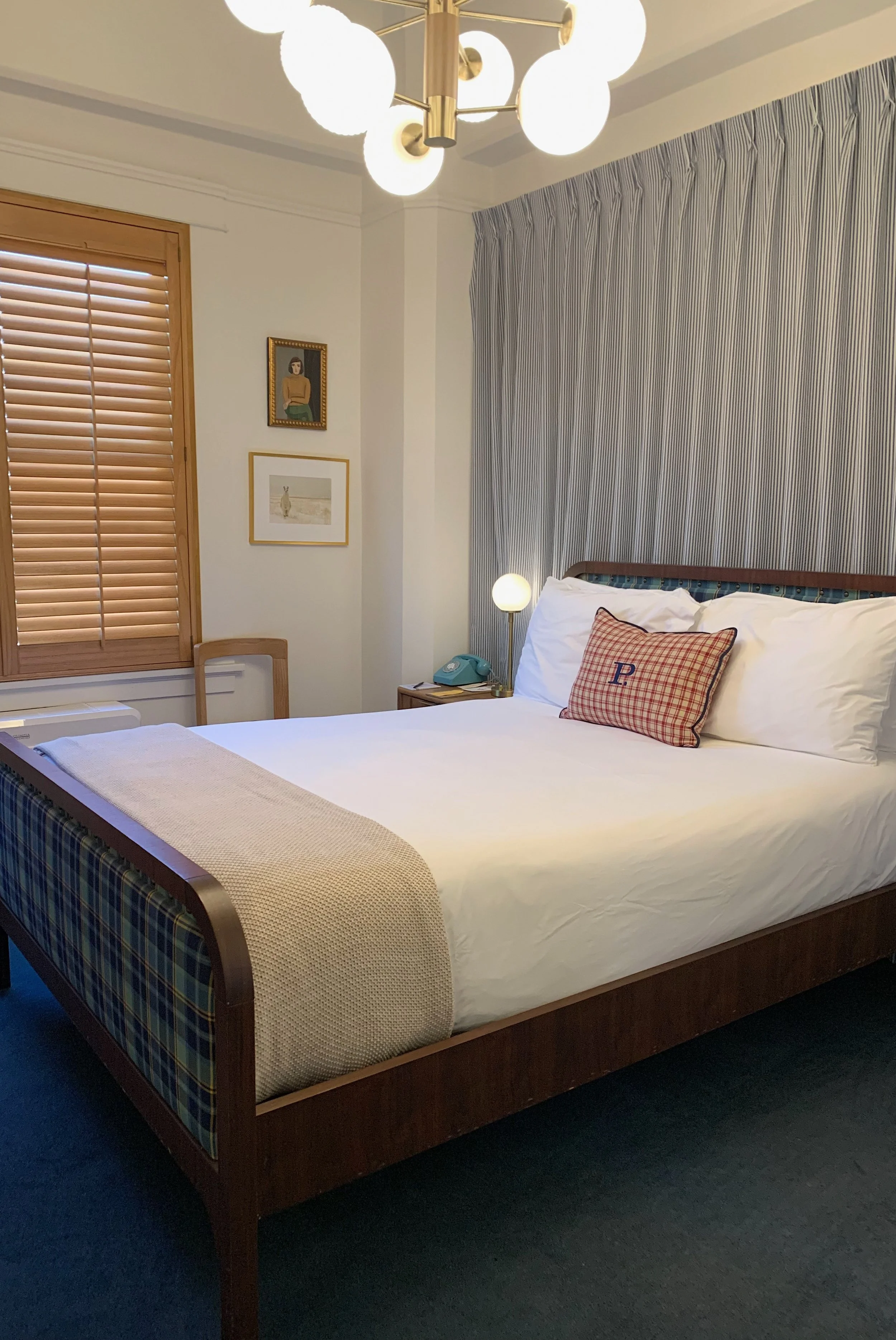
Book your room for two. You may think solo traveler = discount but it’s rarely that much money saved (if any). When you check in, ask for the second key, too. Leave it in the room, a second bag, etc. but make it known upon check-in that there’s a second traveler.
Remember: the front desk attendant can be friendly and kind; you don’t know who else is listening, though! That includes other travelers waiting in line behind you.
Safest hotel room preferences:
no connecting doors (even if they lock)
no balcony, especially if on the ground floor. Remember people can climb from one balcony to the other, so if you do have one, keep the door locked always.
never on the first floor
away from the end of the hallway or exit
not directly in front of the elevator
If the desk attendant says your room number out loud, it’s okay to switch. You never know who’s eavesdropping, and guest safety is never an inconvenience to a hotel.
Another hotel tip: when you check in, have them make a note on your file to not give a key replacement to anyone without your permission.
I’ve needed a replacement key before and all I had to do was say which name was on file to get one. The room was under my mom’s name (aka another female traveler) and they didn’t verify my identity or check with her. Too easy!
Make sure your Air BnB has a fire extinguisher, smoke and carbon monoxide detectors, as well as their power outage plan. Check to make sure the extinguisher is in good condition and ask when the detectors were last checked; the more specific answer, the better.
Some Air BnBs don’t allow candles during your stay, but you may want to know if they have any for emergency purposes (or a backup generator, etc.)
Familiarize yourself with the evacuation map. Especially if you’re in an Air BnB or rental, as they might not have one visibly displayed.
Bonus tip: know how many doors are between your room and the exit in case there’s smoke/ you need to crawl.
Pay for quality lodging. You don’t have to overspend, but know that the cheapest hotels are sometimes in less-than-ideal areas. Pricing can sometimes deter some crimes of opportunity, but not always. Crime still happens everywhere, so keep your guard up.
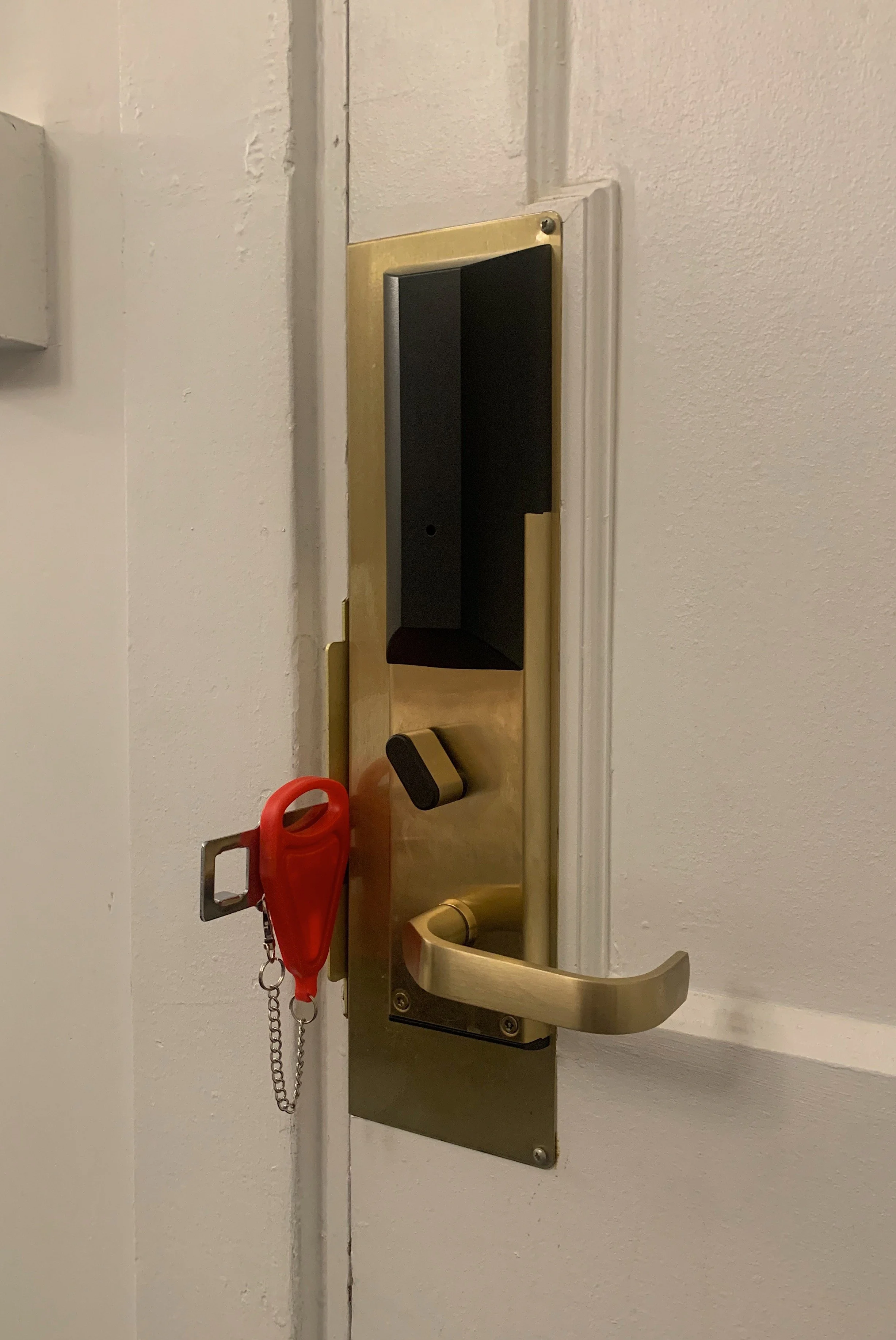
Use the deadbolt and get a door stopper. They provide an added layer of security, especially once you’re all tucked in for the night.
Use the “Do not Disturb” sign. It’s not infallible, but it’s one more barrier that prevents access to your room.
If you need help with maintenance:
Verify with the front desk. Ask for the name of the person and arrival time, so you aren’t opening the door to random knocks.
Secure all valuables. Seems obvious, but make sure your wallet (and ID), cash, purse, jewelry, and laptop are stored away safely.
I also like to tidy up in general so there is a clear walking path (no piles of clothes). Clear the floor of anything you could trip over; push luggage against the walls or stick it in the closet.
Ask for ID. Confirm the name with what the front desk told you. Hotel staff should be in uniform and carry an employee ID. Ask to see this through the peephole before opening the door.
Ask for an escort. The hotel staff is there to make sure you are safe and enjoying your stay. It’s totally normal to ask for an additional staff member to be onsite during the maintenance work if it makes you feel more comfortable.
Prop the door open during work, but stay visible. This advice can contradict what others say, but I personally prefer to have the hotel door propped open (maintenance should have a door stopper; their cart/ toolbox works, too) so that I am not locked in the room with them (remember the hotel doors lock automatically, even if you leave the deadbolt open).
Some will suggest you stay on the phone with someone during maintenance work. My advice is have the phone on speakerphone in your pocket, but don’t actively talk to someone. That distracts you; stay focused on your surroundings and what is actively in front of you.
Once they leave, test the locks. Make sure the door fully shuts and all locks work. Even if they did not work anywhere near the door, it’s not hard to apply a tiny piece of tape that prevents the door from fully shutting.
Reschedule or ask to change rooms if you’re uncomfortable. It’s not required for maintenance work to be completed during your stay, especially if it’s something supplementary (ex: mini fridge needs work, but you don’t plan on opening it, or heater needs an update but you’re visiting in the summer).
chain hotel vs boutique hotel vs air bnb
Chain hotels have standardized safety protocols, staff training, and are typically busier and well-lit.
The downsides: predictable setup, and more people = more anonymity.
Boutique hotels have more personalized service and typically fewer rooms, but the security is a lot more variable. Always check the location; some boutique spots are tucked into quieter areas that seem ideal, but might be less safe.
The downsides: fewer resources (such as 24-hour staff on-site), and they may not have standardized vetting for employees.
Air BnBs are typically private spaces without shared walls (ex: whole house to yourself). When booking, you have more control over the neighborhood, ratings, and features.
The downsides: you run the risk of false listings, lack of on-site (or timely) support, and there are no universal regulations; everything is entirely up to the host.
running, walking, exploring
If you’re walking at night, walk against traffic. You will walk towards other people and can make confident eye contact. It’ll also make anyone walking behind you/ following stand out more.
Do not walk or escort anyone anywhere. As kind as you are, you don’t have to prove it to a stranger.
Time your runs/ walks. This is a great way to explore somewhere new; time it to coincide with morning/ evening commutes.
Stick to busier streets, too; it may not be your best run, but it’ll be safest.
Utilize the reflection of buildings. If you’re walking in a city, you can glance at your reflection in the building rather than turn your head to check behind you. Some safety advice can be contradictory (ex: walk confidently vs consistently scan your surroundings plus behind you), so I try to make things a little more subtle whenever I can.
Familiarize yourself with the route ahead of time. Don’t bury yourself in your phone staring at directions; this can be an obvious sign of vulnerability to anyone who catches a glimpse at you/ your screen.
Another option: one headphone in speaking directions in real time, no headphone in the other ear. Headphone safety is controversial, but this is a good balance for me, personally. Also, turn off the noise-cancelling feature!
If you’re standing around or waiting, stand against a wall. Most regulars do not stand right at the train tracks, so it’ll make you look more like a tourist. This also protects your back so no one can sneak up behind you. Ideally pick somewhere with good visibility for you to scan around, especially the exits.
When you get in an Uber or taxi, keep your navigation on. Make sure you’re in fact headed to your intended destination.
wallets and bags
Don’t keep your entire life in your bag. Simple is best while you travel: no more cash than needed, and 2 credit cards (primary and backup). Be able to freeze the cards if something happens.
Have a scarf, shirt, or sweater in your purse. Keep it on top of your wallet/ valuables; it makes it harder for someone to reach in and steal your lifelines.
Clean up your keychain. You might have 5+ keys or swipe cards on you at any given time (your house, work, mom’s house, gym pass, etc.) but you don’t need them all when you’re traveling. Take off whatever isn’t necessary.
I personally keep my own key plus the key to my mom’s house, just in case of emergency, but everything else goes.
situational awareness and points of interest
Be fully present of your surroundings. Do a quick scan, plus a “vibe check.” Familiarize yourself with the place and the people in it.
Make this a habit, even if you’ve been to that place 100 times. The people who sit around me at a baseball game change and thus, the energy of that section is always different.
Know two ins and outs. If something happens, everyone goes out the way they came in. Avoid the herd/ trampling and make sure you’ve identified ideally two other exit points at different sides of the room; be sure to look behind you, too.
This can be a window, not just a door.
Have a plan. Know your evacuation route, identify what you could use as cover or to hide, and what might help you fight should you need to.
Wood, steel, and tile make for good cover.
Glass mugs, silverware, etc. can be used in a pinch to fight.
Be confident in your plan. When it comes to acting on your plan, don’t second guess yourself just because everyone is going one way; remember that sometimes “the blind leads the blind.” Use discernment!
Do regular scans. Just like how you don’t only look forward while you’re driving, continue to check your surroundings, including behind you. I’ll use the reflections of buildings to do this if I’m out; turning your head all the way behind you changes your force of gravity and can leave you vulnerable.
Check stairwells. These can be confusing, doors can be locked, etc. Know where the stairs empty out to and what stairwells you might have to use.
I always ask front desk at hotels their methods for locked/ unlocked stairwells, should an emergency occur.
Elevator etiquette: you know the basics, but when you’re traveling in a group, make sure you don’t overcrowd the elevator. It’s better to go in two groups than cause the elevator to freeze or malfunction.
Also, it’s ok to check the emergency phone. Just tell the operator you’re checking it when they answer.
hard vs soft targets
Some places are hard targets, so be extra aware. 3 P’s that increase the risk: people, place, press.
The more populated, popular, and visible the event is, the higher risk of it being a target. Attackers want attention; hence the third P, press.
Symbolic places can also increase risk. These are places like the White House or the Statue of Liberty, but it also includes Yankee Stadium and the Golden Gate Bridge.
Soft targets are becoming riskier, as there’s less security. These are places like restaurants, schools, and movie theaters. Be aware of your exits and have at least two paths!
self-defense
Get off the “X.” If things feel off to you, don’t wait for things to actually get bad to confirm it. There’s this value of “stand your ground” but that’s not always the strategically best method to deal with conflict.
This also applies verbally: if someone is provoking you, don’t catch the ball. You don’t need to dignify communication with a response.
Embrace confrontation if needed. Don’t confuse confrontation with a verbal argument. Clearly saying “no,” expressing boundaries, and ending conversations on your terms/ timing are key communication skills to have.
If you’re a people-pleaser like me, you might have a tendency to over-justify responses. Remember you don’t owe anyone an explanation and people will sometimes use that to manipulate you. “No” is a full sentence.
If you feel threatened, get LOUD. Sometimes being loud and yelling before someone even gets close to you is enough to scare them off. It’s better to look crazy than allow someone to get too close to you, let alone attack you.
I tend to freeze up in high-stress situations; I’ve learned my throat constricts and I sound like a pipsqueak. If you also struggle to be loud: get a whistle or alarm you can physically pull (so you don’t have to rely on your voice).
Freeze, flee, fight, fawn: know what your instinctual response is. I avoid confrontation; I’m not going to yell at a bad boss and quit. These are clues in my everyday life that show I am much more likely to freeze and flee than fight. While you won’t ever be 100% sure of how you’ll react until you’re in the situation, you can use other stressful situations (even if they’re low-stakes) as clues to know yourself better.
Do not confuse “fight” with hand-to-hand combat. The general rule of thumb here is hit and GO.
That being said, if you’re going to fight, you have to commit. Don’t let the fear of physicality scare you.
Know the one-shots: strike to the groin, shin, or throat. Or poke the eyes.
Use your elbows and knees; don’t rely on your fists.
If you’re going to hit, be prepared to be hit back.
Hear me out: UFC fights are typically 5 minutes per round. That sounds short, but that is a LONG time when you are fighting professionally, let alone fighting for your life. If you choose to hit back, t’s going to be a lot more exhausting than you realize, even if your adrenaline is going. This is where I recommend practicing with a self-defense class or at a gym. Learn how to get hit, regroup, and then hit again if needed. The first time you fight should not be in a life-or-death situation.
Also, I’m all for female empowerment and truly believe women are scrappy and resourceful, but biologically, men are strong. I lift weights, kick box, etc. and believe you should be confident, but the reality is that a man is likely to be stronger.
Unpopular opinion: self-defense classes are great in theory, but one-off classes aren’t as impactful as you think. In these chaotic situations, you go straight into instinct mode and most likely will not remember the moves you practiced once. So either commit to learning jiu-jitsu or defensive moves on a regular basis until they’re instinct, or know you can’t fully rely on them.
Should you want to fight, learn your limitations. Work with a studio or expert that can introduce you to different styles and techniques that will highlight your strengths and compensate for your weaknesses.
Practice getting out of a wrist grab. Sometimes someone will do this “casually” at a bar if they don’t want you to walk away. Attackers can easily grab both of your wrists with one hand, too. I don’t rely on my ability to escape exclusively, but I feel better that I’ve practiced it.
I hope that these tips help you and allow you to travel with confidence. Don’t let fear stop you from living your life; you are much more capable than you may think.