Wave Spray vs Texturizing Spray
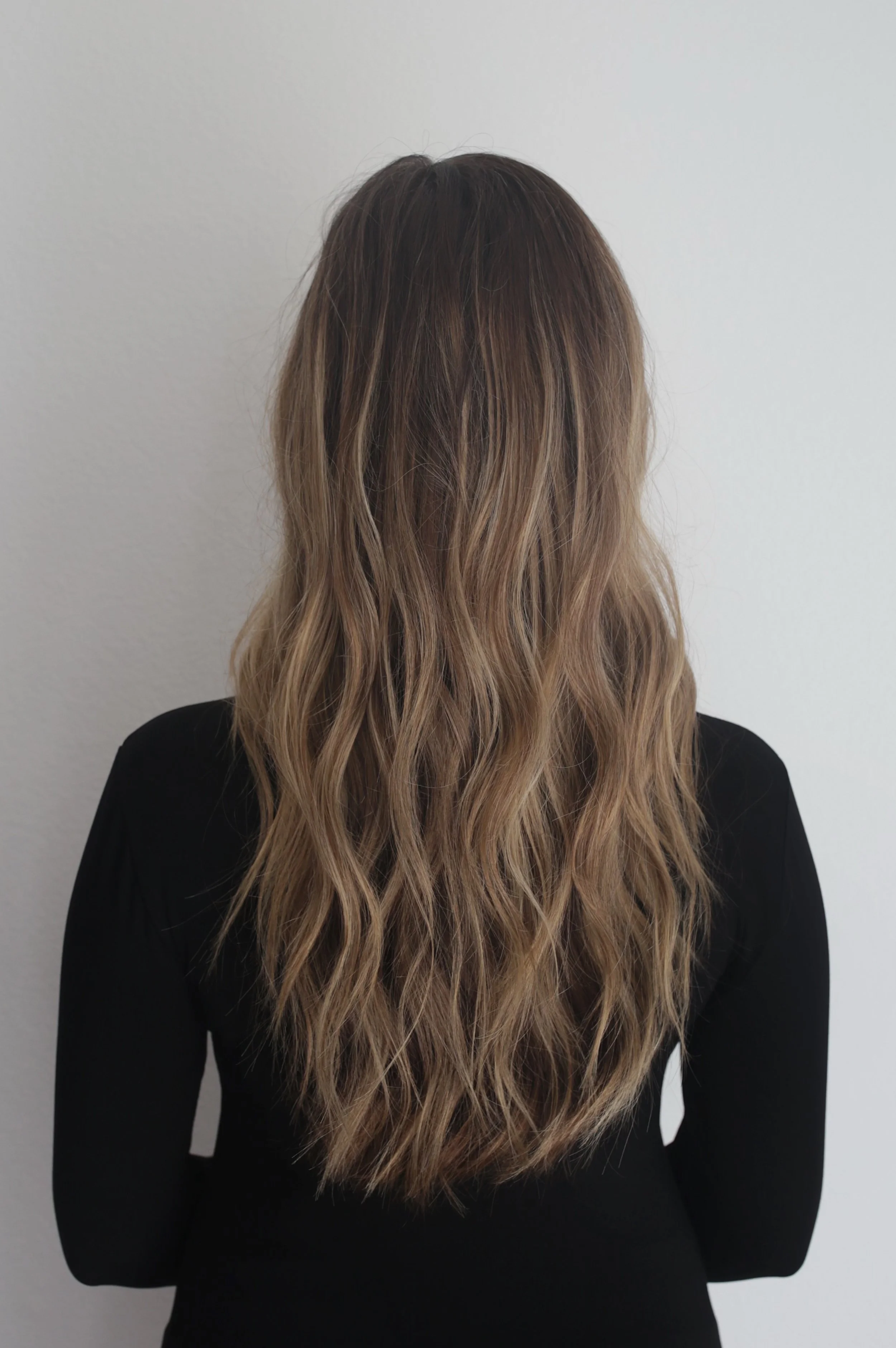
One hair look that will never go out of style is the effortless, lived-in beach wave look. Universally flattering, they give you just enough texture to look like you put in effort without so much structure that you look overly formal and polished.
Two products that help give you lived-in waves are wave spray and texturizing spray. While both are designed to enhance texture and give your hair that lived-in look, they work in very different ways depending on your hair type and the finish you’re going for.
Wave spray is typically used to enhance natural waves (or create them on straight hair), giving you that soft, beachy definition without needing to use a hot tool. On the other hand, texturizing spray is often used to add volume, grit, and hold. Useful for all hair types, think of it as a hybrid between a dry shampoo and a light hairspray.
That said, while you could use both, you technically don’t need to. Below, I share exactly how wave spray and texturizing spray compare to each other and which one will work better for your hair type and goals, whether you want movement, definition, lift, separation, or a little bit of everything.
PS: also curious about sea salt spray? Check out my guide on how sea salt compares to texturizing spray with before and after comparison photos.
wave spray vs texturizing spray: which should you use?
what is wave spray?
Wave spray is designed to enhance natural waves and create a beachy, lived-in look. Most wave sprays contain ingredients like salt to create texture and separation; that’s also what gives your hair the slightly gritty feel similar to how it feels after a day at the beach.
Wave sprays can be applied to damp or dry hair. They typically work best when scrunched while drying for a heatless style, though you can also use them in conjunction with a curling iron (or waver or straightener). That’s what I recommend for the best results if you have fine, straight hair (like me).
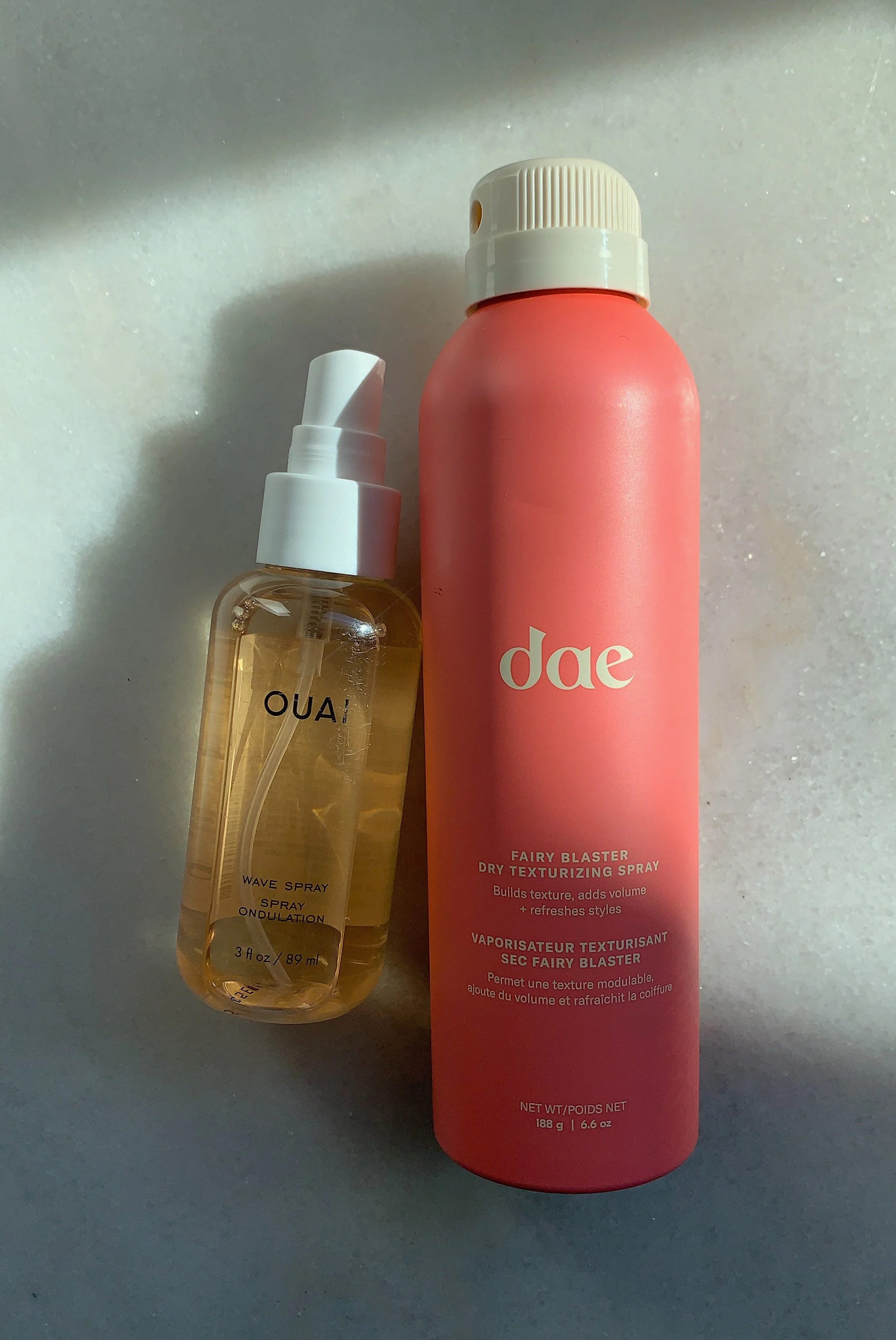
This is my favorite wave spray, though I do have a list of the Best Wave Sprays for Straight Hair that includes a few great other options, too.
pros
For all hair types: enhances natural waves/ curls or helps create soft waves on straight hair
Lightweight and flexible (doesn’t feel stiff or crunchy unless you use too much)
Adds movement and definition without weighing hair down
Great for air-drying or heatless styling
Leaves hair looking soft and natural
cons
Doesn’t offer much hold
Not ideal for volume at the roots specifically
Results can be subtle or nonexistent on very straight or fine hair (especially if you don’t heat style)
May need to be layered with other products for longer-lasting styles
Makes your hair feel gritty or dirty if you use too much
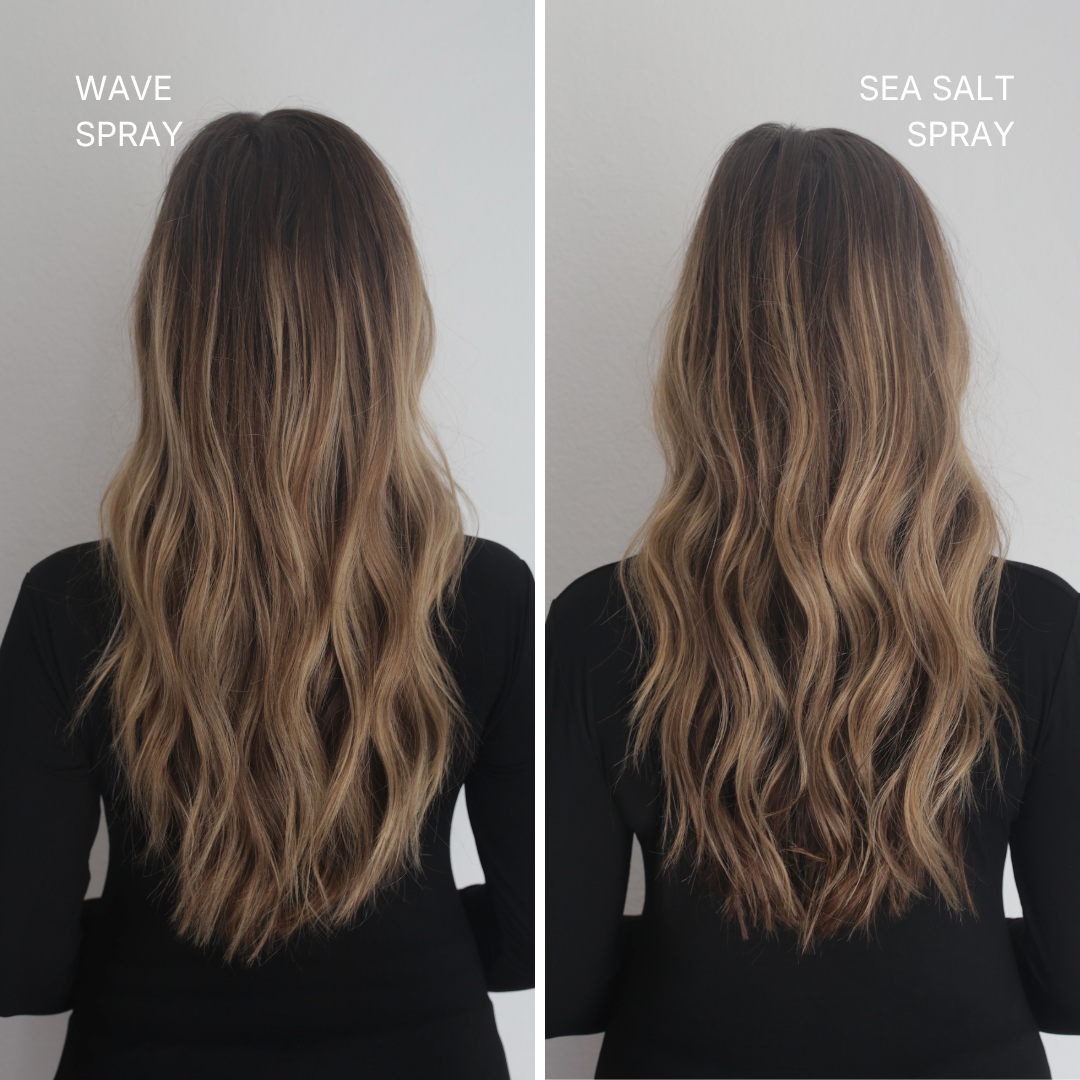
wave spray before and after
what is texturizing spray?
Texturizing spray (sometimes called dry texturizing spray) adds grip (aka texture), volume, movement, and separation to the hair.
Texturizing spray gives you piece-y, tousled waves, volume at the roots, and that slightly undone, cool-girl finish. It typically contains lightweight polymers and sometimes starches or silica to create texture without making hair stiff.
Texturizing spray a styling product, not a setting product (that’s what hairspray is for). Unlike wave sprays, texturizing sprays are usually applied to dry hair and focus more on creating fullness and separation.
You’ll find texturizing sprays at a variety of price points; I love this one and find that it’s the best mid-range option. You get tons of volume, yet it doesn’t weigh down my fine, straight hair.
pros
Adds instant volume, even for limp or lifeless hair
Creates movement and separation
Makes clean hair easier to style
Provides a flexible, touchable hold, so you can go back and re-style if desired
Adds grip, so ideal for updos and braids
cons
Can make your hair feel dry or a little dirty if you use too much
May lead build-up over time
Not strong enough to make your style last all-day in humid climates (aka more moisture in the air)
Some formulas can tangle fine hair
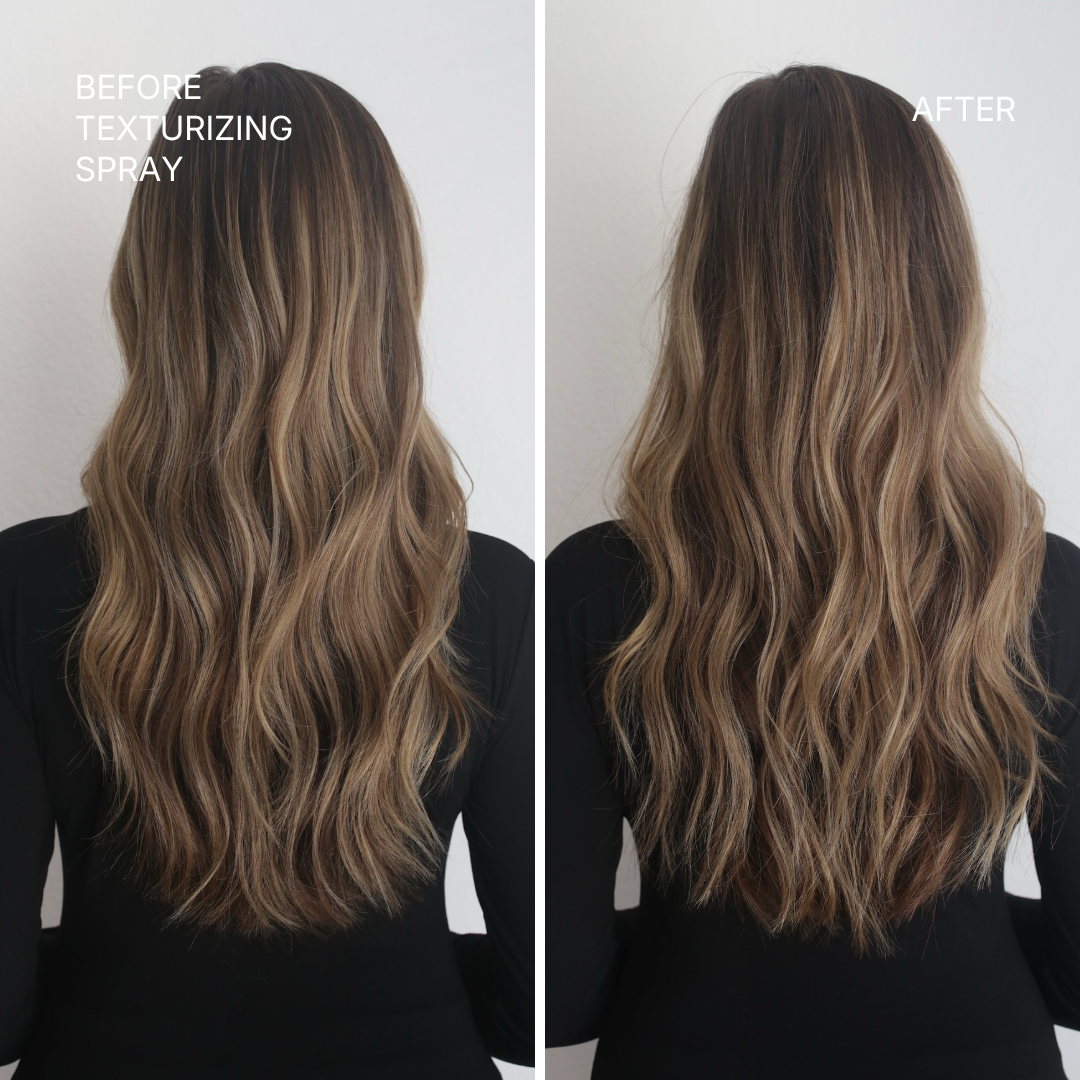
texturizing spray before and after
what’s the difference between wave spray and texturizing spray?
While both products give your hair lived-in, touchable texture, they do have key differences that make each product unique.
Wave spray is more of an enhancing product; they create beachy texture, but are best used on damp hair, unless you have straight hair.
Texturizing spray adds volume and gives you a little bit of hold, but less than you’d get with hairspray. They’re also meant to be used on dry hair.
You can use both for one style, though I’d recommend treading carefully if you have fine or stick-straight hair. Follow this order: wave spray first, texturizing spray after.
how wave spray vs texturizing spray looks
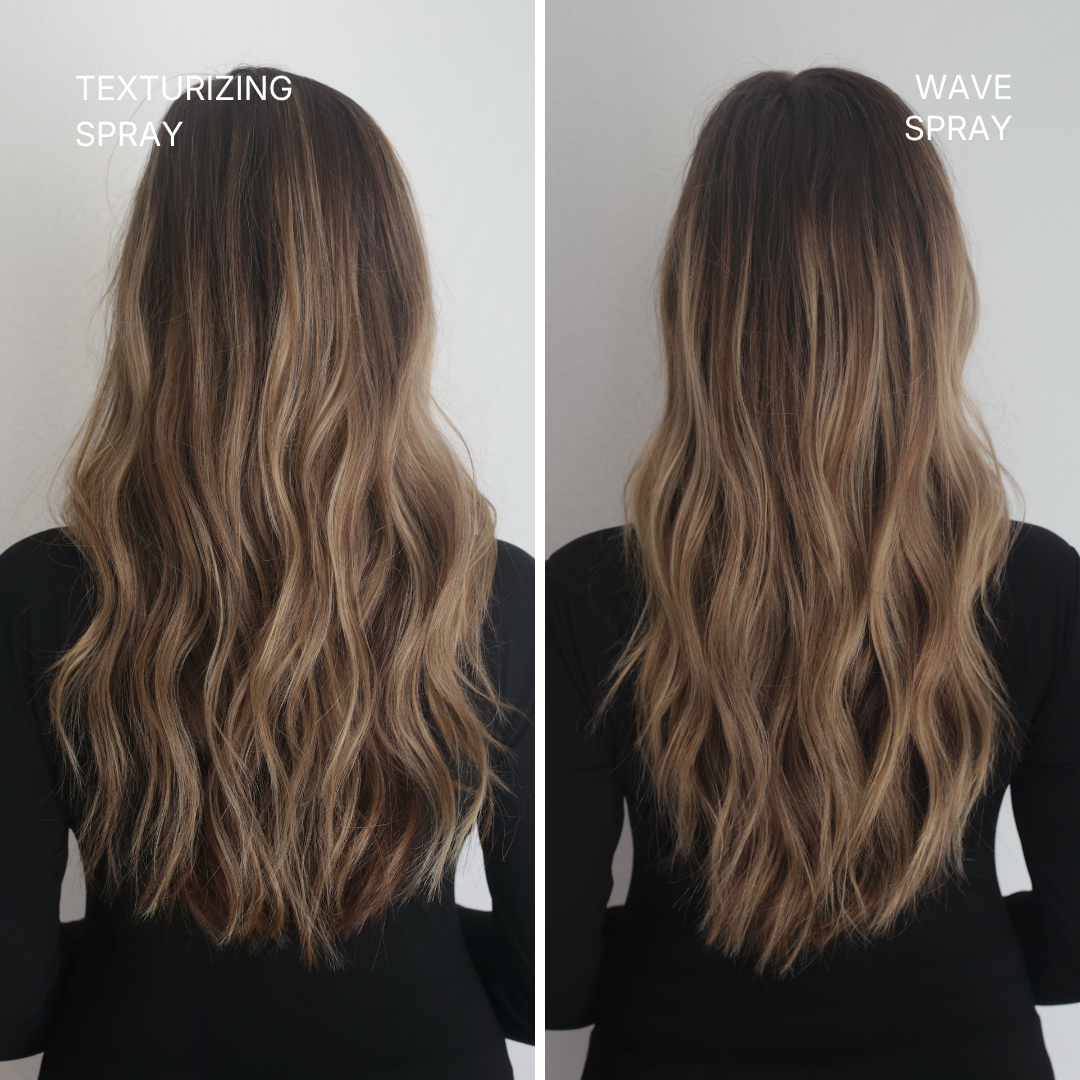
which product is better?
I wouldn’t necessarily say one product is better than the other overall, because it depends on your hair type and goals.
Choose wave spray:
If you have natural texture to your hair (wavy, curly, etc.)
If you prefer a heatless style
If you want softer, subtle waves
Texturizing spray is better:
If you have fine or straight hair
If you’re going to use a hot tool (curling iron, waver, straightener, etc.)
If you want volume with your waves
As someone with fine, straight hair, I prefer texturizing spray, but will use both for special events when I really want a beachy, lived-in look.
can you use both together?
Yes. Many people use both products in their styling routine, and if you ever see a beachy look on a red carpet, I can almost guarantee the hair stylist used both. The best method of application is:
apply wave spray to damp hair to create waves and add beachy texture
finish with texturizing spray for extra volume and hold
If you plan to use both wave spray and texturizing spray, use less product of each, especially if you have fine hair. Too much will weigh your hair down, and can lead to lots of tangles or extra-gritty texture.
tl;dr: wave spray vs texturizing spray
Wave spray and texturizing spray serve different purposes, though both give you lived-in, piece-y waves instead of polished curls.
If your goal is beachy waves, wave spray is the better choice. For volume and lift, stick with texturizing spray.
That said, you can absolutely use both: wave spray first, then texturizing spray.
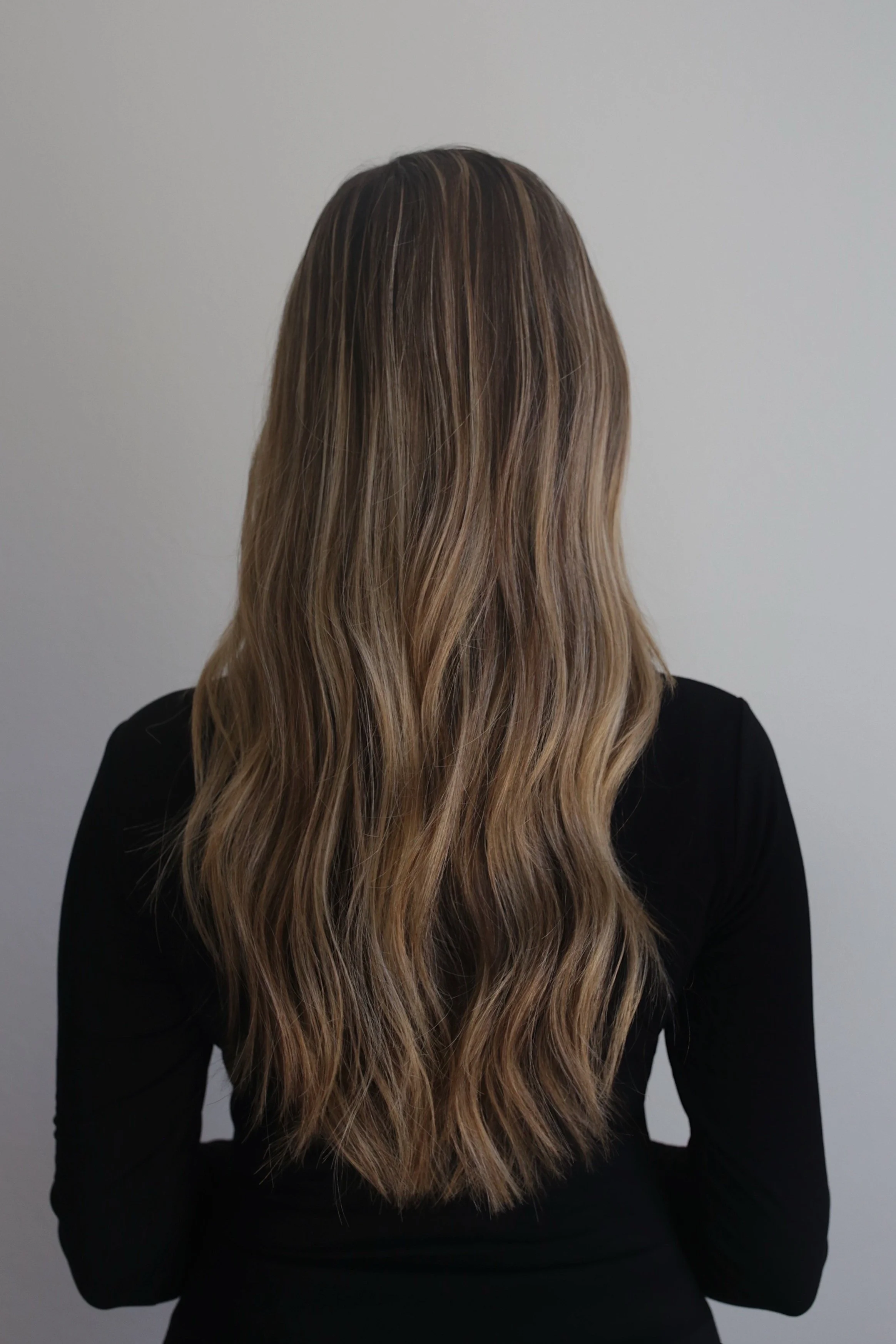
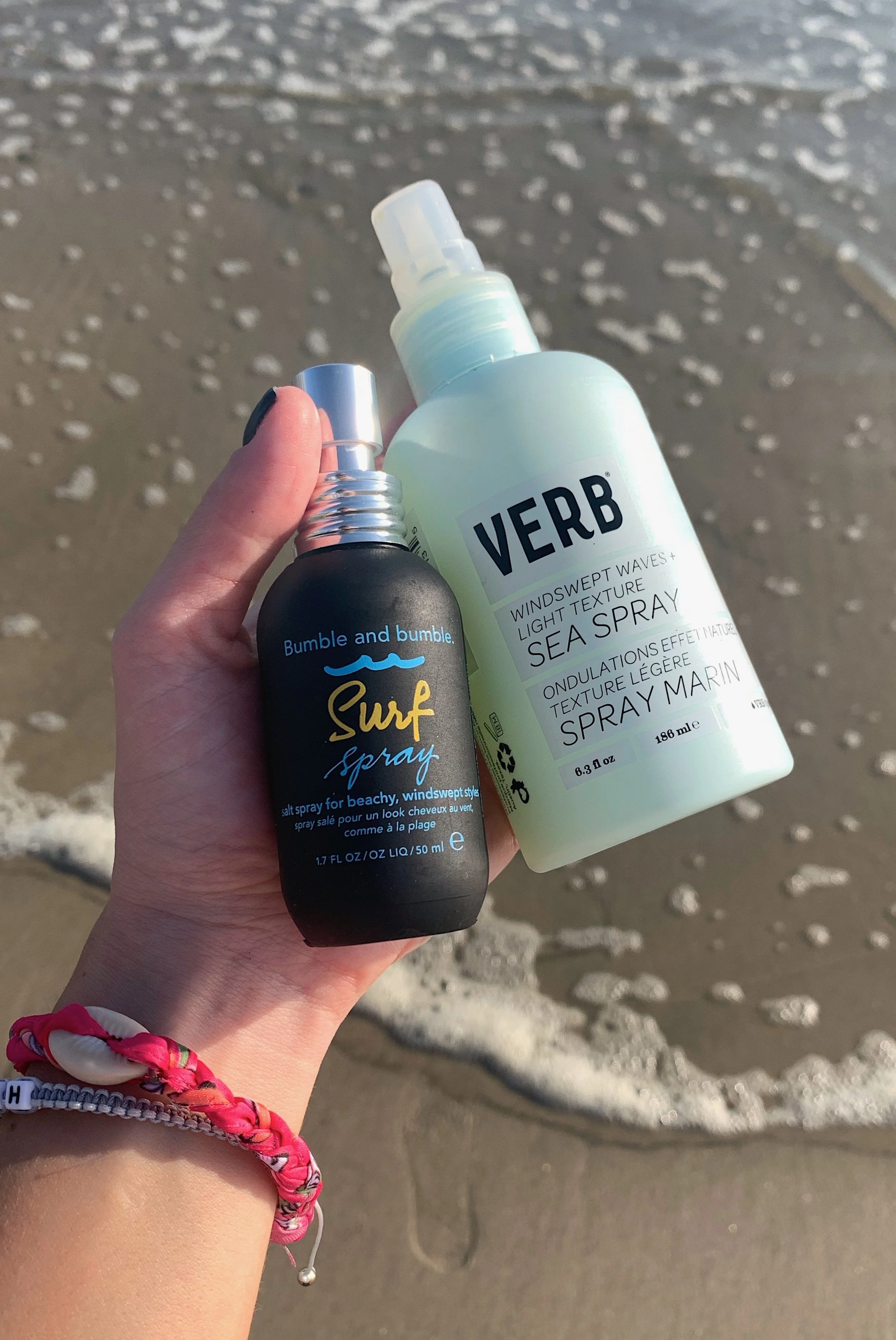
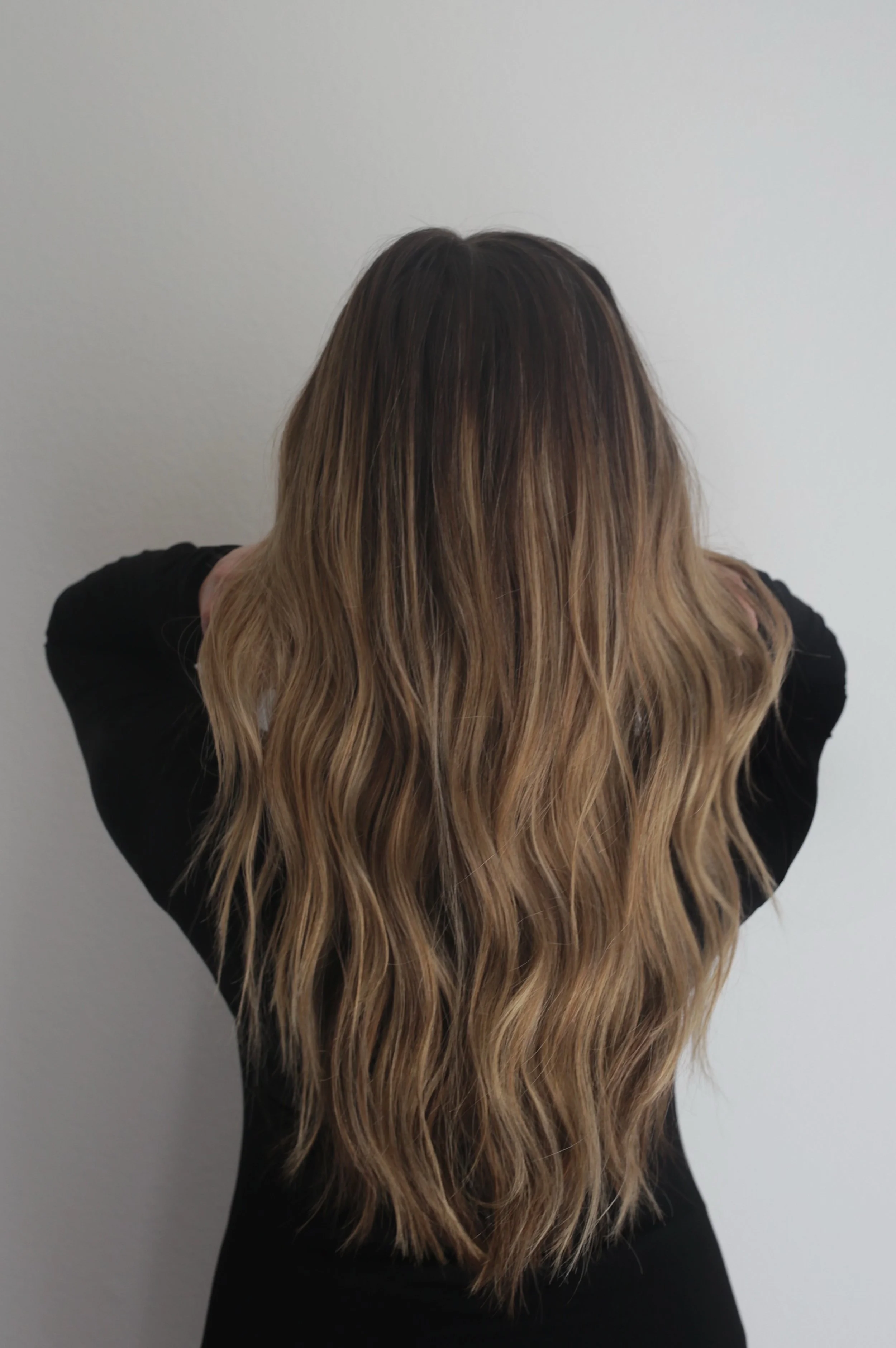
Comparing the Ouai Wave Spray to sea salt spray to see which gives you better texture, beach waves, and who each one works better for, with before and after comparisons for each.