Purple Shampoo vs Toner: What's the Difference?
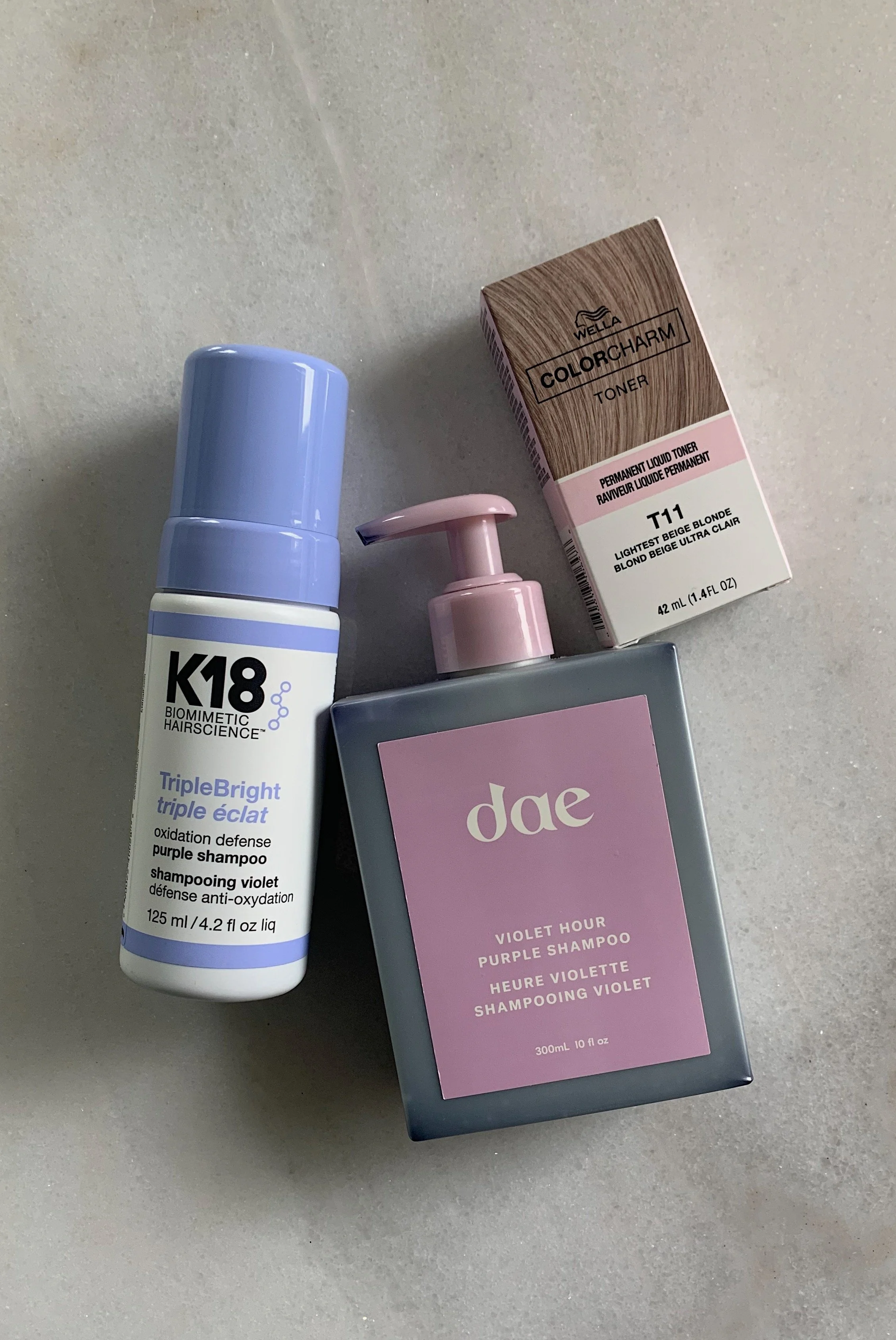
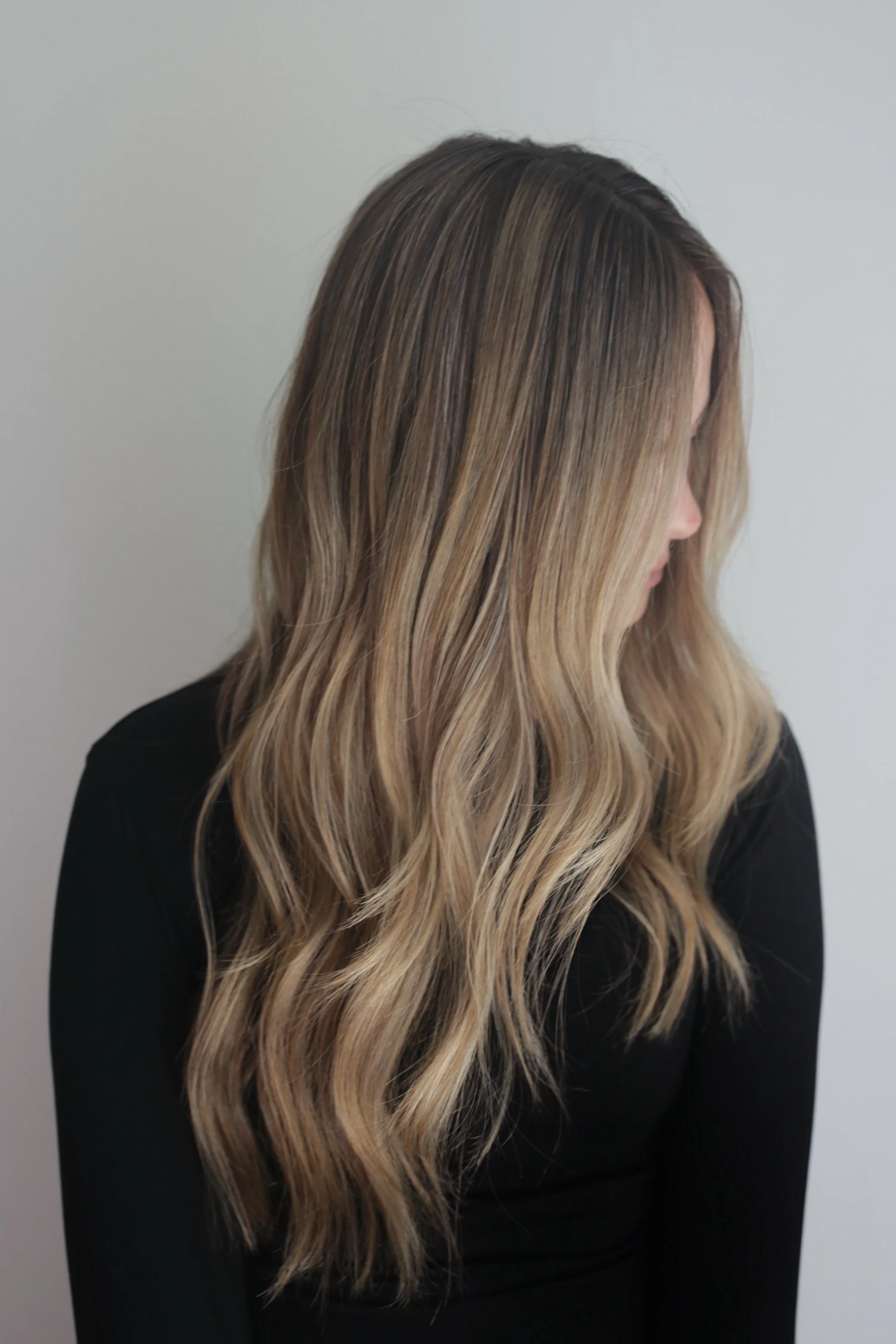
If you have blonde, highlighted, or bleached hair, you've probably heard the terms purple shampoo and hair toner used interchangeably. Although they seem similar, they're actually two different things, and understanding the difference can help you figure out what your blonde hair needs.
There's also a lot of confusion around the term "purple toner." When you search for purple toner, you'll often find purple shampoos, conditioners, masks, and other toning products rather than an actual hair toner. A true toner is a color treatment designed to adjust the tone of your hair, while purple shampoo is primarily used to maintain blonde hair and neutralize unwanted yellow tones between color appointments. Breaking it down even further, there are key differences between salon-quality toners and the at-home versions.
To me, all of this has seemed way more complicated than it should be, so I wanted to create a simple yet comprehensive breakdown explaining everything you need to know about purple shampoo vs toner (salon and at-home versions).
Below, I share exactly how purple shampoo and toner differ, show you my at-home results as well as side-by-side comparisons of each, and explain which option makes the most sense depending on what your hair goals are.
purple shampoo vs toner: what's the difference?
purple shampoo vs. toner: quick answer
Purple shampoo is primarily a maintenance product; toner is a color treatment.
Purple shampoo deposits violet pigment onto the hair to help neutralize unwanted yellow tones. It's designed to be used periodically (weekly or every other week) as part of your regular hair-washing routine.
A hair toner is used to change or refine the tone of the hair more noticeably. Professional toners are typically customized by a stylist and are mostly used after lightening services or when a specific blonde, brunette, or other color tone is desired.
An at-home toner falls somewhere in between. It can provide more noticeable toning than a typical purple shampoo, but the results and strength depend heavily on the specific product. You don’t get the customization that you get at a salon, so it’s my least recommended option of the three. I took one for the team and experimented with an at-home toner for this post, but in general, we spend so much money on professional blonding services that the risk of an at-home version going wrong are not worth it.
The simplest way to think about it:
Purple shampoo = maintain
At-home toner = refresh or change
Salon toner = customized professional color service
is purple shampoo a toner?
Not exactly.
Purple shampoo is a toning product, but it isn't the same thing as a professional hair toner.
Purple shampoo uses purple or violet pigments to counteract yellow tones in blonde or lightened hair. Because purple and yellow are opposite on the color wheel, depositing violet pigment can make overly yellow blonde hair appear cooler and brighter.
However, purple shampoo is not going to lighten your hair. Over-doing it will leave you with a purple tint, not whiter or lighter hair. It’s for maintenance, not changing your color.
On the other hand, a professional toner is a more customizable color treatment. A stylist can choose a specific formula based on your existing hair color, underlying pigment, and the result you're trying to achieve.
This distinction is important because you may see products described online as a "purple toner" when they're actually purple shampoo, purple conditioner, or another type of toning product.
what is purple shampoo?
Purple shampoo is a shampoo containing violet pigments designed to neutralize unwanted yellow tones in blonde, highlighted, silver, or gray hair.
It's particularly useful when your blonde starts looking yellow, dull, warm, or brassy.
Remember, purple shampoo helps maintain the tone you already have. If you want lighter color, you’ll need bleach (and a hair stylist).
Different shampoo formulas vary significantly in how pigmented they are, how long you leave them on, and how frequently they're intended to be used.
For example, some purple shampoos are subtle enough to use every other wash, whereas highly pigmented formulas may only need to be used once a week or even less often.
I've shared my before-and-after results and reviews on a number of them, including:
Moroccanoil Blonde Perfecting Purple Shampoo and Conditioner
Amika Bust Your Brass Cool Blonde Strength Repair Shampoo Review
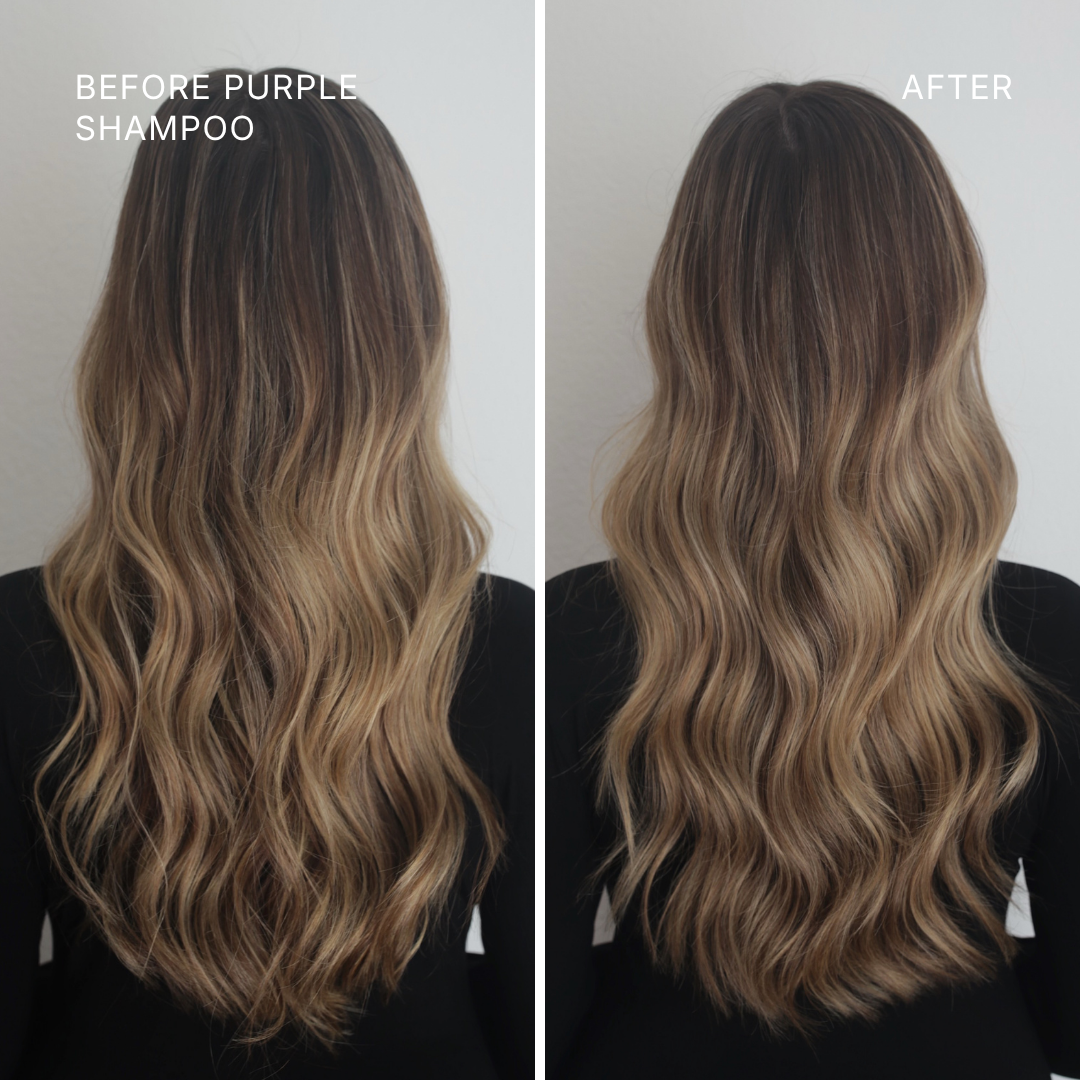
purple shampoo before and after results
what is hair toner?
Hair toner is a color treatment used to adjust the tone of the hair.
It's commonly done after bleaching or highlighting because lightening the hair exposes underlying warm pigments. Depending on your starting color, those pigments can appear yellow, gold, orange, or red. A toner then steps in to neutralize unwanted warmth or create a particular shade - think cooler, ashier, beige, more neutral, or brighter.
Unlike purple shampoo, professional toner can be customized much more precisely to your individual hair.
salon toner
When most hairstylists talk about a toner, they're generally referring to a professional color service.
A stylist looks at your current hair color, underlying pigment, your hair goals, and the condition of your hair first, and then creates a formula specifically designed to achieve the tone you're looking for. Compare that to purple shampoo, which simply deposits violet pigment.
If your blonde needs a significant color correction, purple shampoo probably isn't going to give you the same result as having your stylist tone your hair.
at-home hair toner
Frequent salon visits can add up quickly, so at-home hair toners can be very tempting. This is the category I really wanted to test on myself because I wanted to see how a true at-home toner compared with the purple shampoos I've been testing.
An at-home toner can provide a more noticeable toning effect than a typical purple shampoo, but it isn't necessarily equivalent to a salon toner.
Results vary depending on the toner you choose, your starting hair color, how porous your hair is, how long you leave the toner on, and most importantly, how evenly you apply it.
Because you're applying it yourself, you also don't get the same level of customization or professional oversight you'd get in a salon.
Truth be told, I was terrified to do an at-home toner! I’ve heard so many horror stories of them frying hair, going too light, or being too grey. For full transparency, I worked very closely with my hair stylist for this; I didn’t just order a random toner. Whenever possible, I recommend this. You may want the coolest blonde, but your stylist may end up suggesting something one shade darker based on your hair tone, skin tone, and porosity. It’s kind of like how we want the whitest teeth possible, but Shade 1 veneer is typically too fake-white, so the dentist recommends getting Shade 2 or 3 instead.
at-home toner before and after results
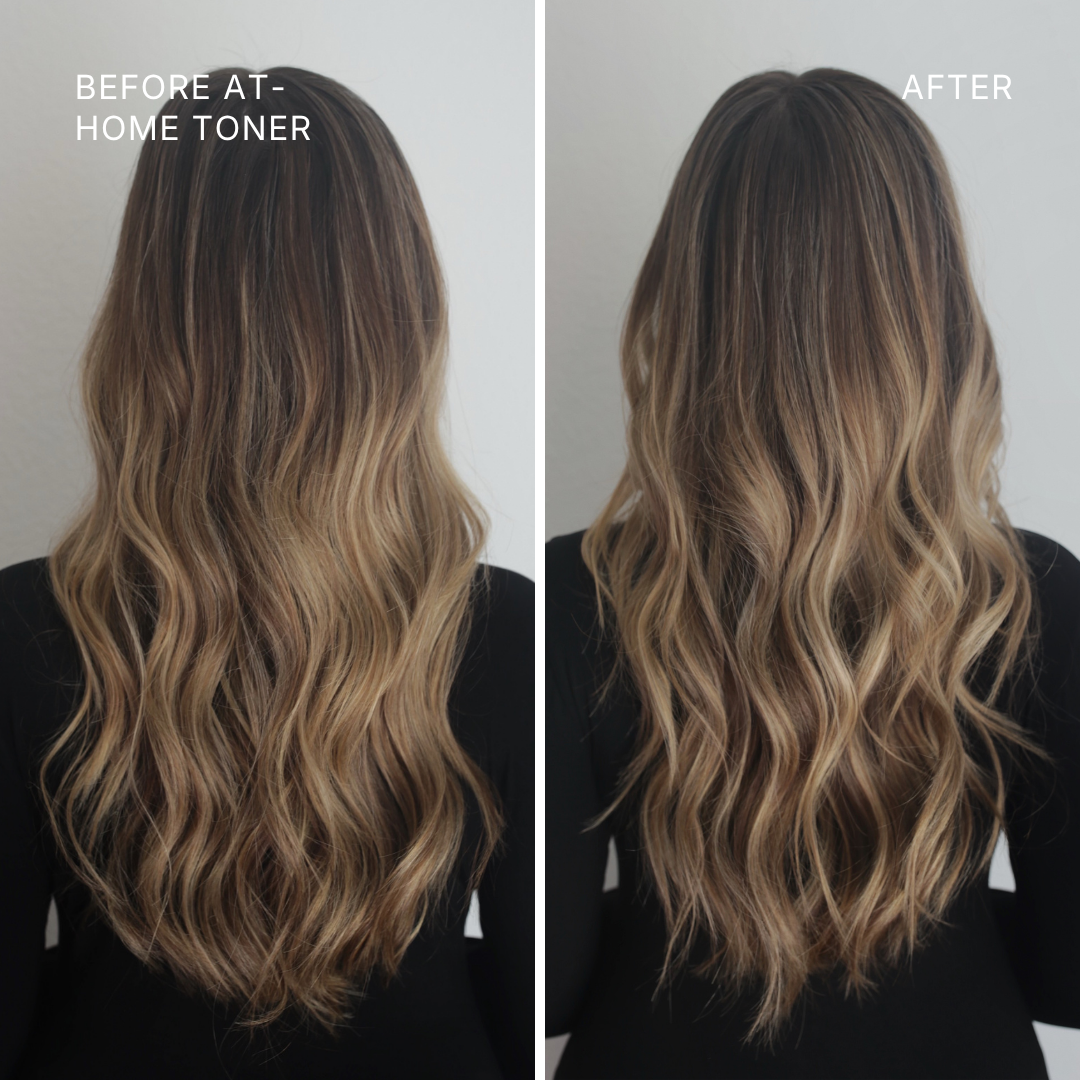
purple shampoo vs. at-home toner side by side results
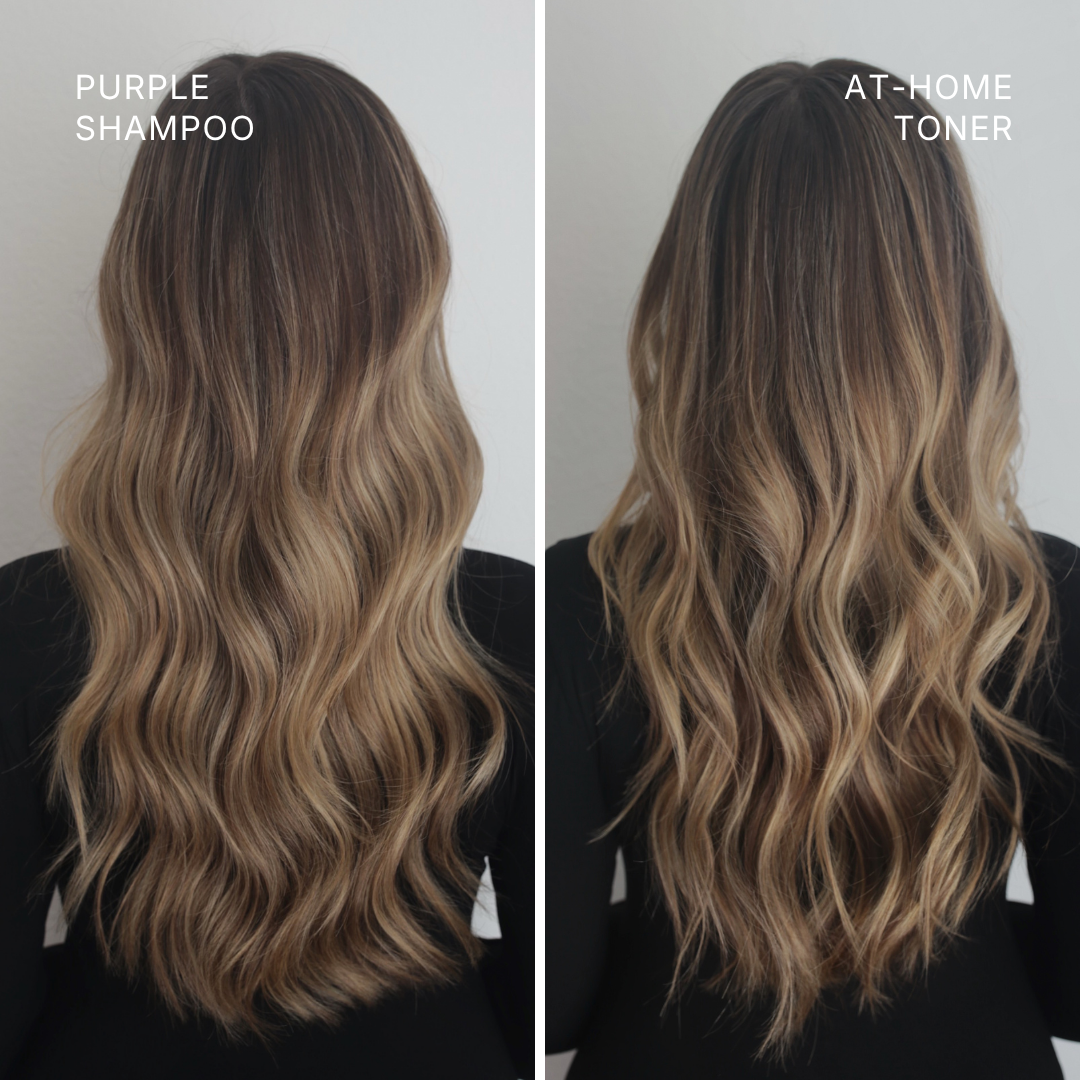
purple shampoo vs. toner: what's the difference?
Purple shampoo:
Purpose - maintain blonde hair and neutralize unwanted yellow tones between color appointments.
Application - at home, part of your regular hair-washing routine.
Strength - mild to moderate, depending on the formula and how long you leave it on.
Customization - limited to none. Purple shampoo primarily deposits violet pigment, so it can't be customized as precisely to your specific hair color.
Results - usually subtle and temporary.
Best for - mild brassiness, yellow tones, and keeping blonde hair looking fresh between salon appointments.
At-home toner:
Purpose - refresh or adjust your hair's tone at home when you want a more noticeable result than purple shampoo typically provides.
Application - at home as a toning treatment; follow the specific product's directions carefully!
Strength - varies by product, though it’s typically stronger than a purple shampoo.
Customization - more limited than a salon toner, since you're choosing a pre-formulated product rather than having a stylist customize the formula for your hair.
Results - provides a more noticeable change in tone, although results depend heavily on your starting color, hair porosity, and the specific product.
Best for - someone who wants to refresh or change their blonde at home and is comfortable using a stronger toning treatment.
Salon toner:
Purpose - adjust or refine your hair color to achieve a specific tone.
Application - applied by a professional stylist, typically after highlighting/ bleaching/ other color services.
Strength - strong; provides significant toning or color adjustment.
Customization - the biggest advantage; a stylist customizes the toner based on your starting color, underlying warmth, hair condition, and desired result.
Results - more precise/more dramatic than purple shampoo, although the exact result depends on your hair and the formula used.
Best for - significant brassiness, achieving a specific blonde shade, correcting unwanted warmth, or getting the most customized result.
The easiest way to think about it:
Purple shampoo = maintain your blonde
At-home toner = refresh or adjust your blonde
Salon toner = professionally customize your blonde
can purple shampoo replace toner?
Usually, no. Purple shampoo is a maintenance product, not a replacement for toner.
If your hair is only slightly yellow or warm, purple shampoo may be all you need to keep your blonde looking fresh, but if your hair has significant brassiness or you're trying to achieve a specific tone (ex: ashy grey blonde), you may need a toner instead.
Think of it like this: you get your hair colored, and then your stylist tones it. At home, you maintain the result with purple shampoo. Then, you return to the salon for another toner when needed.
Purple shampoo can help extend the life of your color, but it doesn't provide the same level of customization as a professional toner.
when should you use purple shampoo?
Use purple shampoo when your blonde starts to look a little warmer than you'd like.
The exact frequency depends on the strength of the purple shampoo you have, as well as your hair. In general, a good rule of thumb is every week or every other week.
Keep in mind that purple shampoo doesn’t lighten your hair, and using it too often can make blonde hair look overly cool, gray, lavender, or dull (not blonder).
when should you get a toner?
A toner may be worth it when purple shampoo isn't giving you the result you want. Some situations include:
Your hair has significant brassiness
You want a noticeable change in tone
Your blonde is too warm after highlighting
You want a specific blonde shade
Your stylist recommends one after a color service
Purple shampoo isn't correcting the underlying warmth
That said, don’t mistake toner for color correction. If your hair needs significant change, I highly recommend having it done professionally, rather than trying to fix it yourself.
what about an at-home toner?
An at-home toner can be appealing if you want something stronger than purple shampoo without going to the salon. That said, proceed with caution!
Purple shampoo is generally easier to control because you're using it as part of your normal washing routine and the toning effect is temporary. An at-home toner is stronger, but if you use the wrong shade, you may need a stylist’s professional guidance to fix it.
Remember to follow the product's directions carefully; don't assume that leaving it on longer will automatically give you a better result.
which is better: purple shampoo or toner?
Neither is universally better; they serve different purposes.
Start by figuring out how much correction your hair actually needs.
For mild brassiness or routine maintenance, purple shampoo is the easiest option and the one I'd reach for first.
If you want a more noticeable change, an at-home toner may be worth considering, but I don’t really recommend it.
If your hair needs significant correction or you want a very specific result, head to the salon for a professional, customized toner.
choose purple shampoo if:
Your blonde is only slightly yellow
You want to maintain your existing color
You're between salon appointments
You want a gradual, lower-commitment approach
You don't want to dramatically change your hair
choose an at-home toner if:
Purple shampoo isn't strong enough
You want a more noticeable toning effect
You're comfortable applying a color treatment yourself (or your stylist has helped you pick the best shade/ product for your hair)
choose a salon toner if:
Your hair has significant brassiness
You have a specific goal/ shade in mind (ex: grey blonde)
Your hair needs customized correction
You're unsure which tone your hair needs
You recently had your hair lightened and aren't happy with the tone
You want brighter, lighter hair
purple shampoo vs. toner for blonde hair
For most blondes, there isn’t one clear pick because they can serve different roles in your hair routine.
A salon toner can establish the tone you want; then purple shampoo can help maintain it between appointments.
An at-home toner can be an option for someone who wants a more noticeable DIY refresh, but it requires more care than simply incorporating a purple shampoo into your routine.
If you're only dealing with mild yellowing, start with purple shampoo before reaching for a stronger toning treatment.
purple shampoo vs. purple toner: why the search results are confusing
If you searched for "purple toner," you may have noticed that many of the results aren't actually hair toners.
That's because "toner" is sometimes used loosely to describe products that tone the hair, including:
Purple shampoo
Purple conditioner
Purple masks
Toning treatments
At-home toners
If you're shopping for a product, don't rely solely on the word "toner" in the product name. Instead, look at what the product actually is and how it's intended to be used. A purple shampoo is still a purple shampoo even if the brand calls it a "purple toner."
frequently asked questions
is purple shampoo the same as toner?
No. Purple shampoo deposits pigment that works to neutralize yellow tones and maintain blonde hair. Hair toner is a more dramatic color treatment used to adjust the tone of the hair. Always check the product description to determine whether you're buying a shampoo, conditioner, mask, at-home toner, or another type of toning treatment.
is purple shampoo a type of toner?
Purple shampoo is a toning product, but it isn't the same as a professional hair toner. It uses violet pigment to neutralize unwanted warmth; it does not provide the same level of customized color adjustment as a salon (or at-home) toner does.
what is the difference between purple shampoo and toner?
Purple shampoo is best for ongoing maintenance and mild toning; toner is a color treatment that creates a more noticeable and customized change in tone.
can purple shampoo replace toner?
Typically, no. Purple shampoo helps maintain blonde hair between toner appointments, but it generally can't provide the same level of correction or customization as a professional toner.
does purple shampoo tone blonde hair?
Yes. Purple shampoo can temporarily neutralize unwanted yellow tones in blonde hair by depositing violet pigment. The effect is generally more subtle and temporary than a professional toner, though.
how often should you use purple shampoo?
It depends on the product and your hair. Follow the specific product's instructions and adjust based on how quickly your hair becomes brassy. A good rule of thumb is once a week or every other week.
can purple shampoo make your hair too purple?
Yes. Highly pigmented purple shampoos can temporarily leave blonde hair looking lavender, gray, or overly cool if they're used too frequently or left on too long. Porous or very light hair may absorb more pigment, too.
is toner better than purple shampoo?
Not necessarily; they serve different purposes. Toner is better for a more significant or customized color adjustment; purple shampoo is better for maintaining blonde hair between color appointments.
how long does toner last compared with purple shampoo?
The longevity depends on the specific toner, your hair, and how often you wash it. Purple shampoo provides temporary toning that gradually washes out after a few shampoos. Professional toner generally lasts longer than a single wash with purple shampoo.
can you use purple shampoo after toner?
Yes, but not after every wash. In general, you will use your regular color-safe shampoo more often, and the purple shampoo occasionally.
can you use purple shampoo and toner together?
Yes, but you don't need to use them at the same time. Think of toner as the stronger color-adjustment step and purple shampoo as maintenance between treatments.
is an at-home toner the same as salon toner?
No. An at-home toner is pre-formulated; a salon toner is customized by a professional based on your hair's current color and desired result. At-home products can vary considerably in strength and results.
should i use purple shampoo or toner for orange hair?
It depends on the underlying tone. Purple pigment is primarily used to neutralize yellow, while orange tones are generally better addressed with a blue-based shampoo or a professionally selected toner. If your hair is significantly orange, a stylist can help determine the appropriate corrective tone.
should i use purple shampoo or toner after bleaching?
If you've just bleached or highlighted your hair, your stylist may recommend (or apply) a toner to achieve your desired color.
Purple shampoo is generally better suited for maintaining that tone afterward, rather than replacing the initial toning service.
what is better for maintaining blonde hair: toner or purple shampoo?
For regular maintenance between salon appointments, purple shampoo is generally the better choice.
can i tone my hair at home instead of going to a salon?
You can, but I don’t recommend it unless the toner has been selected/ approved by your stylist. Going blonde (and maintaining it) is not cheap; color corrections are even more expensive. Ask your stylist what they recommend for you specifically, but when in doubt, use purple shampoo (or schedule a salon appointment) before you apply a DIY-toner.
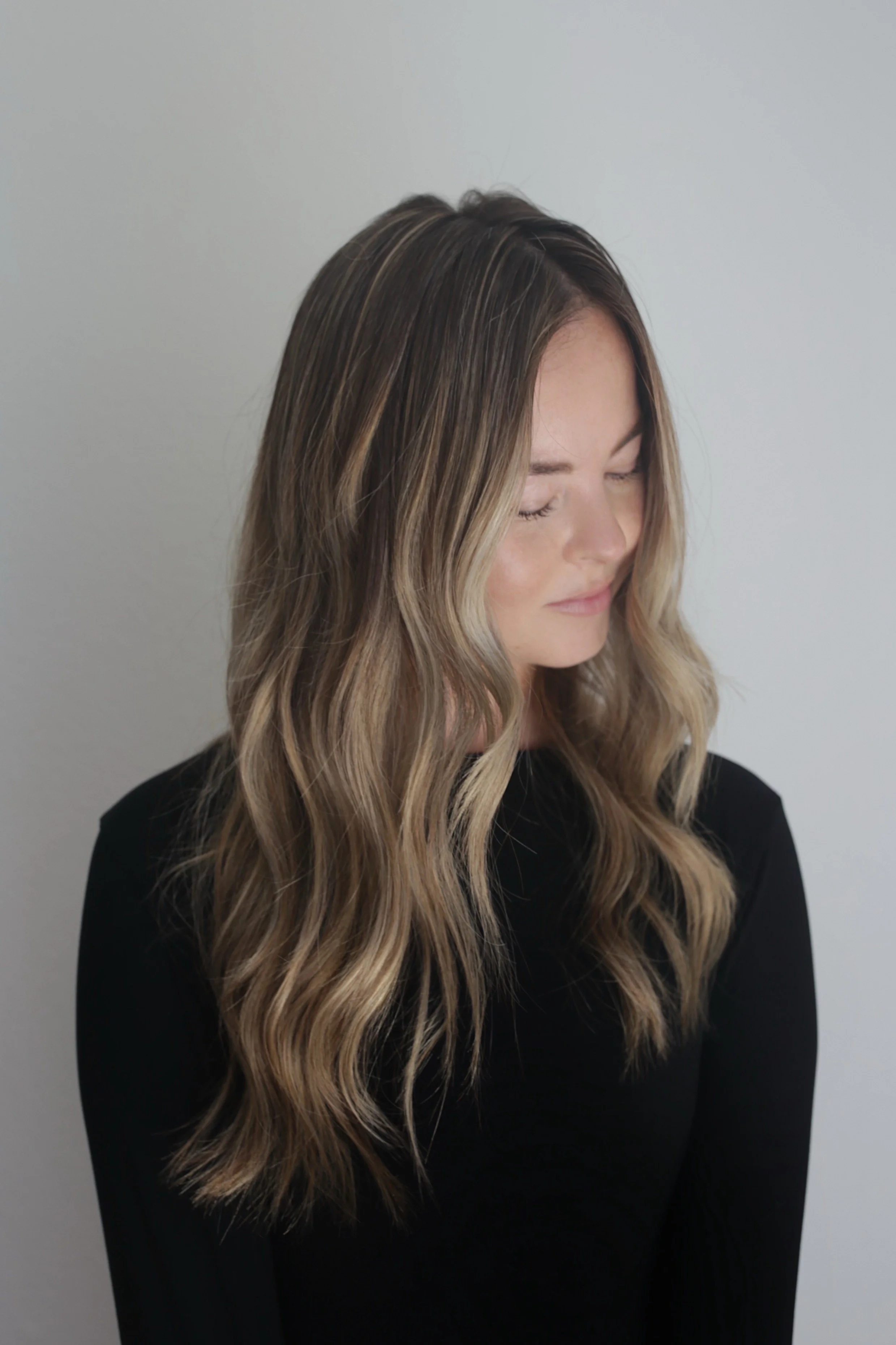
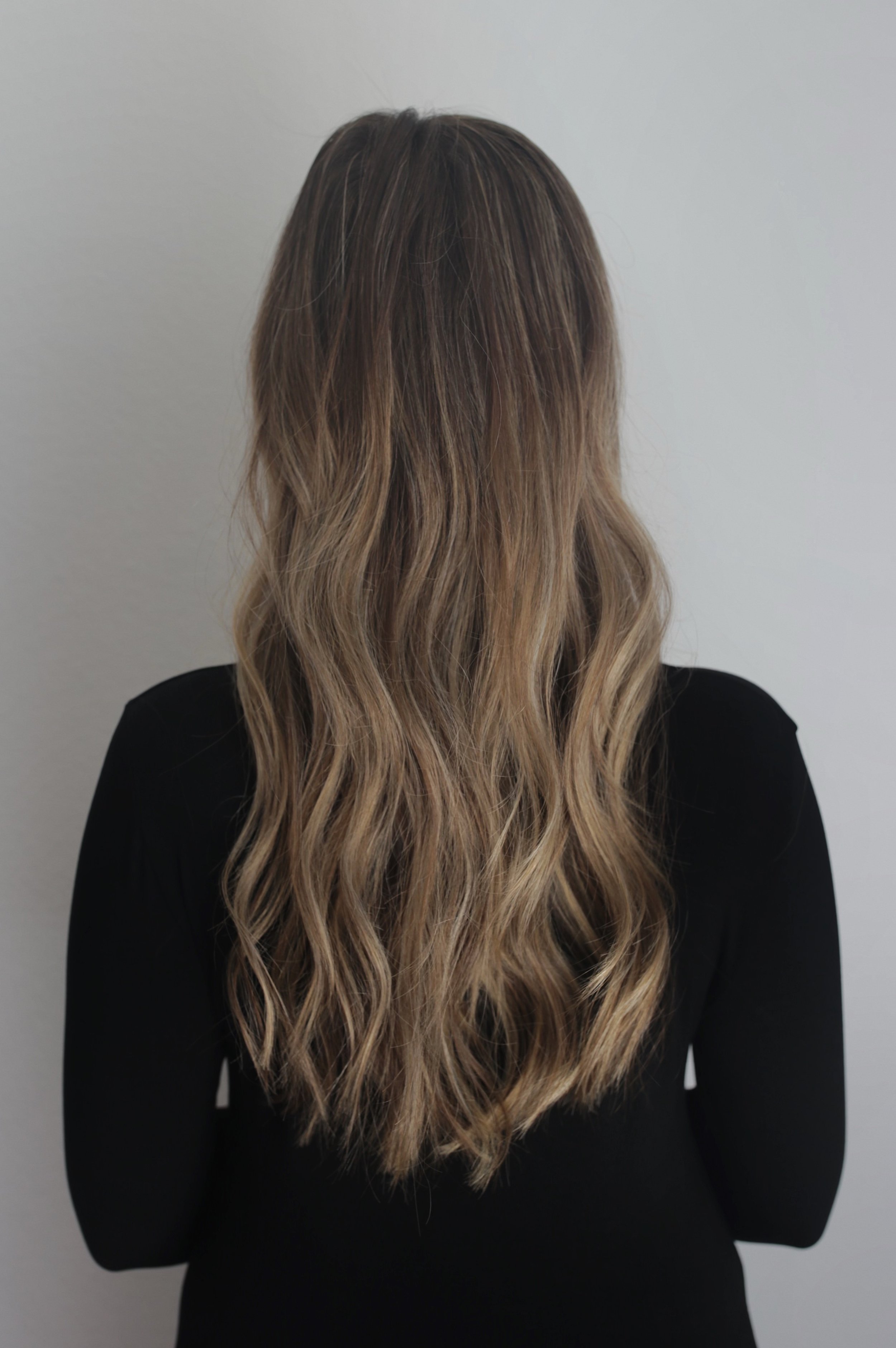
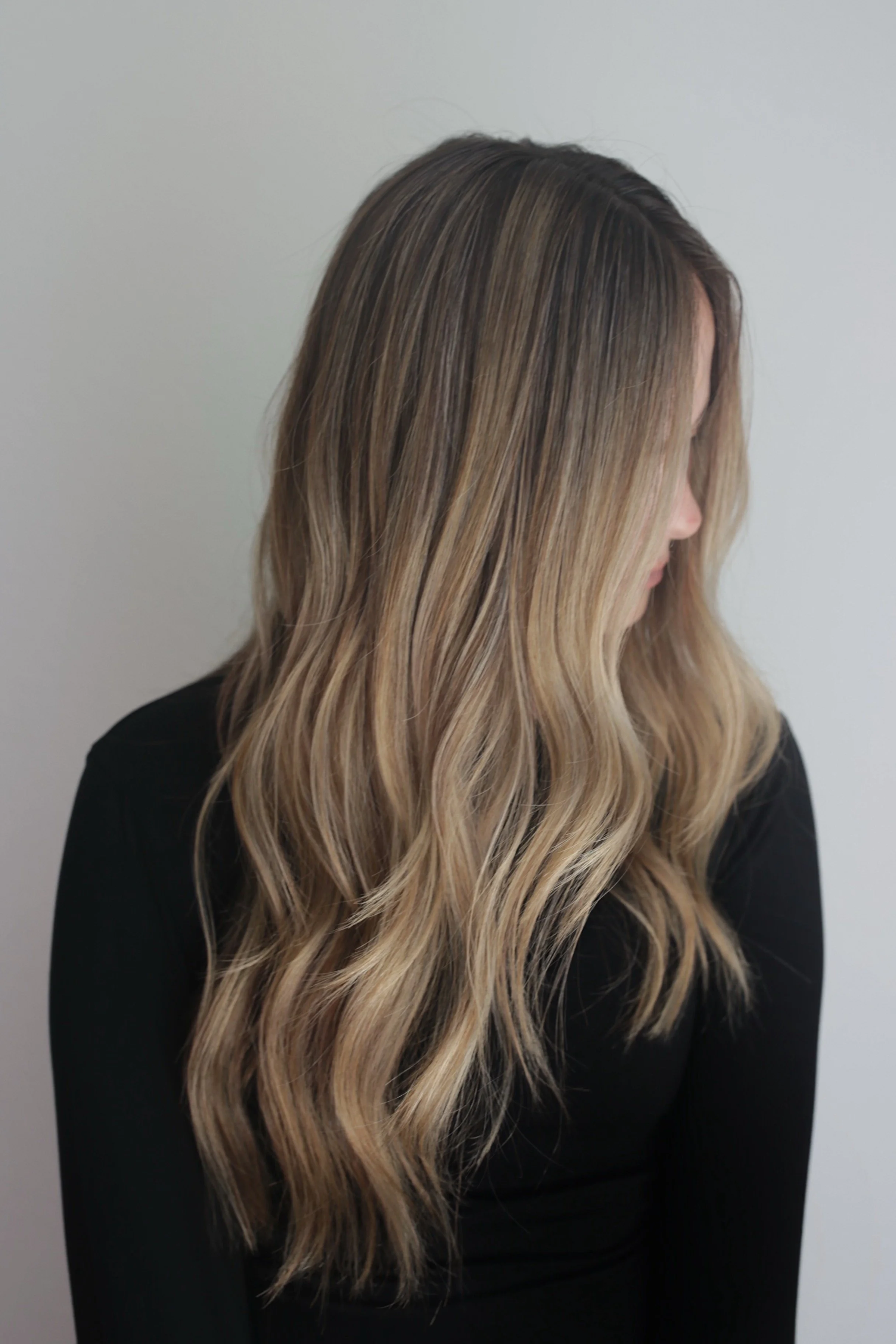
My review of the K18 TripleBright Purple Shampoo with before and after results, ingredients, pros and cons. Sharing if it removes brassiness or dries out hair, how it works, and if it’s worth the money.