Texturizing Spray vs Hairspray
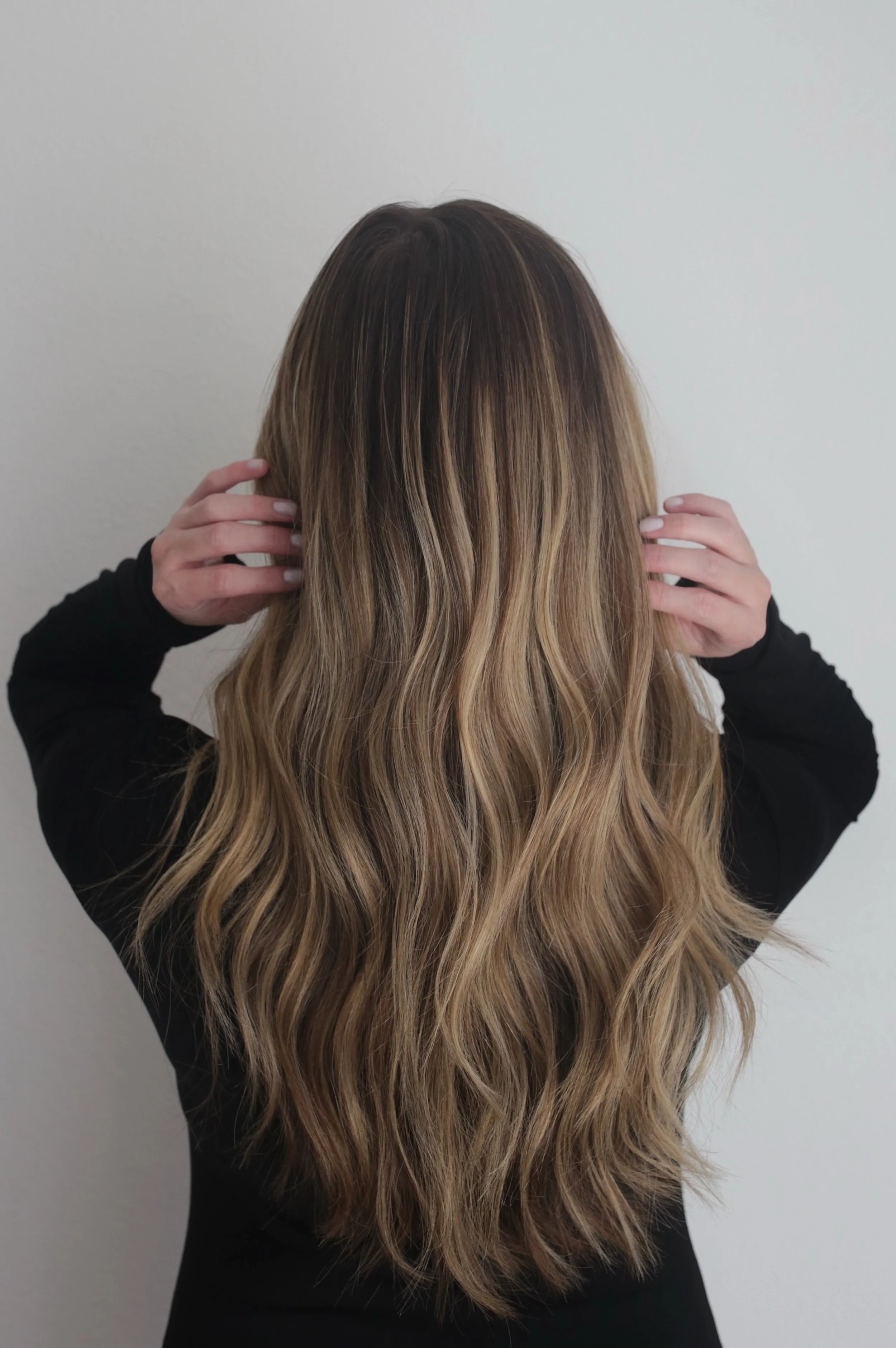
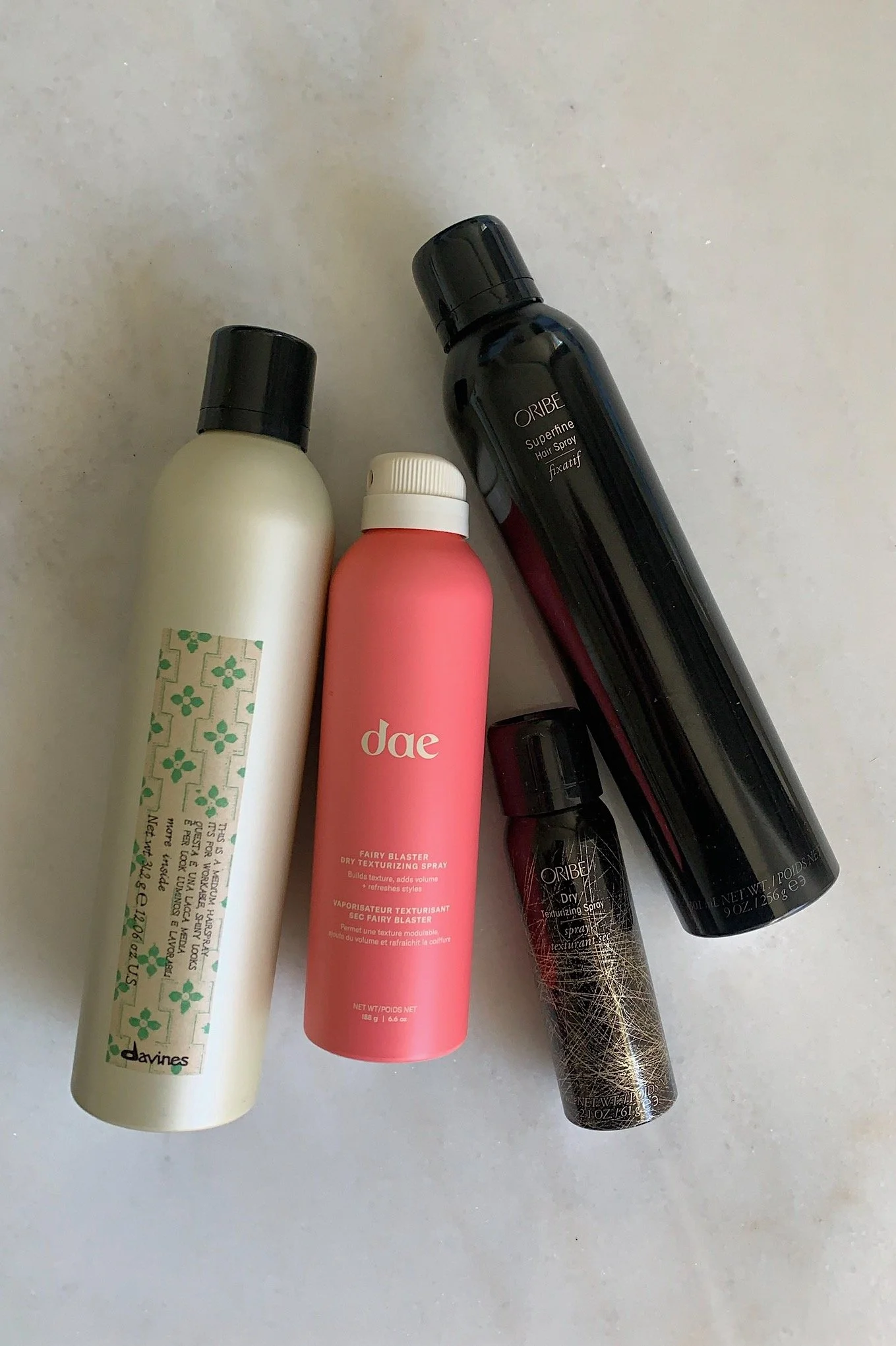
While I love how comprehensive the haircare industry is, all of the different product choices can be overwhelming. Texturizing spray (sometimes called dry texturizing spray) and hairspray are some of the biggest culprits - they look similar, they’re both aerosol (usually), and they both promise “hold,” yet they do very different things.
As someone with stick straight, fine hair, I want my styles to last a long time, and I’m always in pursuit of that effortless, lived-in beachy look, yet I don’t want to buy extra hair products just for the sake of it.
And I know I’m not the only one with limited beauty storage, so I’ve put together this guide to help you learn about the pros and cons of each, plus tips to get the most out of each product.
Whether you’re looking for volume, a humidity-proof product for a special event, or simply want to avoid the dreaded crunchy texture that damages your hair, here’s exactly how texturizing spray and hairspray compare, plus which one makes the most sense for your hair type and styling goals.
texturizing spray vs hairspray
what is texturing spray?
Texturizing spray (also called dry texturizing spray) is a hair product designed to add grip (aka texture), volume, movement, and separation to the hair.
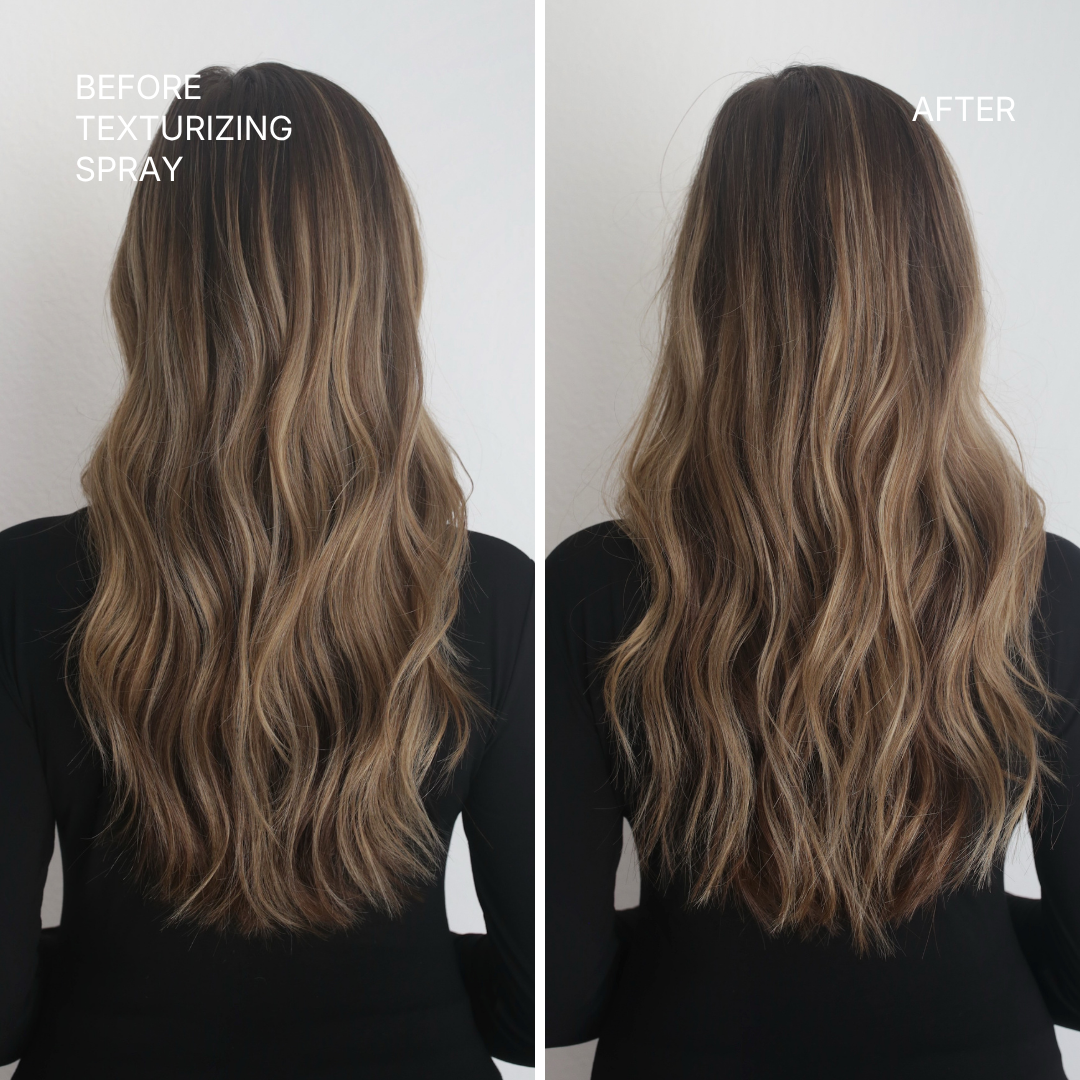
Texturizing spray gives you piece-y, tousled waves, volume at the roots, and that slightly undone, cool-girl finish. It typically contains lightweight polymers and sometimes starches or silica to create texture without making hair stiff.
While the “dry texturizing” wording can make it seem similar to dry shampoo, they’re entirely different products. Dry shampoo absorbs oil, whereas texturizing spray adds body, creates hold with flexibility, enhances your natural texture, and gives your hair a little more “grip” to help styles last longer.
Texturizing spray a styling product, not a setting product (that’s what hairspray is for).
texturizing spray before and after
how to use texturizing spray
What I love about texturizing spray is that it’s versatile and can be used in a few different ways.
If you’re looking for volume:
Spray the roots of dry hair.
Flip your head upside down, and spray lightly at the base of your hair.
Work or massage the texturizing spray in with your fingers to create lift in volume.
Remember, less is more. You’ll get better volume using less spray but working it in for longer/ more deliberately, than using more spray. Too much texturizing spray can work against you and ultimately weigh your hair down, rather than give it volume.
For perfect beachy waves:
Spray the mid-lengths to ends.
Scrunch with your hands to work with your natural texture. If you have straight hair like me, you might prefer to lightly curl your hair first. I personally do that as it gives me little more wave to work with since my hair is stick-straight.
Using your fingers, break apart the curls or waves for an undone, lived-in look.
For added grip before styling your hair (such as an updo, half-up, or braids).
Spray all-over lightly before curling or braiding, especially if you have fine or slippery (aka freshly washed) hair. This will help your hair hold the shape or style better.
Always apply texturizing spray to dry hair. Start with just a little, and build gradually. A little goes a long way, and it’s easy to overdo.
pros
Adds instant volume, even for limp or lifeless hair
Creates movement and separation
Makes clean hair easier to style
Provides a flexible, touchable hold, so you can go back and re-style if desired
Adds grip, so ideal for updos and braids
cons
Can make your hair feel dry or a little dirty if you use too much
May lead build-up over time
Not strong enough to make your style last all-day in humid climates (aka more moisture in the air)
Some formulas can tangle fine hair
best texturizing sprays
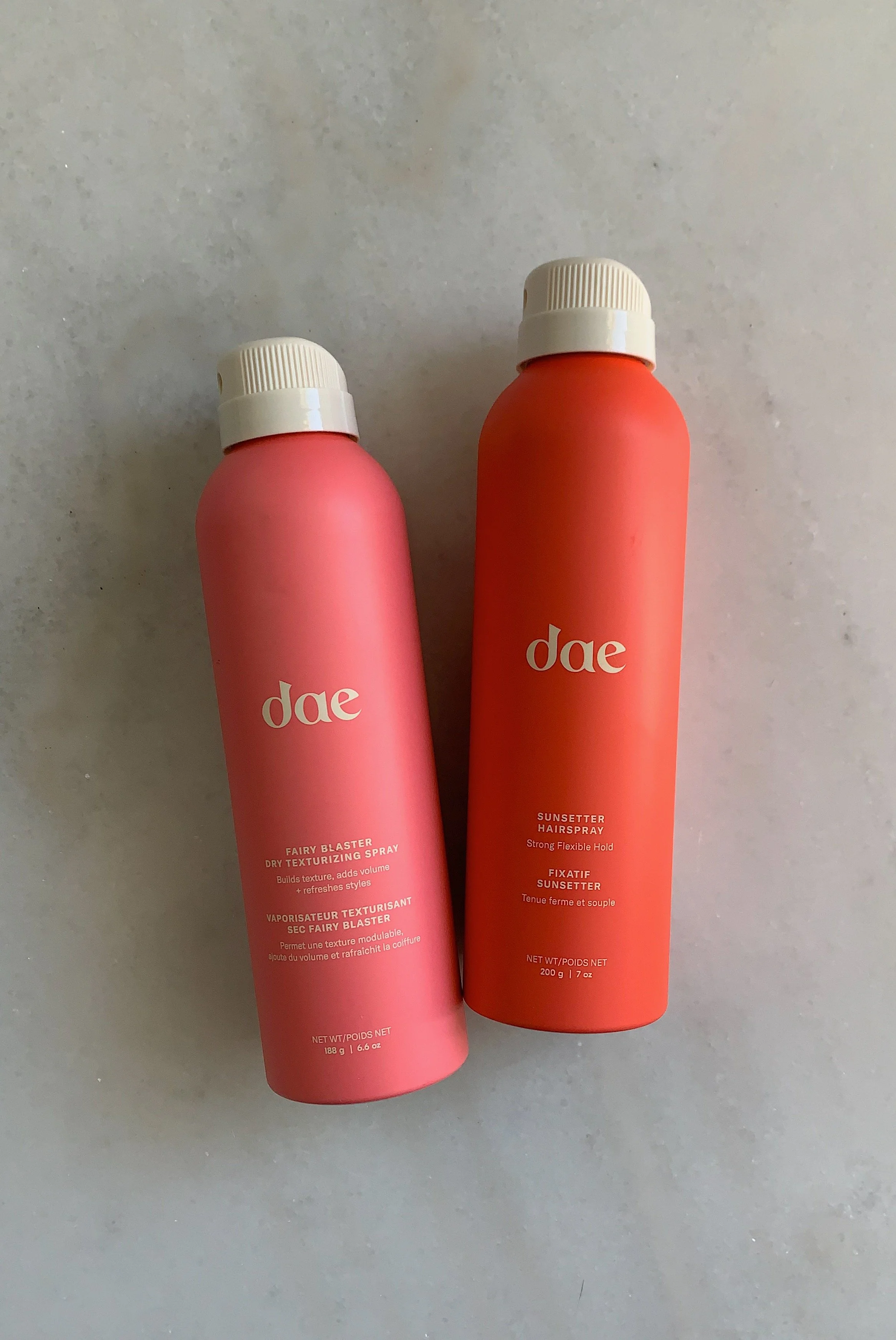
Dae Fairy Blaster Dry Texturizing Spray - Dae Hair products are super hit-or-miss for me. The nozzle on their hairspray is perpetually clogged, for example, but this dry texturizing spray is gold. It gives you just enough texture without making your hair feel sticky or dirty, and is SO easy to work with regardless of how “good” you are at doing your hair. The scent is citrusy, but isn’t so sweet that it’s overwhelming, yet I do sometimes skip perfume when I use this texturizing spray. Not only does it give you texture, but it gives you a little volume, even if you have fine hair like me.
Oribe Dry Texturizing Spray - The OG, award-winning favorite for a reason. It’s pricey ($52) but universally loved because it gives you great texture without making your hair feel dirty or weighing it down. This product is basically a one-and-done. It’s going to give you tons of gorgeous texture plus volume and shine; myself and my friends often skip hairspray entirely whenever we use this product (which makes the price a little bit easier to reconcile with). Anytime I’m having a bad hair day, this texturizing spray works with my hair and makes it look (and feel) much more mangeable and put-together. That’s why I continue to repurchase it and rave about it.
Fable and Mane Moisturizing Volume Spray for Fine and Thinning Hair - If you specifically want a texturizing spray that is still moisturizing, this is your best bet. Oftentimes, it’s really hard for a product to do both; it may add texture, but the moisturizing agents weigh your hair down (ultimately giving you less texture than desired). This one is a really nice option, and a little goes a long way. What’s different about this product, though, is that it’s that activated, so you want to apply it to towel-dried hair and then use a blow drier to get full results. Not my favorite (and the scent is polarizing), but if hydration is important to you in a texturizing spray, it’s worth trying.
what is hairspray?
Hairspray is a finishing product designed to hold your style in place. Where texturizing spray is a styling product, consider hairspray to be the final step once you’ve completed your look.
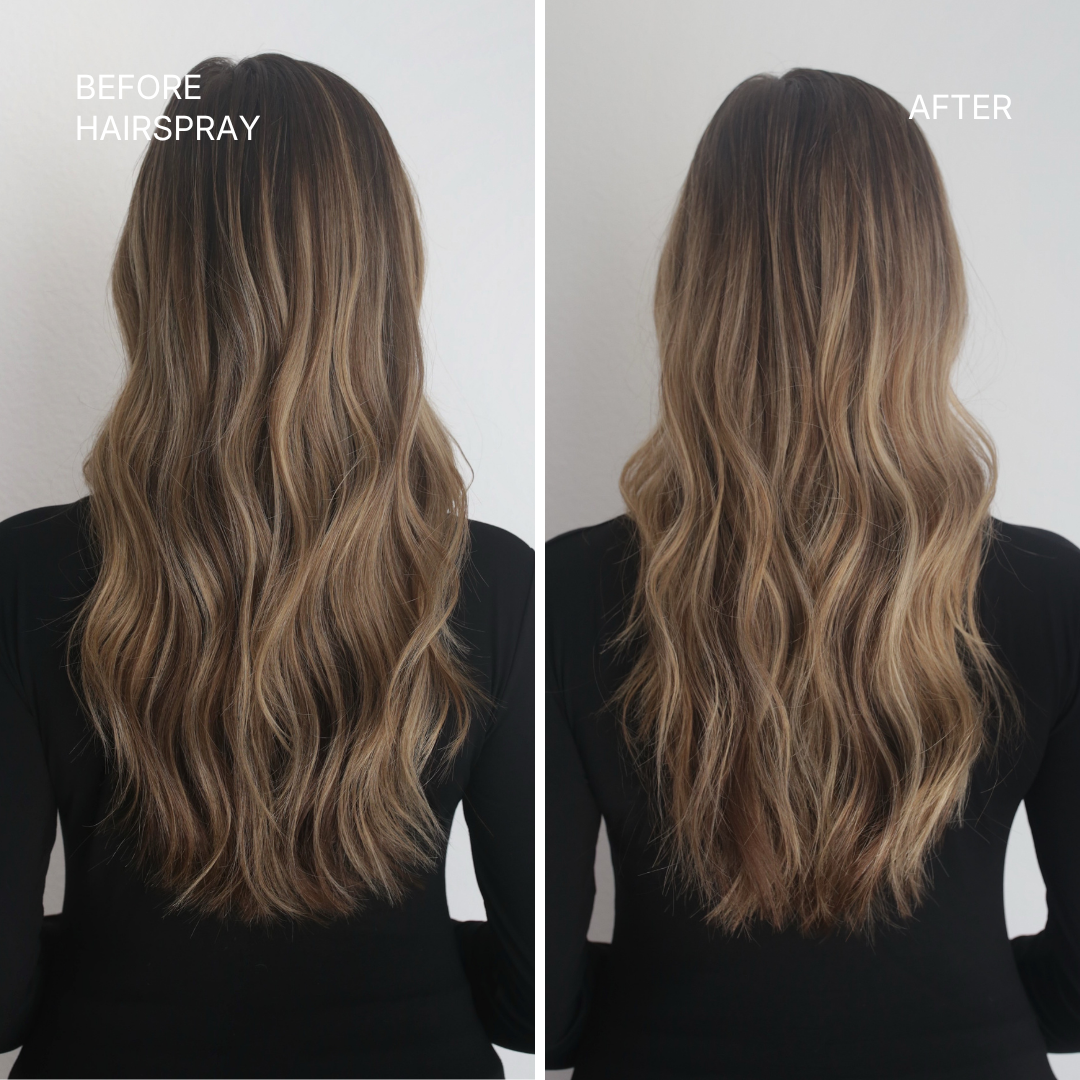
Hairspray comes in different holds - light, medium, strong, extra strong, etc. These holds form a cast over the hair using film-forming polymers that help resist movement, frizz, and humidity. Depending on the formula, it can range from flexible and brushable to ultra-firm and shell-like, so whether you need just a little extra help or need to lock in your style to last all day (and night), there’s a formula perfect for your goals and hair type.
Hairspray’s main purpose is to create hold, not texture (that’s what texturizing spray is for).
hairspray before and after
how to use hairspray
Hairspray is one of the most versatile and customizable hair products, and can be used in various ways.
For setting curls or waves:
Curl your hair first.
Lightly mist from 8-12” away. If you spray too close to your hair, you can create that crunchy, sticky texture or end up with white flakes.
Let your hair set before brushing it out.
For updos:
Spray section by section while you build your style. Updos always remind me of Legos, and I find I get the best results when I use hairspray at each “level” rather than just at the end.
Once done, finish with a light, all-over mist.
To tame flyaways:
Spray onto a brush (a toothbrush for smaller sections, or at the part) or your hand.
Smooth down over targeted areas. Try to not apply too much pressure, as that can eliminate volume and give you a flat look.
When it comes to hairspray, remember to apply in light layers. Too much at once leads to stiffness or that dreaded crunchy texture.
pros
Long-lasting hold; makes your style last longer
Helps resist humidity (less frizz)
Controls flyaways
Ideal for formal hairstyles
Available in multiple hold levels (aka strengths), so there’s a formula for every hair type and texture
cons
Can make hair feel crunchy or sticky
May dull natural shine or brightness
Can flake, especially if you use too much
Makes it harder to restyle your hair once the hairspray sets in
best hairsprays
Kenra Professional Volume Spray 25 Super Hold Finishing Hairspray - This will give you that long-lasting hold you need for special events and busy days, but is lightweight enough that you can also use it on a daily basis. It adds a little volume, but won’t replace your texturizing spray. Only $22; I also love that it doesn’t make your hair feel sticky.
Davines This Is A Medium Hair Spray - While I can be skeptical of stylist-pushed products, I really do love this hairspray. It’s marketed as a medium hold but is closer to a light hold. I especially recommend it if you have little ones who need their hair styled every now and then (like for dance or picture day, etc.) because it’s lightweight but also smells SO good (vanilla, but not too sweet). As someone who hates the feel of a ton of product in my hair, this is my go-to.
Color Wow Texas Hold 'Em Big Hold Hairspray - Your go-to strong hold hairspray. This tames frizz and locks in your curls, but doesn’t leave your hair feeling crunchy or dried out. It also works as a heat protectant, but more importantly a UV protectant, so I love using this hairspray when I’m traveling or plan on being outside all day. With non-yellowing resins that add shine and flexible polymers that don’t make your hair flaky, this is a great heavy-duty option for all hair types.
Chris McMillan Major Shine Hairspray for Buildable Hold - If your main concern with hairspray is dryness, I highly recommend trying out this one. It’s infused with TCM Mushroom Extract to add hydration back into the hair, and also includes a heat protectant if you need to go back and touch up your hair later on. The scent is fresh yet luxurious with notes of green tea and lily of the valley, and I’d consider this one of the easiest hairsprays to use because it doesn’t leave your hair crunchy and you can still work with your hair after using it.
what’s the difference between texturizing spray and hairspray?
As strange as it seems, I compare texturizing spray and hairspray to salt and pepper. Sometimes you want both, sometimes you need just one. They’re similar, but serve different purposes.
Texturizing spray enhances the texture you have (or creates the illusion of more). Hairspray freezes the style you’ve already created.
Texturizing spray = movement + volume + grip, whereas hairspray = hold + control + longevity.
You can absolutely use both, following this order: texturizing spray before styling, hairspray after.
how texturizing spray vs hairspray looks
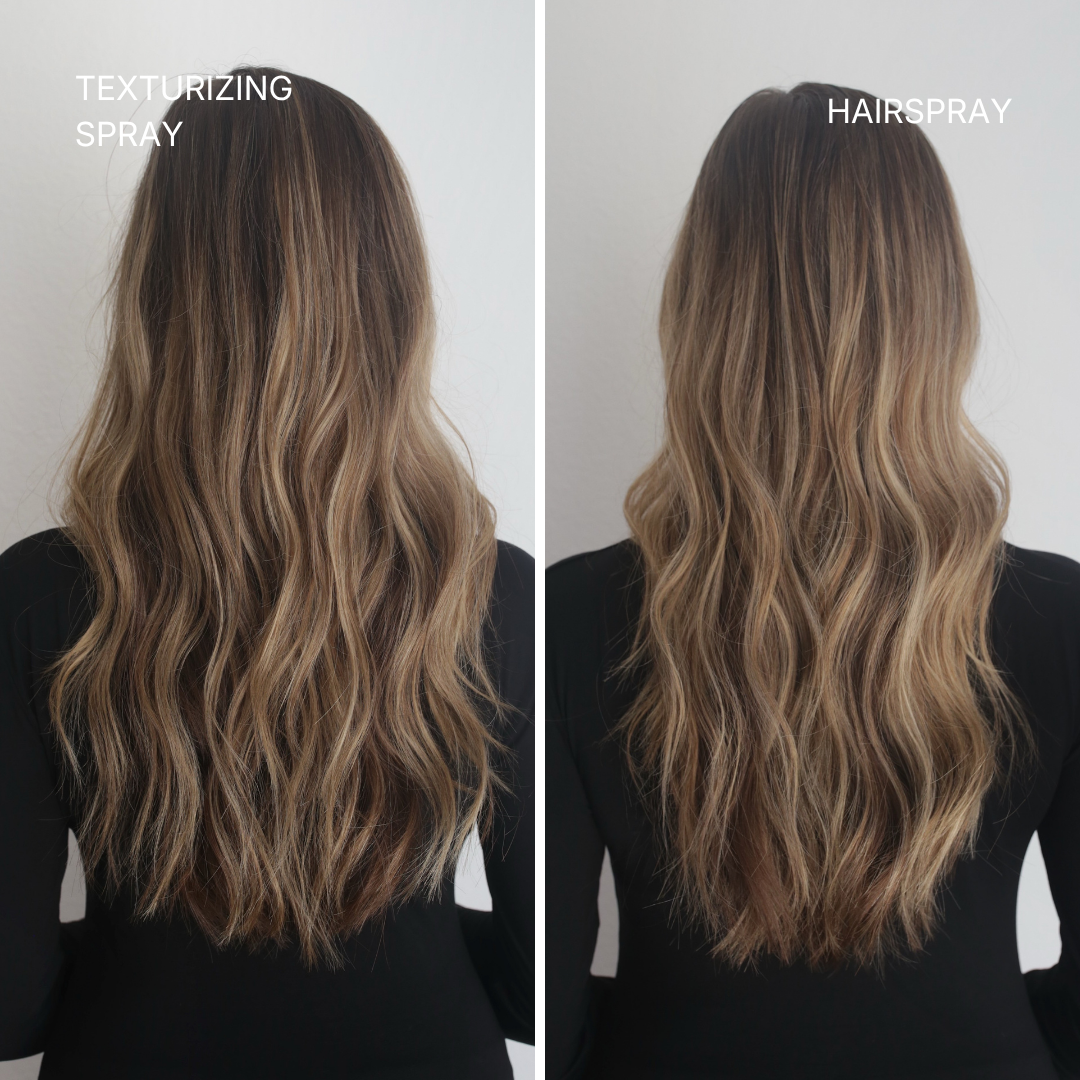
what’s better: texturizing spray vs hairspray?
Ultimately, it depends on your hair type and what you’re trying to achieve. As similar as they may seem, texturizing spray and hairspray aren’t interchangeable; they serve different purposes. Once you know what each one actually does, it’s much easier to build a styling routine that works for your hair type instead of against it. Here’s my best advice:
for fine hair
Oftentimes, texturizing spray is better. Fine hair tends to fall flat and slip out of styles. Texturizing spray adds body and grip without collapsing volume. Heavy hairspray can weigh it down or make it look stringy. As someone with fine hair, I prefer the volume that texturing spray gives me. I only use hairspray for special events, and find that a light, flexible formula gives me the best results.
for medium to thick hair
Honestly, you may need both.
Thicker hair holds shape better but also needs stronger products to lock styles in and make them last; in that case, you’ll want hairspray. If you’re looking for dimension and separation, opt for texturizing spray.
for curly or coily hair
Hairspray will do a better job preserving your curl shape and reducing frizz, especially in humid climates. Unless it’s specifically curl-friendly, texturizing spray can sometimes disrupt curl clumps or create dryness. Stick with hairspray for definition and longevity. If you really want to use texturizing spray, use it sparingly at the roots for volume.
for stick-straight hair
Believe it or not, texturizing spray is best. As someone with stick-straight hair, I know that straight hair usually needs grip to hold curls or waves. Texturizing spray creates that “second-day hair” texture that makes styling easier.
Remember, hairspray won’t create texture; it just locks in what is already there.
One more tip: so many guides on how to curl straight hair emphasize curling second day, dirty hair. That’s because it gives your hair a little more grit (and texture) to hold onto. I’ve personally found that second-day hair makes my straight hair too heavy, and works against itself, making it SO much harder to hold a curl than when I start with freshly washed hair. If you’re struggling to get your hair to hold a curl, try freshly washed hair. You can always add texturing spray, which is oftentimes a little more workable and lightweight than the oils of second-day hair.
for color-treated hair
You can safely use either, so it comes down to your goals (hold curls vs volume).
That said, try to look for alcohol-balanced formulas. Both texturizing spray and hairspray often contain alcohol, which can be drying. If your hair is color-treated, aim for a flexible, lightweight hairspray, or conditioning or shine-boosting texturizing spray.
While you can use both products together, try to be mindful of how much you’re using. Heavy layering may make your style last longer, but can dull out your color.
for holding curls
Hairspray, as it’s meant for long-lasting hold. While texturizing spray helps curls form and look fuller, hairspray keeps them from dropping, especially in humidity. If you want to use both:
Add texturizing spray before curling.
Use a light mist of hairspray afterwards for hold.
Since you are using both products, remember a little goes a long way (two halves make a whole).
for adding volume
Texturizing spray is better, as it creates lift at the roots and separation through the lengths. Hairspray can add volume only if sprayed at the roots and manipulated quickly, but it’s not designed for it, so if you love good volume, use texturizing spray.
tl;dr: texturizing spray vs hairspray
If you want effortless texture, opt for texturizing spray. For a locked-in, long-lasting style, use hairspray. If you want full, long-lasting waves (like for special occasions or pictures), use both (texturizing first, hairspray once your hair is styled).

Full review of the Dae Dreamriser Volumizing Mousse, including volume, hold, ingredients, pros and cons, before and after results, and if it’s worth the money.