San Diego Zoo Safari Park Itinerary: How to Spend One Perfect Day
If you only have one day at the San Diego Zoo Safari Park, having a plan makes a huge difference.
Unlike the main San Diego Zoo, the Safari Park is designed around large open habitats and safari-style experiences, so it can be overwhelming to first-time visitors. With more than 1,800 acres (not all are open to explore), dozens of major exhibits, and thousands of animals, it’s easy to feel overwhelmed or afraid you’re going to miss something big.
As a local, I’ve been to the Safari Park enough times to figure out exactly how to maximize your visit to see everything without wasting time zigzagging across the park or forgetting some of the zoo’s most underrated areas entirely.
Below, I share my go-to itinerary for a day at the Safari Park. It’s designed to help you avoid unnecessary backtracking, allows for time to see the daily animal presentation, and navigates you around the park’s key exhibits while the animals are most active and engaged. Because the Safari Park is located inland, weather is also a factor I’ve considered when planning out the day.
Keep reading for my full, one-day itinerary for the San Diego Safari Park, and for more tips and advice, be sure to check out my San Diego Safari Park Travel Guide.
san diego zoo safari park one-day itinerary: how to spend 1 perfect day
quick tips before you go
arrive before opening
There are three key reasons why I recommend arriving early to the Safari Park:
Animals (especially the herd animals in the Savanna) are most active in the mornings/ late afternoons and evenings. Get there early to see them moving around! I always have an easier time spotting the rhinos in the morning than mid-day. The Safari Park closes earlier during the hot summer months (around 4PM) so morning is the way to go.
The main road that gets you to the Safari Park is a two-laner; traffic builds quickly.
The Safari Park gets significantly hotter than you’d expect. By early afternoon, temperatures can feel intense, especially in summer, so getting an early start is one of the best ways to maximize your visit.
dress weather-appropriate and wear comfortable shoes
Layout and guest experience is one of the main ways that the Safari Park differs from the San Diego Zoo. I would say that the Safari Park is more walkable because there are less hills, but it’s much bigger than the zoo and you will end up walking several miles by the end of the day.
Also, the Safari Park is located in San Pasqual Valley, meaning the days get very hot very quickly, and you are quite far from that gorgeous beachy breeze.
There is also less shade at the Safari Park than the zoo, so expect to be in the sun for the majority of the day. Dress in lightweight layers and wear shoes you already know you can walk far distances in (it’s not the time to break in new athletic shoes).
While rare, some people have overheated at the Safari Park. Wear breathable fabrics and a hat that protects you from the sun. Even in the wintertime, the temperature always feels slightly warmer at the Safari Park, so layers are the way to go. I’ve visited on a rainy day before and still ended up taking off my jacket because the trek to Condor Ridge gets your blood pumping!
download the official safari park app
Anytime someone tells me to download an app, I see it as a challenge to actively not download the app because it’s annoying to me. That said, you will want to download the official Safari Park app and it’s actually worth it. You have to go out of your way to ask for a paper map (they’re no longer available at the entrance), and the app allows you to build a custom itinerary based on the animals you want to see. It’s also the best place to see the daily schedule, including special events and animal presentations.
bring a bag
Because the Safari Park is located inland, the weather gets very warm and can hinder your ability to have a fun day if you don’t plan accordingly. Make sure you bring:
A hat or sunglasses
Sunscreen
A portable charger
Refillable water bottle (there are stations throughout the park)
Snacks (protein bar, chips, fruit) or a lunch (sandwich)
If you have kids who will want to play in the splash pad, bring an extra change of clothes.
You do not need to have everything in a clear bag as of June 2026.
the perfect 1-day safari park itinerary
head straight to walkabout australia
Some will say that you should start at the newest Elephant Valley, but if you want to see the kangaroos, it’s best to get there early. Walkabout Australia and the surrounding World Gardens and Condor Ridge are also the highest points of the Safari Park; if you wait until midday to explore, you will absolutely feel the heat.
One of the rarest animals at the Safari Park, the albino wallaby named Everest, is also most likely to be active in the mornings, so you won’t want to miss him.
Enter the Safari Park then head up the Safari Walk to Walkabout Australia. Some people miss the actual “walkabout” part because it looks like a restroom; it’s a wooden building and you may see strollers parked nearby. Enter in to see the kangaroos/ wallabies up close. Make sure to stop by the platypus exhibit; the Safari Park is the only zoo in the world outside of Australia to have them!
They are nocturnal so it is a darkened room; some people miss this as well so keep your eyes out! The tree kangaroo is located just outside the Sheared Sheep; you can sometimes spot them easier from inside the building
From here, you can continue upwards to the World Gardens and Condor Ridge. I’d say these areas are the most strenuous to get to (some of the paths are just dirt), but the view of the San Pasqual Valley is truly gorgeous.
head down tiger trail
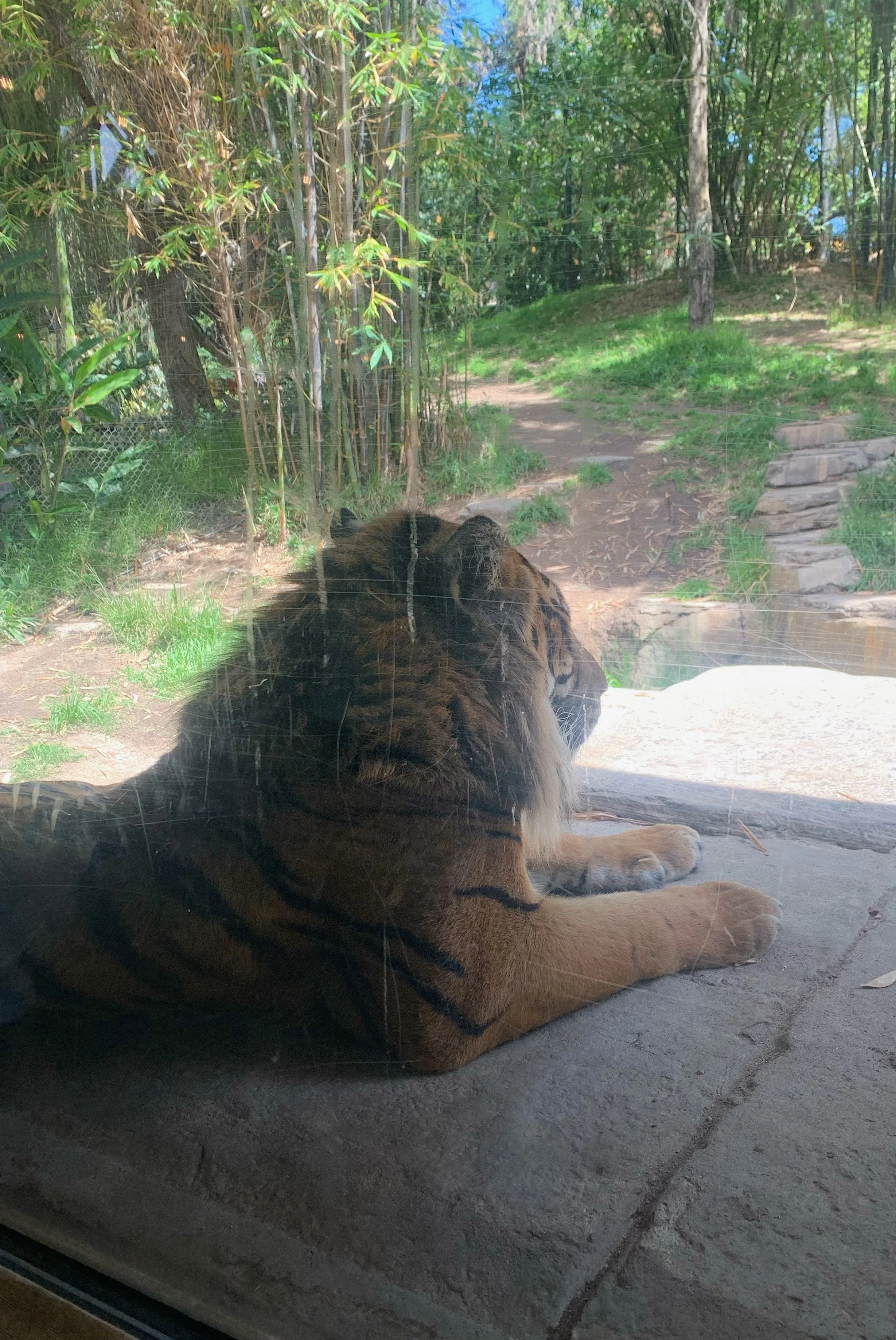
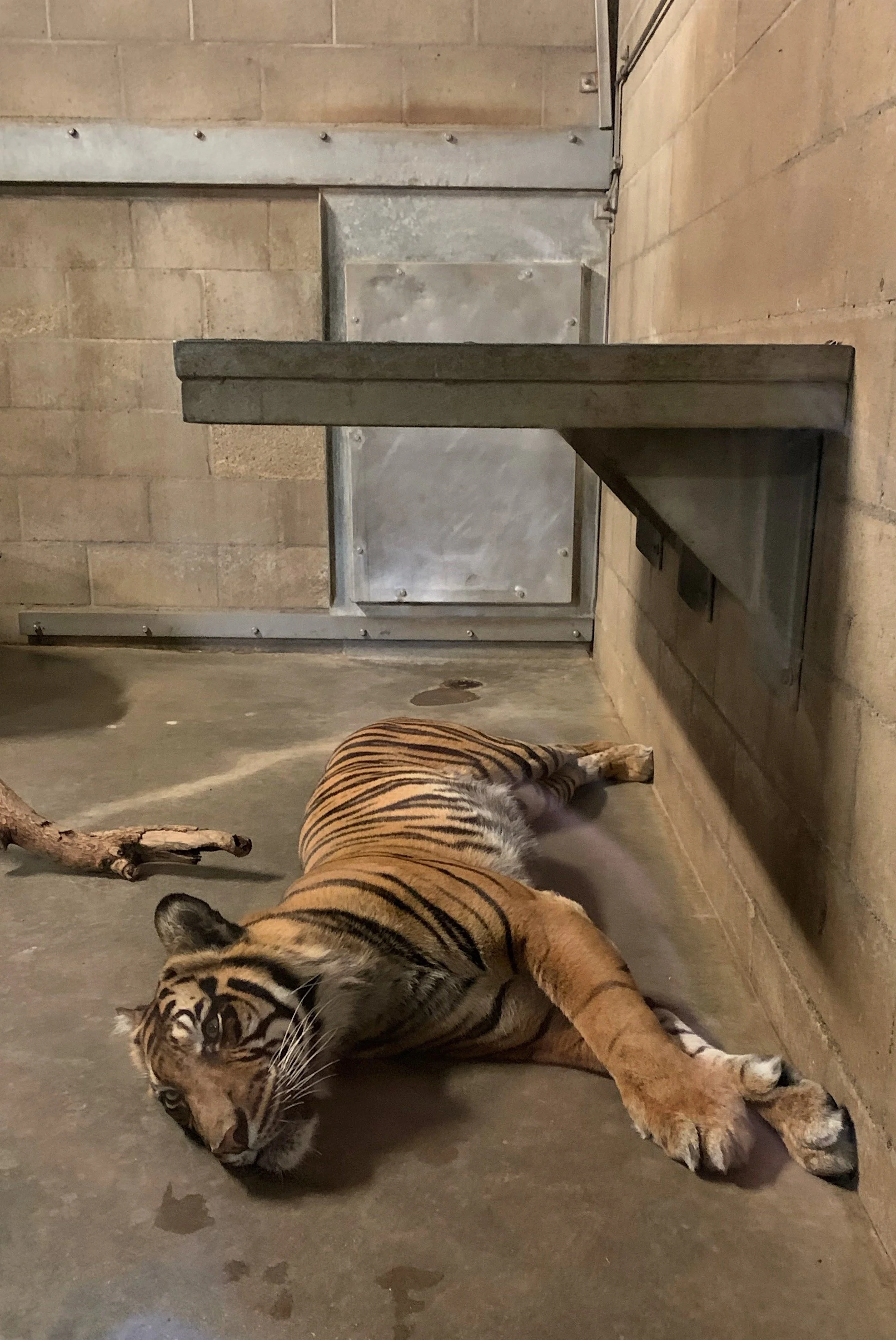
Next, head to Tiger Trail. Depending on how much time you spend at Walkabout Australia, the tigers should still be pretty active and there are a few different areas to view them from. Tiger Trail is shady and there’s a small play area for kids to enjoy.
There is also a Bonsai Pavilion just outside of Tiger Trail; if that is of interest to you, see that first before getting too deep into Tiger Trail. Some of the trees are extremely rare and valuable; though you won’t see them, there are security cameras watching! A fun fact is that if you added everything at the Safari Park up, the plants are actually more expensive than the animals (though they’re all quite priceless in my opinion).
elephant valley
From Tiger Trail, you have two options. I recommend heading back to Elephant Valley; that gets you to a good central location for lunchtime. Another option is to take the Nature Trail towards the Savanna and Lion Camp. It’s a comfy downhill walk on a path (no stairs), but you don’t really see too much outside of plants and landscaping (and a few wild squirrels/ bunnies). The Savanna is the largest part of the zoo, and it can be hard to see all of the animals just walking by it; you get the best views on the Africa Tram. That’s why I recommend saving that portion for later, but I wanted to mention it so you can kind of customize this itinerary to your preferences.
As far as the lions go, they definitely like their midday catnap. If they’re one of the main animals you want to see, I do recommend going out of your way to see them in the morning, especially if you’re visiting on a hot summer day.
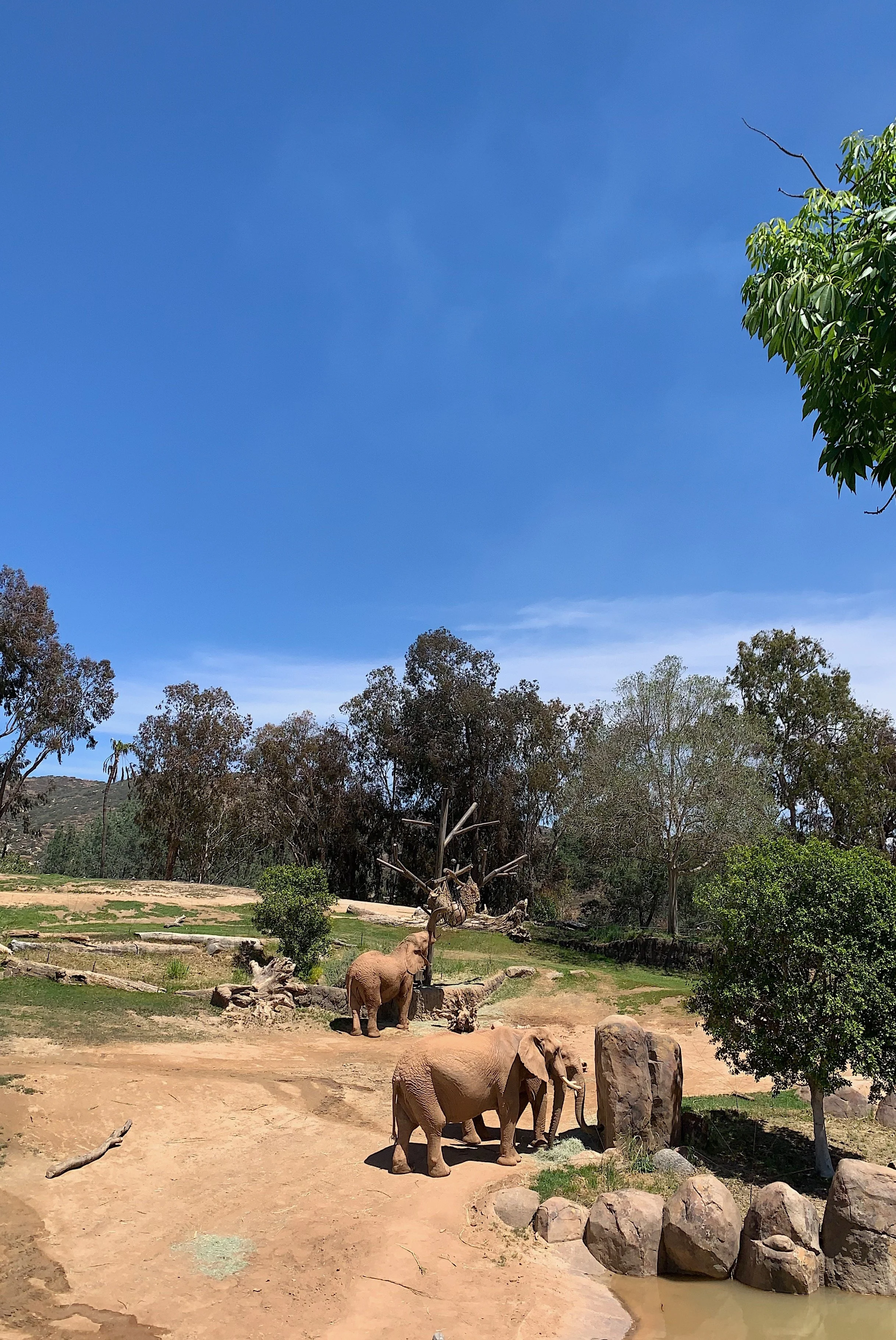
That said, Elephant Valley is the newest area of the Safari Park and it’s absolutely incredible. It’s designed in a way that gets you SO close to the elephants without them feeling uncomfortable. With immersive walkways and up-close viewing areas, you get to view the animals from very close distances while still prioritizing large roaming spaces.
Elephant Valley also has misters and shady spots throughout, making it a great spot to be mid-day. Elephants spend about 18-20 hours a day eating, so are more likely than not to see them moving around.
lunch break
As you hit the midpoint of the day, you are in a great spot for lunch, and there are few different options I recommend:
Mkutano House
The newest dining location, this is the Safari Park’s sit-down restaurant with table service. Located near Elephant Valley, the restaurant features African-inspired dishes and views overlooking the elephant habitat (including their gorgeous, state-of-the-art pool). Reservations are strongly recommended; since the restaurant is new, they’re booking around a week or two in advance. If you are visiting without kids, you might prefer Ona Lounge. It’s located on the second floor and offers small bites and premium spirits; there is an additional cover charge.
Casual Quick-Service Lunch
From Elephant Valley, you are close to many of the quicker food stops, which is ideal if you are in a larger group or have picky eaters to feed. Here’s my rundown on the notable spots:
Tu Grill - Located in Elephant Valley; this is the most convenient location-wise but the menu is small. The skewers are good, but it’s not the most kid-palette friendly.
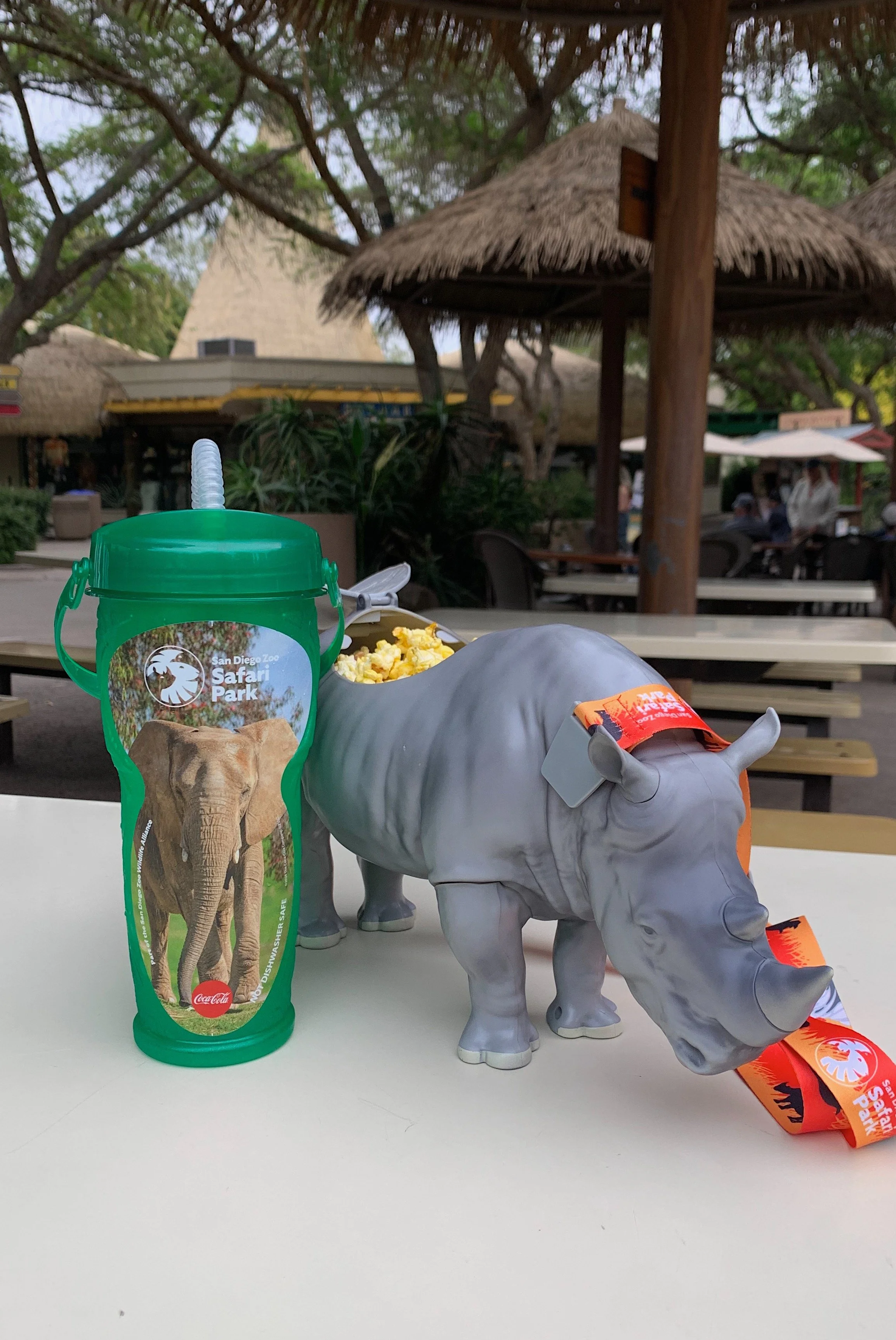
Mombasa Cooker - My top recommendation. Choose between chicken, burgers, sandwiches, or a corn dog. This is a little less crowded than Thorntree Terrace, and there’s lots of seating nearby. Worth noting is a little sailboat that you can sit in; kids love it. It’s a short walk from Elephant Valley but worth it.
Thorntree Terrace - Most popular; lots of burgers and kids meals. Plenty of outdoor seating with umbrellas.
Barking Deer - Tiny little shack that serves pizzas; located right across from Thorntree Terrace.
nairobi village
After you eat, you’re back at the heart of the Safari Park and ready to explore the lower half of the park. Start with Nairobi Village. You’ll see cranes, a small reptile section, and don’t forget to look for the pudus near the lagoon. They’re the world’s smallest species of deer and SO cute; people end up stopping to watch them for longer than expected.
gorilla forest
As you complete Lagoon Loop, head down Gorilla Trail to the gorilla exhibit. Gorilla Forest is usually quieter for some reason, but feels much more immersive with shaded pathways, waterfalls, and lush landscaping. To escape some of the afternoon heat, it’s the perfect place to go.
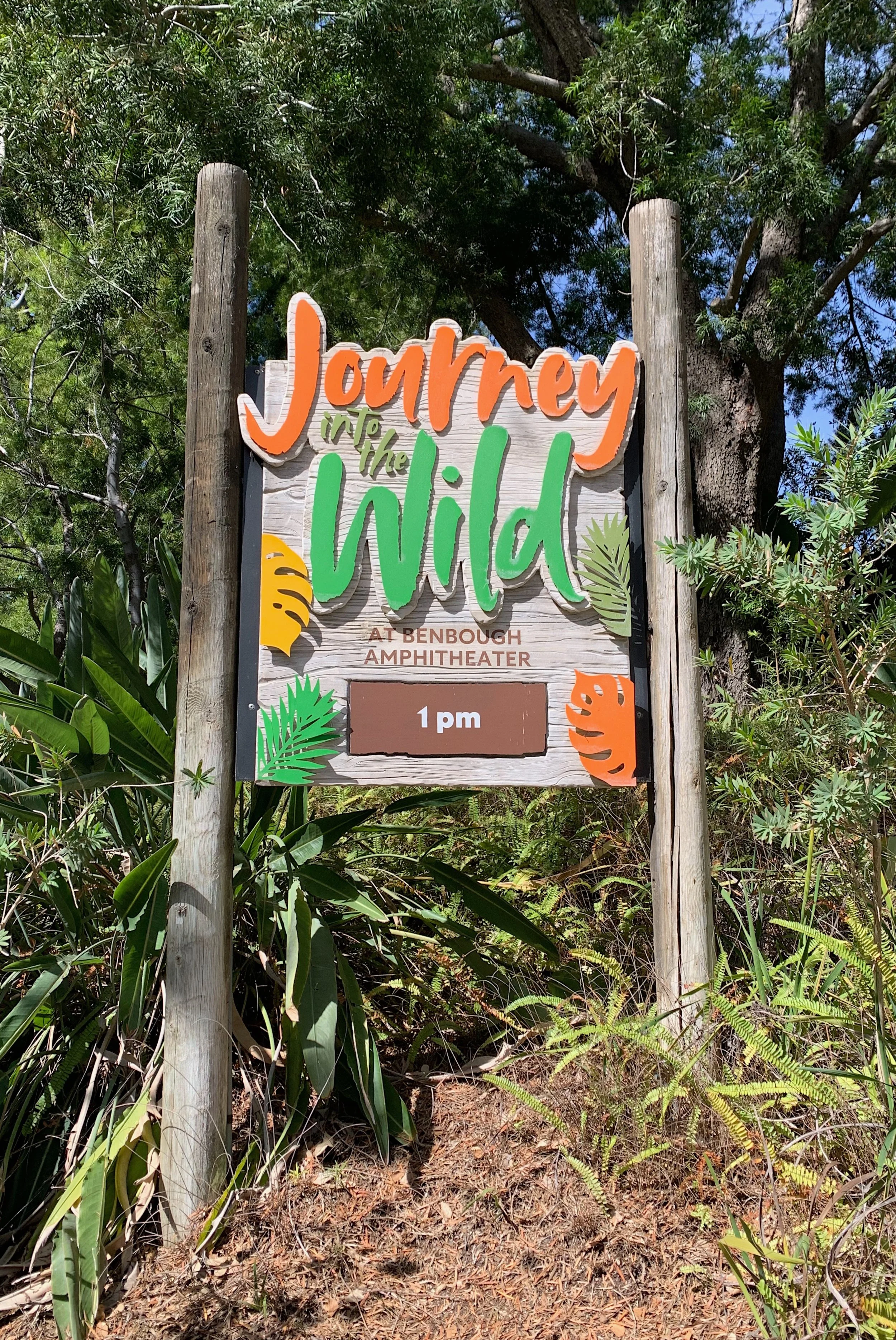
Just beyond Gorilla Forest is the Benbough Amphitheater, where they do a daily presentation. Check your app for the most recent updates, but in my experience, it’s typically after lunch. They are very strict on timing and do not allow late entrances, so get there early!
walk through africa woods
As you move past Gorilla Forest, you will see a few monkeys as well as the rainforest aviary. Don’t skip them; they’re great and active more often than not. From here, you will end up at a little lookout by Rift Sand Bar. Expect gorgeous views of the Valley as well as the hot air balloon; it’s a nice place to take a break for a few minutes if you need it.
As far as if the hot air balloon ride is worth it - maybe, depends. The balloon is tied down so you just go up and down (you don’t move around the park). I enjoyed it, but won’t do it again. When I’ve talked to other visitors, those from out of state/ country love it because you get a view of the valley. Locals are a little more indifferent about it.
lion camp
Next, head down the stairs (or take the elevator) to end up at Lion Camp. Keep in mind that African Loop is exactly what the name suggests - a loop - that takes you around Lion Camp, African Woods, and the Africa Tram. The below sections will change order depending on which part of the loop you start at, but you will see all three by the time you finish.
As you exit the stairs/ elevator and face the big map sign, I typically turn left for Lion Camp. You’ll walk past the hot air balloon and splash pad, ending up right at the lion exhibit. There are few different areas to view them, even if they are taking a much-needed cat nap.
After the tram, continue into African Outpost and Lion Camp while temperatures are still relatively cool. This section has some of the park’s best viewing areas and often feels less crowded earlier in the day.
take the africa tram
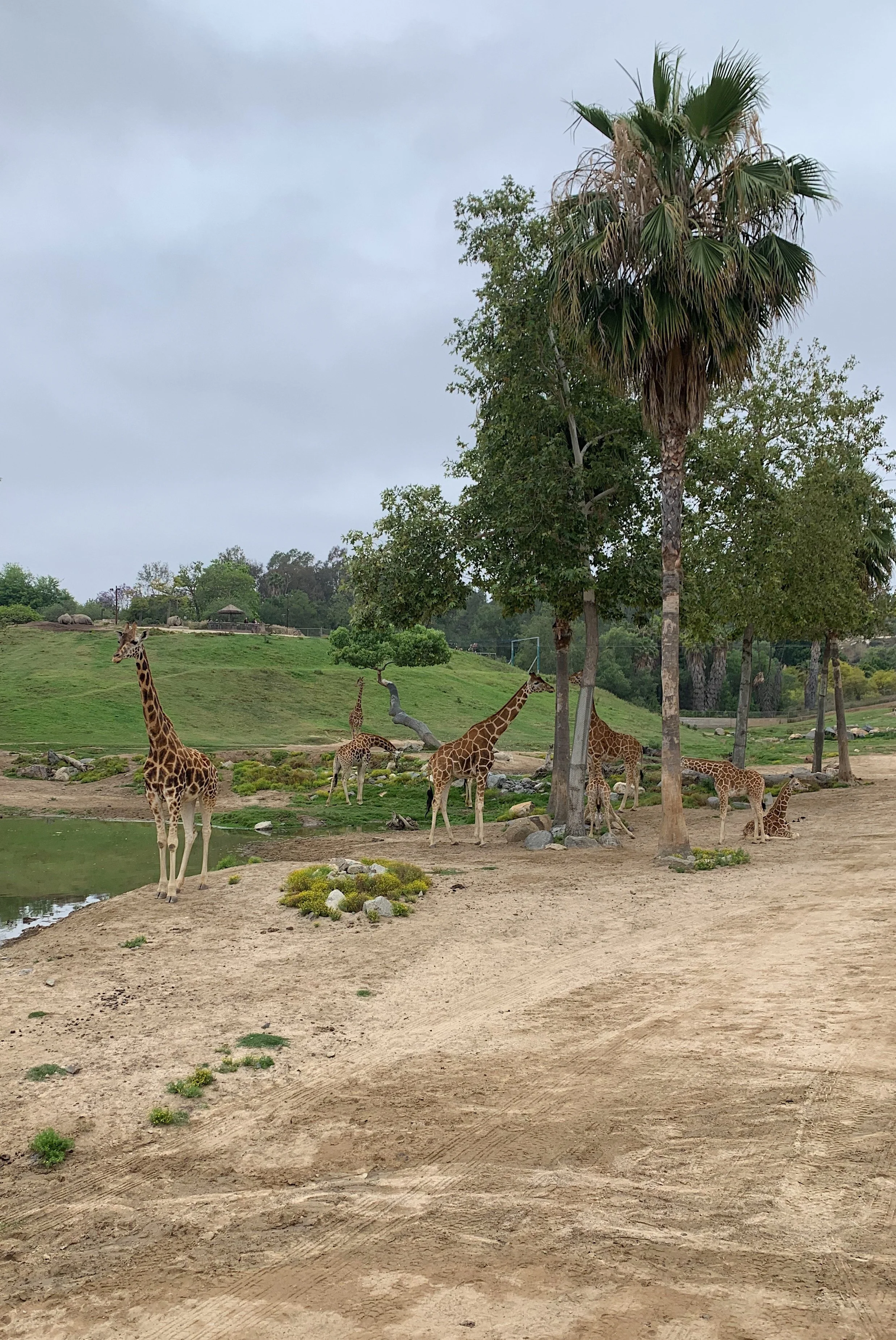
From Lion Camp, your next stop of the African Loop is the Africa Tram line. Some volunteers recommend taking this first thing in the morning, but that’s when I find lines to be the longest. After lunchtime, the animals have also had their lunch and are more likely to be moving around and easier to see (especially the giraffes).
The Africa Tram lasts about 20-30 minutes and is very well-done. The guide shares fun animal stories as well as conservation facts, and you are able to see just how large the Safari Park is! Animals you will see while on the tram include giraffes, rhinos, antelope, zebras, and flamingos (plus more).
The tram is free and included with your admission; it’s also open-air so you get a little bit of breeze as you drive around. You do not stop or walk around; that’s more for the upgraded safaris (more on that below).
I recommend sitting on the left side of the tram. You are going to circle around the savanna, and while you will see animals on both sides, I find that you get the best view from the left.
Also, try to sit in the middle sections (not the tail end or first row behind the driver). As the driver stops throughout the tour, they will try to stop in the middle to give everyone a view of the animal. Thus, the middle sections tend to get the best view.
Unlike the San Diego Zoo’s bus tour, the Africa Tram is all about the Savanna, which is why I recommend walking around the park to see the open-air exhibits first. What you see around the park (like Tiger Trail, Walkabout Australia, etc.) is completely different from what you see on the Africa Tram.
That said, it’s one of the most popular attractions and worth doing! There may be a line, especially during peak times (weekends, holidays, and summer), so try to go to the bathroom ahead of time, and bring water or a snack for while you wait.
finish the loop with the african outpost
After the tram ride, continue following African Loop to the African Outpost. Here is where you’ll see the cheetah (though they are quite shy), as well as more birds. It’s a pretty walk that takes you past the research island, and is arguably the quietest and least-walked area of the Safari Park.
end the day by revisiting favorites
It feels really strange to end the itinerary with African Outpost, because you’re technically at a corner of the park, not back at the entrance/ exit, but you are at a fair spot to revisit some of your favorites, or check out animals that may have been off exhibit earlier in the day.
From African Outpost, you can head up to Lion Camp and back through Elephant Valley, or take Nairobi Walk back to Nairobi Village and Safari Base Camp, where kids typically like to ride the carousel (extra cost).
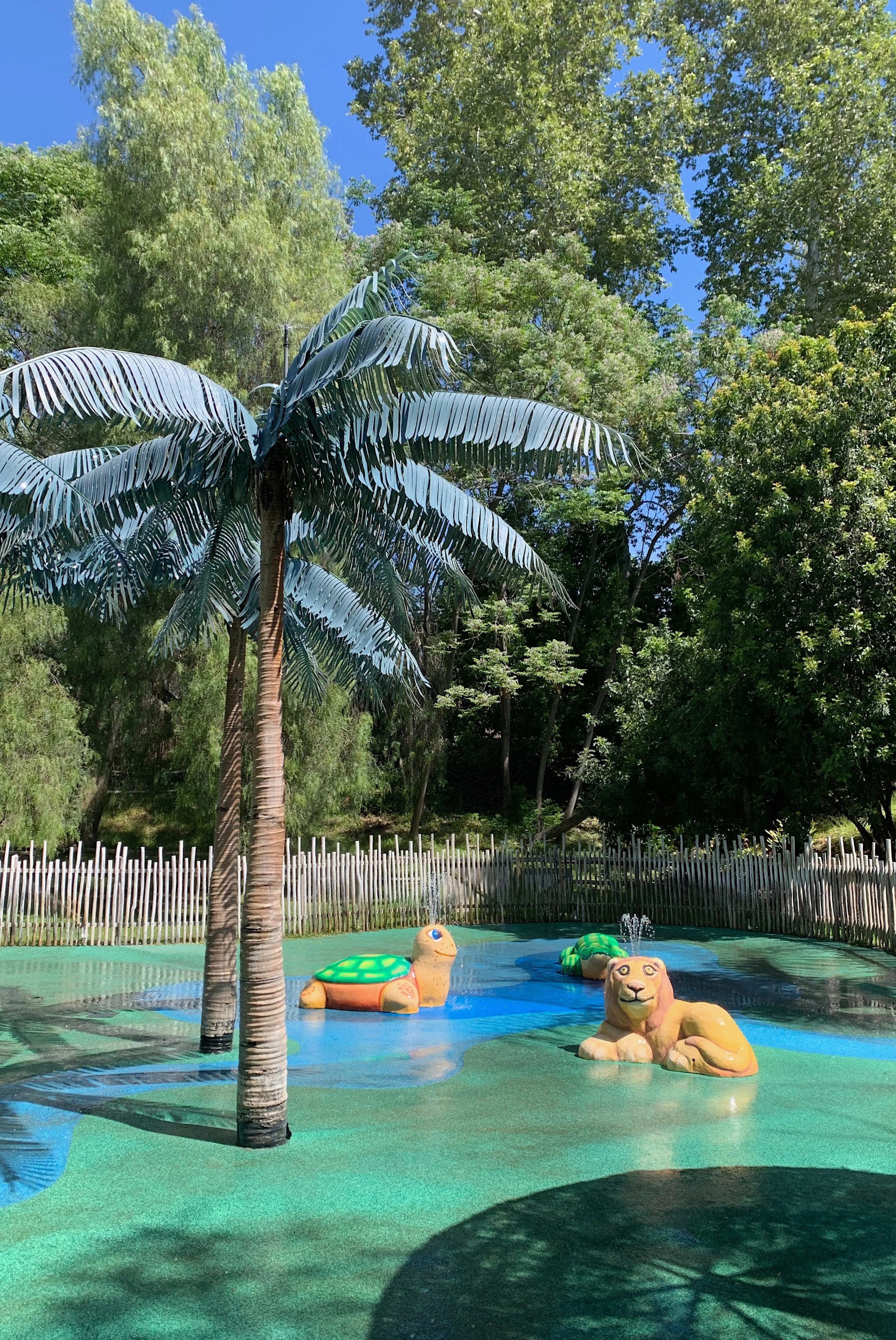
Heading through Lion Camp allows kids to play in the splash pad; anytime I bring my little cousins, they love ending the day that way. The other route (Nairobi) is more direct and quicker. It takes you by Kibo Cones, where you can get a sweet treat or dessert to end the day.
Before you exit, don’t forget to check out the Wings of the World Aviary (it’s right by the exit; you can’t miss it) You’ll also pass by souvenir shops, should you want to buy a hat or sweatshirt to bring home with you.
Whichever way you make your way back will be enjoyable. One of the best parts of the Safari Park is slowing down toward the end of the day. Crowds usually thin out slightly later in the afternoon, making it a great time to revisit favorite exhibits or explore quieter corners of the park.
is one day enough at the safari park?
Overall, yes, one day is typically enough most visitors, especially if you arrive early. Remember that the Safari Park closes earlier (around 4PM) during the summer due to the heat, so you want to arrive promptly to get the most out of your visit.
That said, if you plan to do paid safari upgrades, behind-the-scenes tours, or spend extra time photographing animals, you could easily turn it into a two-day experience.
Whenever I play tour guide with friends or family visiting, we plan for one day. I’ve done paid upgrades (more on that below) and don’t recommend doing more than one unless you are okay with skipping an animal exhibit or two.
best add-ons worth paying for
The Safari Park has quite a few upgraded experiences that you can pay for on top of your admission ticket. While not necessary, these are very unique experiences that you can’t replicate anywhere else (except maybe Africa or Asia). I’ve done most of them, and share my experiences and reviews here on my website. Upgraded experiences include:
Wildlife Safari
Cart Safari
Behind-the-Scenes Safari
Flightline Safari
Roar and Snore Safari
My full, unsponsored opinion is that an upgraded safari is truly unique and fun, but there are a few caveats:
Animal viewing is not guaranteed. They do not force the animals to do anything.
The Behind-the-Scenes Safari is one you could probably do year-round. It’s interactive and gives you a true inside look at the Safari Park.
The Wildlife and Cart Safaris are weather contingent, but feel the most immersive. I highly recommend visiting on a colder, gloomier day for the highest chance of animal activity.
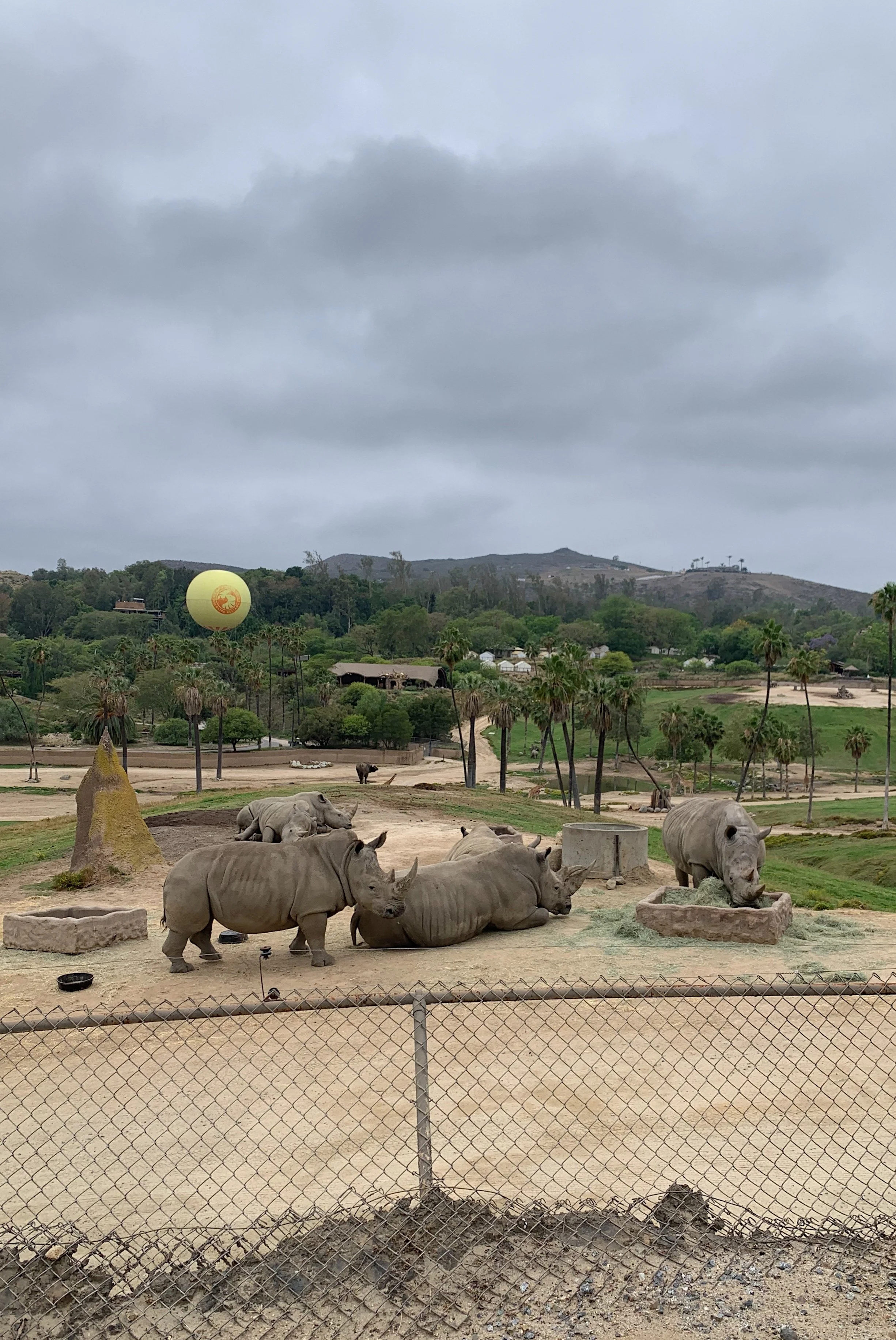
If you are visiting the Safari Park specifically to see rhinos, pay for an upgraded safari. They can be hard to spot if you are just walking by the Savanna (or from the Africa Tram).
I recommend not taking kids until they’re old enough to really enjoy them. Go to the free presentation instead; it’s shorter, yet still engaging. On every upgraded safari tour I’ve taken, there seems to be at least one kid who yells, pounds the glass, gets hungry/ tired, or just isn’t able to focus throughout the entire experience. It’s not fair to the animals, and you (the parent) pay too much to miss out on half of the experience.
That said, whether you pay for an upgrade or not, the San Diego Zoo Safari Park feels very different from a traditional zoo experience. The open habitats, safari-style attractions, and huge landscapes make it one of the most unique wildlife parks in California
With an early start and a solid itinerary, you can comfortably experience all that the Safari Park has to offer without feeling rushed or overwhelmed. I hope this itinerary helps you!
A breakdown on how the Deluxe Cart Safari or Deluxe Wildlife Safari tours compare for animals, experience, comfort, photos, and value. Plus, which specialty tour is better.